
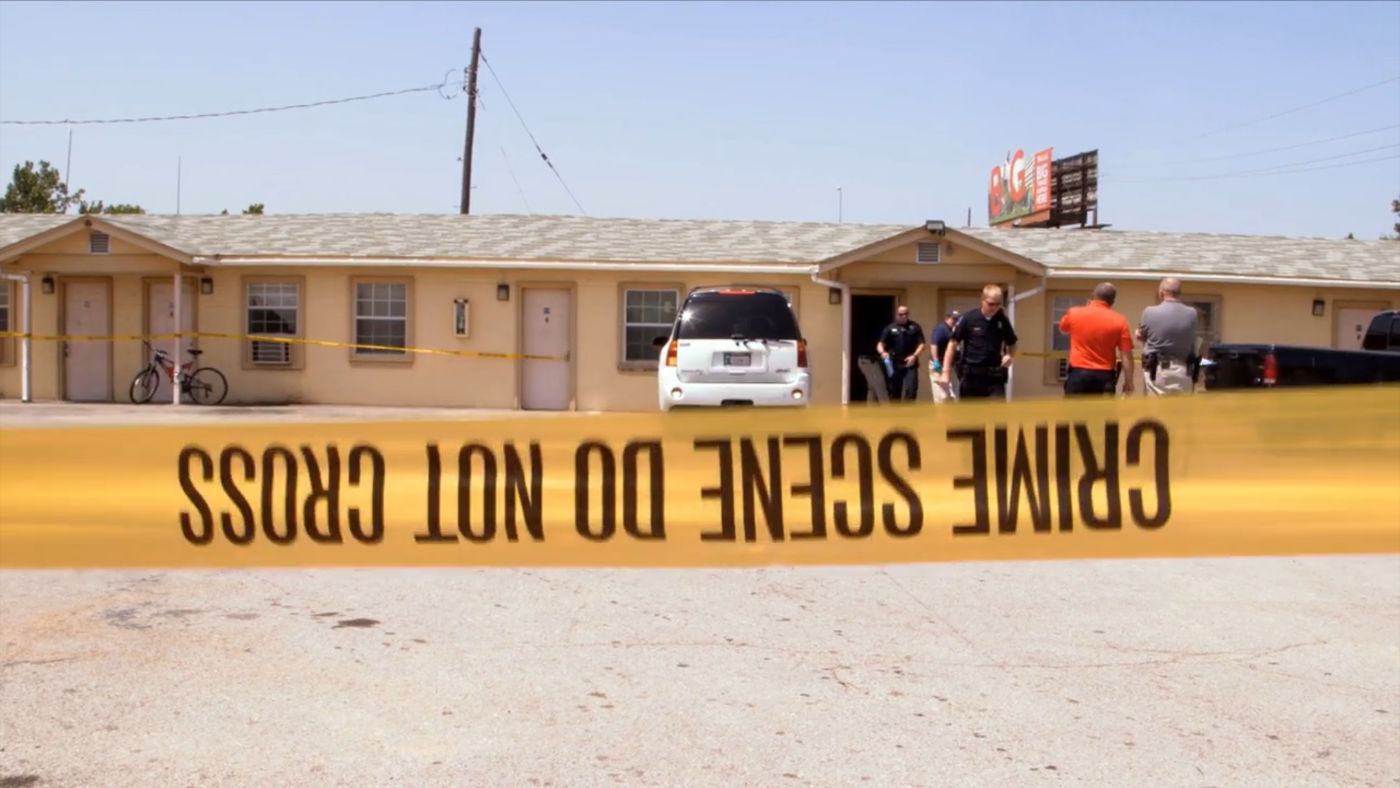
The First 48‘s “Ringside Seat” is one of the A&E true crime show’s seminal episodes. When it originally aired as Season 16, Episode 2 almost a decade ago, it was simply the debut of another new department. But in retrospect, the introduction of Tulsa Homicide is perhaps the series’ most important moment.
“Ringside Seat” is the first Tulsa Homicide episode, in which Detective Jason White investigates the shooting that left Richard “Pizo” Parker dead and wounded Amber Stevens. It came along at a time when The First 48 was in need of a fresh identity, as major cities Cleveland and Dallas had exited the series. The one major holdover was New Orleans, which couldn’t carry the program on its own (and which would leave two seasons later). The arrivals of Tulsa and Atlanta not only gave The First 48 new blood, but a new way of approaching the show.
When it could have easily been canceled or faded into the plethora of true crime series, Tulsa and Atlanta instead launched The First 48 into its best era—and that started with “Ringside Seat.”
TULSA’S DETECTIVES STOLE THE SHOW

The first Tulsa Homicide detective viewers met was Jason White, and whether that was by coincidence or design, it was the best choice The First 48 could have made. The primary detective in every episode essentially serves as the narrator (aside from the actual narration done by the award-winning Dion Graham), because they are the person that the viewer follows and who is speaking directly to them. Of all the detectives who have appeared in show history, White is one of the best narrators. He’s personable, he’s eloquent, and he has the ability to make law enforcement processes and approaches easily digestible to an audience. At the same time, he’s also learned how to make the camera work with him—instead of being awkward with it or playing up to it.
White essentially sums up The First 48 through his to-camera segments during the Richard Parker case, noting that homicide detectives deal with “five percent of the population, 95 percent of the time.” He even uses the episode name in a sentence (which suggests that’s how producers came up with the title). But one of the most interesting comments he makes is in reference to the apparent lack of witnesses, when he says, “It’s just a different kind of a segment of society that most of us don’t understand.” Those last five words are critical. He’s frustrated, but he’s not taking it out on the subjects or railing against what’s at least a little bit of willful ignorance. He understands that these people are coming from a different perspective, and by bringing it up, he’s letting the audience understand that, too. His empathy is indicative of the character of the entire Tulsa Homicide unit, and sets the tone not only for that episode, but for the next nine years of episodes.
Audiences have one episode, if that, to decide if a department is worth following. In “Ringside Seat,” viewers get to see the winning personality of Tulsa Homicide that injects a whole lot of life into The First 48. They bring a positive energy and they’re willing to dialogue in a way that is very uncommon. There’s a controversial scene when White is finally able to interview his mystery witness Leonnie; some viewers have claimed that he’s unnecessarily hard on her, including finding drugs in her purse and wanting to use them to hold her in jail. But note the following moment, when he discusses that idea with Sergeant Dave Walker, who points out that it’s not going to get him where he actually wants to go. There’s a refreshing vulnerability to Tulsa Homicide that directly contradicts the “copaganda” stereotype, and would ultimately take the show to places it had never gone before in exploring how police work and what it means emotionally to be a homicide detective.
“Ringside Seat” is also successful because it’s a well-rounded installment. There’s the very first on-screen Tulsa team conference, substantial screen time for Sergeant Walker and Detective John Brown, the debut appearance of the Fugitive Warrants Squad, and assists from people in Narcotics and Major Crimes. Most importantly, audiences meet White’s other half, Detective Ronnie Leatherman. The Leatherman and White combination would become one of the most beloved team-ups on The First 48 and continue on White’s podcast Into the Fire.
In “Ringside Seat,” though, it’s Leatherman who gets the last word, by ribbing White about his self-created murder difficulty scale. “He kind of inflates his own numbers at times, in my personal opinion,” he quips, and viewers get to decide whether or not Leatherman has a point. That moment feels so organic to the rest of the episode, and it leaves the audience on a whole different note than the typical true crime show. But The First 48 would never be called a typical true crime show again.
WHAT ‘RINGSIDE SEAT’ MEANT TO THE FIRST 48

“Ringside Seat” is also a classic The First 48 case, in the sense that it has everything viewers expect of true crime, and almost everything they could want. The case feels straight out of a crime novel: a lower-end motel where the security cameras don’t work and most of the clientele either don’t know anything or are pretending not to know. There’s the hunt for a mystery witness, a sting operation, and the scene where the suspect is taken in at gunpoint (after being stopped in a McDonald’s drive-thru). What happens holds the audience’s interest, but there’s also nothing unnecessary. In fact, the episode is so efficient that repeats often cut out the part that introduces the Tulsa Homicide unit. (A&E must be assuming that at this point, anyone watching this show knows about Tulsa.)
What’s particularly great about it is that while White serves as the guide for the audience and does everything he needs to do, the real heroes in the episode are civilians. Then-Corporal Nathan Schilling finds two witnesses who saw Pizo’s murder and encountered the mystery woman before it went down. The two of them not only give detailed statements to White, but they spend an inordinate amount of time looking at photo lineups to identify the shooter. “Ringside Seat” busts the common belief that the cops just carry the day all the time. As the Tulsa detectives have said time and again, the community is vital to what they do. This chapter highlights the role of citizens in closing murder cases.
Whether it’s the star witnesses or showing how White and Leatherman interact with the victim’s family, the episode places more emphasis on homicide investigators as the biggest piece of a larger equation—something that The First 48 had not done as well before and that most true crime shows still don’t do well. But it works perfectly here, specifically because of Tulsa Homicide’s connection to their community, which would come out again in other episodes such as Season 19’s “Trap House” (another Jason White case).
The First 48 got to 16 seasons by telling solid stories about homicide investigation in prominent cities like Dallas, Memphis and Miami. But once Atlanta and particularly Tulsa came onto the scene, the tone and focus of the show changed for the better. The positivity and sense of belonging that Tulsa Homicide contributes directly counteracts the darkness and isolation that come with the subject matter.
And in wisely leaning into the engaging personalities of the Tulsa detectives like Jason White, Ronnie Leatherman and Justin Ritter (to name but three), the series became less of a case study of crimes and more of a study about people. It started to emphasize life just as much as it focused on death. “Ringside Seat” started a new era for The First 48 that allowed it to reimagine itself, to start asking questions it hadn’t before and present a more complete view of being a detective—thanks to the arrival of Tulsa Homicide.
The First 48 airs Thursdays at 8:00 p.m. on A&E. This article is exclusive to Fangirlish and if reproduced or excerpted anywhere else, has been stolen without the author’s permission.

I absolutely agree with you. I only wanted to watch Tulsa. They are my favorite. Detective Jason white is the best and my husband calls detective Ritter my boyfriend lol. Shout out to you for noticing them and to Tulsa police first 48. I’m a Floridian, Palm beach county, I appreciate all police services. Tulsa is the only 48 I need though!