
House MD remains a towering icon in TV history: A procedural drama with razor-sharp dialogue, moral ambiguity, and Hugh Laurie’s magnetic portrayal of the misanthropic Dr. Gregory House.
Yet, in 2025, revisiting, or even thinking of House MD, reveals a bitter pill to swallow: its most complex women, Lisa Cuddy and Allison Cameron were often relegated to the sidelines. Their intelligence and authority were frequently undermined, and their emotional arcs contorted to serve House’s narrative.
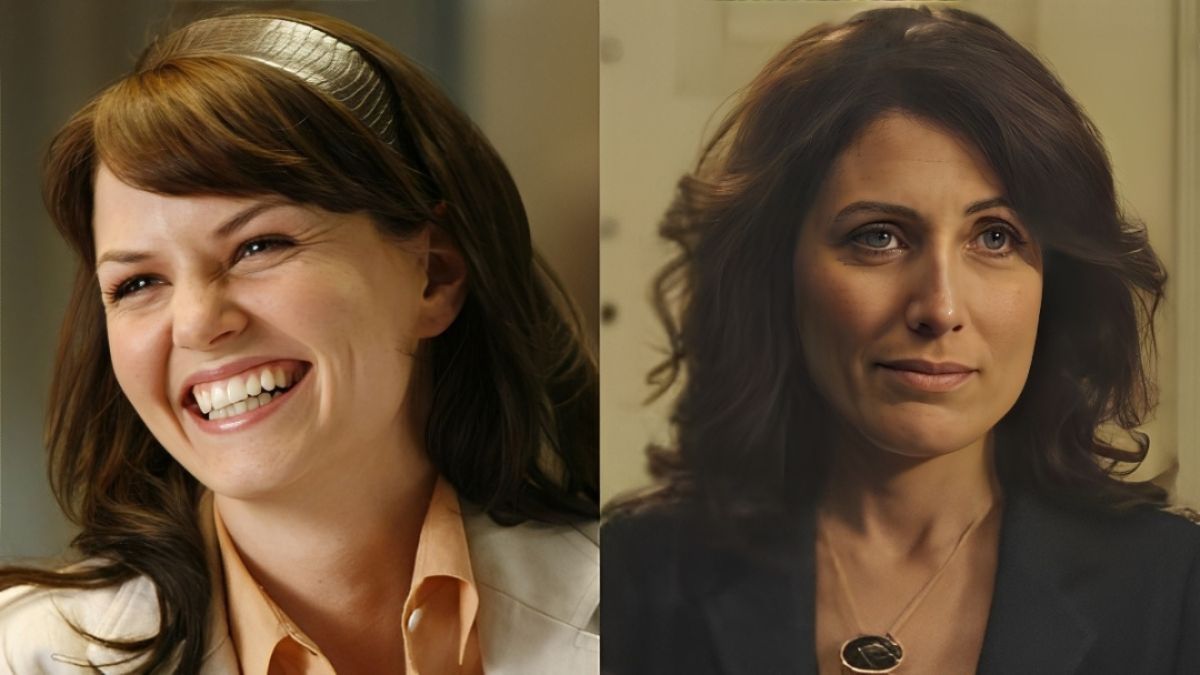
Lisa Edelstein’s Dr. Cuddy (the Dean of Medicine and House’s boss) was obviously in control. And Jennifer Morrison’s Dr. Cameron was the moral center of House’s diagnostic team. But in a hospital where dysfunction reigned and boundaries blurred, both women were often used to reflect, challenge, or…worse…enable House’s behavior, rather than stand in their own light.
The question remains: Why did two of House MD’s most influential female characters so often find themselves devalued?
The Patriarchal Pulse of Princeton-Plainsboro
House MD thrived on a male-dominated narrative structure. While Cuddy had institutional power and Cameron had emotional intelligence, both were consistently undermined by House’s “alpha male” tendencies.
Dr. House’s rhetoric embodied male chauvinism. It was evident in how he belittled Cuddy’s authority and turned Cameron into an object of flirtation and philosophical sparring. Their interactions weren’t just tense. A male gaze framed them.
Even when Cuddy fought back, her victories were often short-lived.

The show hinted at her inner strength, especially in moments where she disciplined House or made high-stakes administrative calls.
But these times were usually contradicted by the running theme of House MD: House always won. She threatens to dismiss him; still, he never gets fired! Once their relationship turns romantic in Season 5, Cuddy’s character arc becomes more about managing House than leading the hospital.
Cameron changed throughout seasons, but seldom had a story that wasn’t filtered through a man’s suffering. Be it House’s misanthropy, Chase’s greed, or Foreman’s drive. She was sometimes infantilized or used as a moral contrast rather than as a protagonist in her own right, even if she was intelligent.
For dramatic reasons, a lot of Cameron’s control was taken away.
House MD Fans Loved Them, But the Show Didn’t

House’s ratings dominance and critical acclaim (nine People’s Choice Awards, a Peabody, and an Emmy for David Shore) underscore its cultural cachet. Yet, part of the show’s impact came from how it shaped viewer expectations.
When liked characters face no real consequences, viewers internalize that behavior as acceptable. House constantly demeaned Cuddy and Cameron with little fallout, reinforcing the idea that brilliance excused cruelty.
Even Edelstein once said in a 2011 TVLine interview about her sort of random exit from House MD, “How could you drive a car into a house where you know that your friends are, where you know there’s a child, and not think that? It really is homicidal.” That disrespectful twist speaks volumes. To date.
In the end, these women weren’t poorly written. They were brilliantly acted and often brilliantly conceived. But House MD chose to keep them orbiting the sun that was House, rather than letting them burn on their own.
MORE – Keep Calm, Trope On: Medical Dramas

House demeaned everyone. No one got it worse than his “best friend” Wilson.