
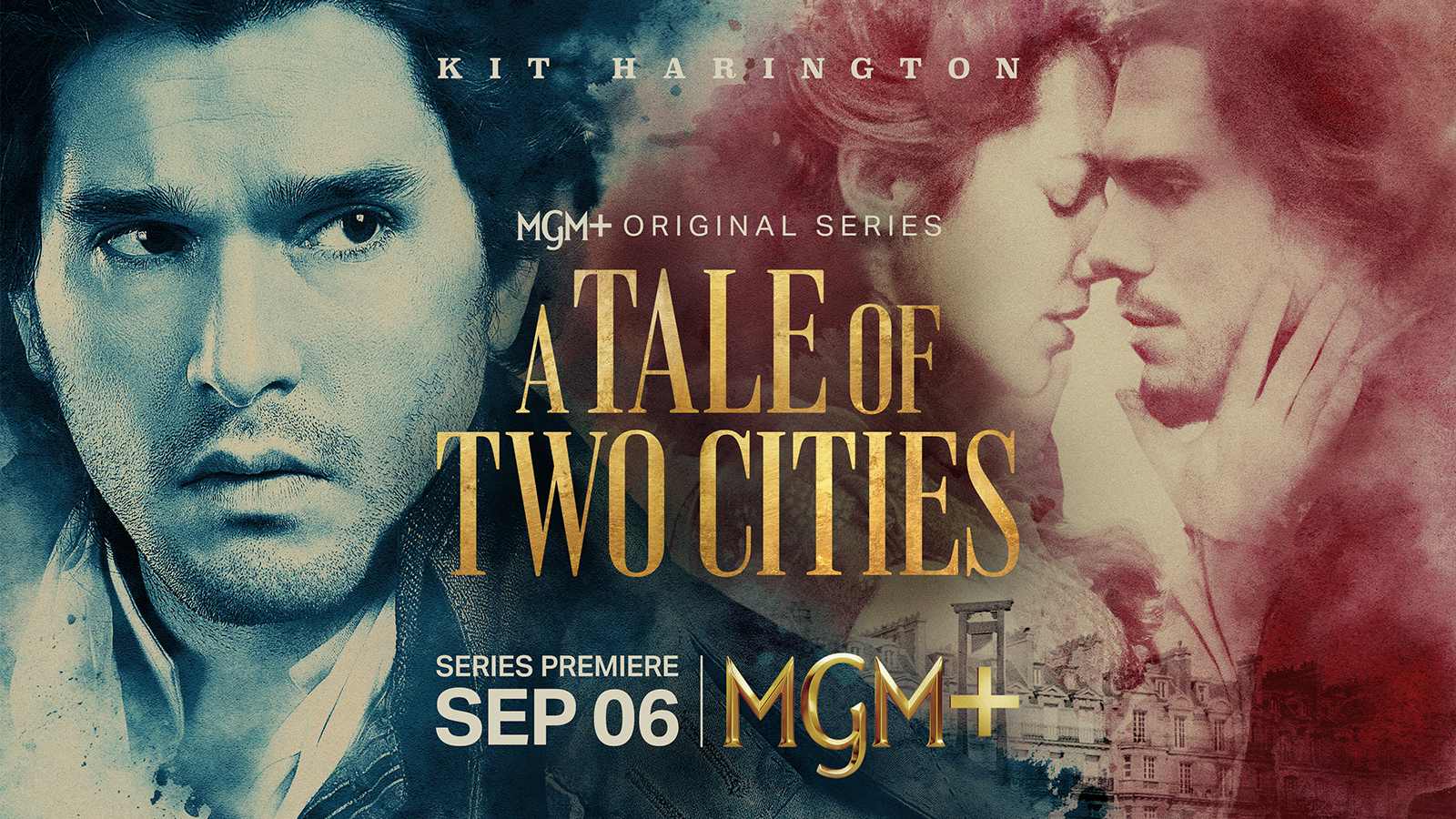
A Tale of Two Cities, MGM+’s adaptation of the classic Charles Dickens novel, is anything but a faithful adaptation of the novel. Though, if we’re being fair, it’s not like Dickens tried all too hard to be very historically accurate in the first place. Instead, the miniseries is a little bit vibes, a lot of ‘rich people are kind of evil’ and a fair bit of noble sentiments, expressed by characters we don’t often manage to relate to.
The show focuses on a French aristocrat and an English lawyer who happen to look a lot alike and also happen to fall in love with the same woman. The problem, both with the book and the show, is that neither the men nor the romance is all that interesting. In fact, the most intriguing character in any version of this story is, without a doubt, Lucie Manette (Mirren Mack), a woman ahead of her time who begins as an orphan and then spends much of it trying to find and keep her family.
If you’re familiar with this story, you know where this goes. If you’re not, you still probably have a good idea. Dickens’ tale was always a tad predictable, even if there are a few specific twists that are very much only possible because of the setting and the time period. Nonetheless, the show does a lot to try to make the tale not just more interesting, but also easier to understand.

Even when it manages it, though, it rarely ever makes you care enough for Sydney Carton (Kit Harington) or Charles Darnay (François Civil). Both are stereotypical characters that the script and the acting sometimes manage to elevate, but never to the point where we are truly rooting for one over the other, much less invested in their well-being.
Perhaps that was always going to be the problem with any adaptation of this book, though. If Dickens’ novel excels at something, it is the political aspect of it, the criticism of the French nobility and a system built on the pain of the poor. But we’ve seen many tales with a similar undercurrent, and the themes of self-sacrifice and personal redemption through selflessness that run through the show are very hard to sell to modern audiences.
I remember reading the novel when I was perhaps too young to understand it, and not enjoying it much. I gave it a chance when I was older, thinking I would appreciate it more. I both did and didn’t. As an adult, the themes were easier to grasp, but the characters felt even more hollow. The miniseries does very little to add to that. Maybe if you’re a fan of the book, you’ll find enough here to draw you in.

But if you aren’t, perhaps you’ll be left like me, wishing A Tale of Two Cities had given you more reasons to care about the people, instead of the historical moment. Sure, this isn’t a horrible watch. And Mirren Mack is compelling enough that at times I wish I cared enough about the people around her, mostly for her sake.
This, however, is also not the kind of period drama that’ll leave you wishing for more, or the kind that’ll make you invest in the romance. If anything, it’s the kind you watch and never really think about again, for better or worse.
Will you be watching the miniseries?
A Tale of Two Cities will release weekly on Sundays starting September 6 on MGM+.
