
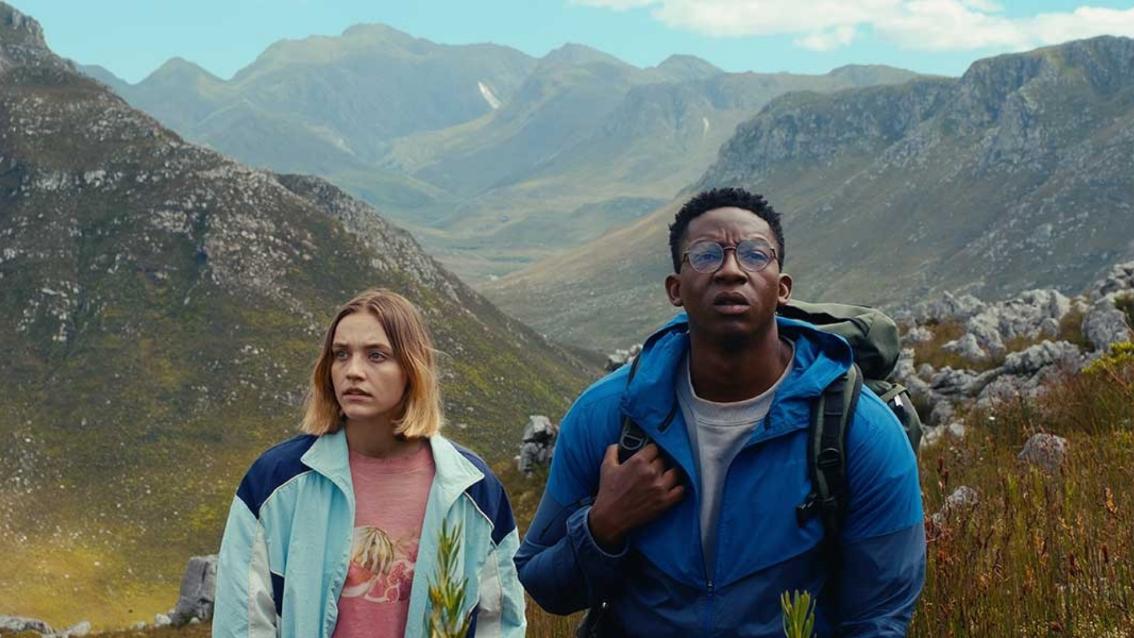
Future Tense sees the depiction of Black trauma told through a white perspective and sanitized for a white audience in mind. And this isn’t to say that white directors or writers like Jenna Cato Bass can’t tell Black stories. They can. But for that to happen, nuance is required and they actually have to commit to the story they’re telling. And Future Tense lacks nuance, coherency, empathy for the subject at hand, and the actual tone needed to tell a story that feels authentic.
As a critic, I have to make it clear that I’m a white presenting Latina. I’m not part of the South African diaspora. And I’m looking at this film through the lens of white directors and writers shaping the narrative as to what being Latino is actually like across film, TV, books, etc. I’m also looking at this through the lens of people outside of my community getting the accolades and opportunities to continue telling stories about us while Latino creatives are paid dust.
MORE: Always Lalisa TIFF Review: You’ll Laugh, Cry, & Get to Know a New Side of Lisa
This is why I could tell there was a disconnect in Future Tense that made it so the Black experience was sanitized for a white audience to understand the plight of a community that has been oppressed to the advantage of said white community. It was oppression lite with an exploration that was surface level and almost afraid to actually make a decision or share something real. And it’s even more disappointing because if there’s one genre that you can explore the human experience in surprising yet complex ways, it’s sci-fi.

There were multiple instances in Future Tense where I could tell that the creative decisions were made for us to sympathize with Tara, the white woman who traveled into the past with Lwando, a Black man who wants to change the past in a small yet significant way that could change the very foundation of the future they just came from. And the film squandered every opportunity to explore his anger, motivations, hesitations, or even why he thinks this is the hill he’s willing to die on. This made his character feel A) flat B) like the movie didn’t know what to do with him and C) like the film lacked the nuance or gumption to actually explore the layered reasons that led him here.
MORE: The Julia Set TIFF Review: Doesn’t Have to Break the Wheel to Be Intriguing
Tara is the one who was shown to have the layers we could explore and who had to have everything explained to her with a gentle parenting hand because she’s ignorant and wants to stay in the system that benefits her on the backs of others. And the film felt like it was trying to continuously make her the victim while sanitizing his mission or why the company who set up this time travel vacation program would be so adamant to stop him helping those who are days away from having their lives changed forever and for the worse.
Yes, cinematography wise this movie was beautiful. I’ll give Future Tense that. The creative decisions when it came to the world built around them were stunning. But besides that, it felt like every other creative decision was made to connect the audience to Tara instead of committing to the actual point they’re trying to make in the first place. Because of that, Future Tense feels hollow and like it’s putting a cute little Band-Aid on a bleeding wound and then going, “See? I get it. I helped.”

By the end of the film, all these creative decisions left me feeling like ultimately there was no emotional or storytelling arc for Lwando or Tara. I didn’t understand why Lwando gave up at the end, why he kept fighting for this woman, or why he in particular felt like he needed to do this mission. And I didn’t understand what Tara learned, how her perspective shifted, or why she chose to fight and then just abandon him as if the whole sci-fi adventure they went on didn’t happen.
If there’s anything that Future Tense has achieved, it’s made me curious about South African cinema, particularly from a Black perspective. Because this film can’t be the height of South African cinema. There has to be more that contextualizes the shared experience of living in South Africa without hand waving away one experience to the benefit of another or sanitizing the story at hand like Hollywood loves to do with the Latino experience.
If anything, the one thing that Future Tense got right is that the rich would use the past as a convenient getaway instead of fixing the problems that billions are facing now, especially when it comes to climate change. They would also use time travel to cement their future on the backs of anyone who gets in their way to ensure that they live a comfortable life in the future while others suffer. At least they got that right.
Future Tense premieres October 12 in theaters.
