
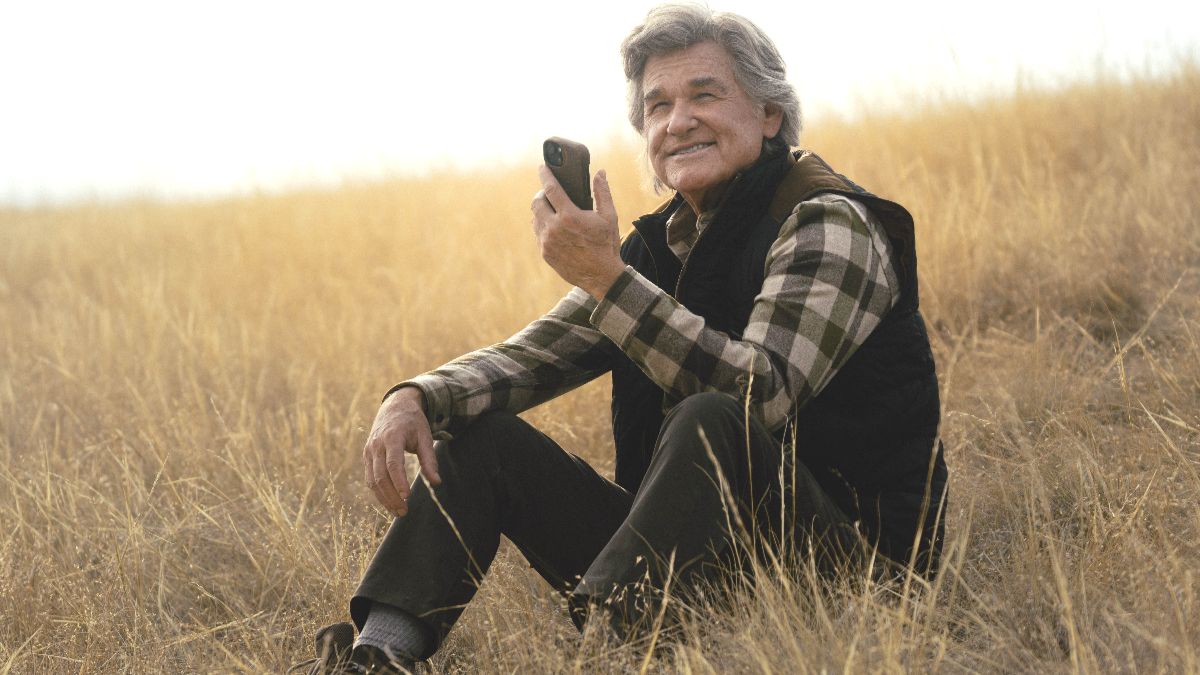
One of the best aspects of The Madison is the Paramount+ drama’s striking visual style. Taylor Sheridan series are known for their look, yet this show is even better than usual. Behind the camera is Christina Alexandra Voros, who serves as not only director for all six episodes but also director of cinematography.
In an interview, Voros spoke about her longtime collaboration with Sheridan and how she crafted the look of The Madison. She revealed what she applied from her episodes of Yellowstone and its prequel 1883 to the new series. Plus, what was it like for her to singlehandedly direct an entire TV season?
Brittany Frederick: How did you approach The Madison knowing that you weren’t just setting the visual tone with the pilot, but directing the entire season? Was that a blessing or did it create an additional challenge?
Christina Alexandra Voros: It’s a blessing. To be given the opportunity to tell a story over six hours of television, and to be able to be given scripts written by Taylor—who has been a collaborator and a big brother to me for the last seven years—was a gift on its own. And then you add the cast, Kurt [Russell] and Michelle [Pfeiffer] and everyone in the Clyburn family; it was really a dream come true.
I have been working as a cinematographer-director in Taylor’s world for a while, and have been able to help bring other stories to life as one of several directors telling those tales. So to be able to be trusted with creating the family, to bring the story to life, and to be able to live in that world with this cast and crew for an extended period of time was a real gift.

Taylor Sheridan series have a distinct cinematic style. How did you maintain that herein while also making sure that The Madison was unique visually?
There was a lot of interplay with the juxtaposition of intimate moments between characters in confined spaces and the massive expansiveness of nature. Sometimes being inside can feel safe and sometimes being inside can feel like a prison, and sometimes being outside can feel safe and sometimes being outside can feel like a prison.
So there was a real Interplay, trying to find the moments where the natural landscape was a breath of fresh air, versus something to be feared or reckoned with. And likewise, when being inside with one’s family can feel like shelter, or when it can feel like war.
Was there anything from the episodes of Yellowstone or 1883 that you did, that you found helpful in establishing The Madison?
There’s definitely a certain language in the visual storytelling that feels like something I’ve been fluent in from years of doing Yellowstone. Treating the landscape as a character in its own right is very important in stories that have to do with the land. And even though it’s very different from the Yellowstone flagship and not a spinoff in terms of any character connectivity, there is a communal theme about the importance of land and the way that land can change us.
So there is a certain part of that language that carries over. But I also think when you’re dealing with an ensemble cast and scenes that have seven people sitting down at a dining room table, that there are things that you learn about how to adapt to tell stories that are really character-driven and emotional dialogue-driven, rather than stunt driven.
The Madison streams Saturdays on Paramount+. Photo Credit: Courtesy of Paramount+.
