
Adapting a book for the screen is never easy.
There are always changes. Favorite scenes get cut, memorable lines disappear, new storylines are introduced, and inevitably, someone walks away disappointed. But after covering enough productions and talking to enough authors, I’ve realized that change isn’t automatically a bad thing.
Sometimes it’s necessary.
Going into Things I Wanted to Say, I expected changes. The Lancaster Prep books are incredibly dark, and there was no realistic way every storyline would make it to the screen unchanged.
I enjoyed the book series, and I know that’s a controversial opinion.
That doesn’t mean I defend everything that happens in it. I don’t.
What draws me in is the setting and the psychology. Give me a boarding school full of secrets, complicated relationships, morally questionable characters, and enough drama to fuel multiple therapy sessions, and I’m interested. I like stories that explore toxic relationships—not because I romanticize them, but because I’m fascinated by how people survive them, grow from them, or sometimes fail to.
That’s what makes them compelling to me.
I understand that may be controversial to anyone else.
Things I Wanted to Say is a very different experience from the book.
And honestly?

I think that’s a good thing.
Instead of trying to recreate every controversial, toxic, or cautionary moment, the series finds its own identity. Once I stopped comparing every scene to the source material—and looked past a few costume choices that occasionally leaned a little too hard into “prep school starter pack”—I found myself getting swept up in the chaos and the character growth.
The show embraces its own version of the story, and I found myself having fun wondering how the writers managed to take something so dark and reshape it into something that still feels entertaining. I wondered how they managed to make characters I hated and turned them into complex characters worthy of redemption.
One of the things I appreciated most about Things I Wanted to Say is that it never felt like it was shocking audiences just for the sake of it. Every shot, every scene, and every change felt intentional, serving the characters’ growth rather than simply trying to recreate the book beat for beat.
Every page, every moment, every word didn’t need to come alive.
I appreciated the acknowledgement of that by how they shaped the project.
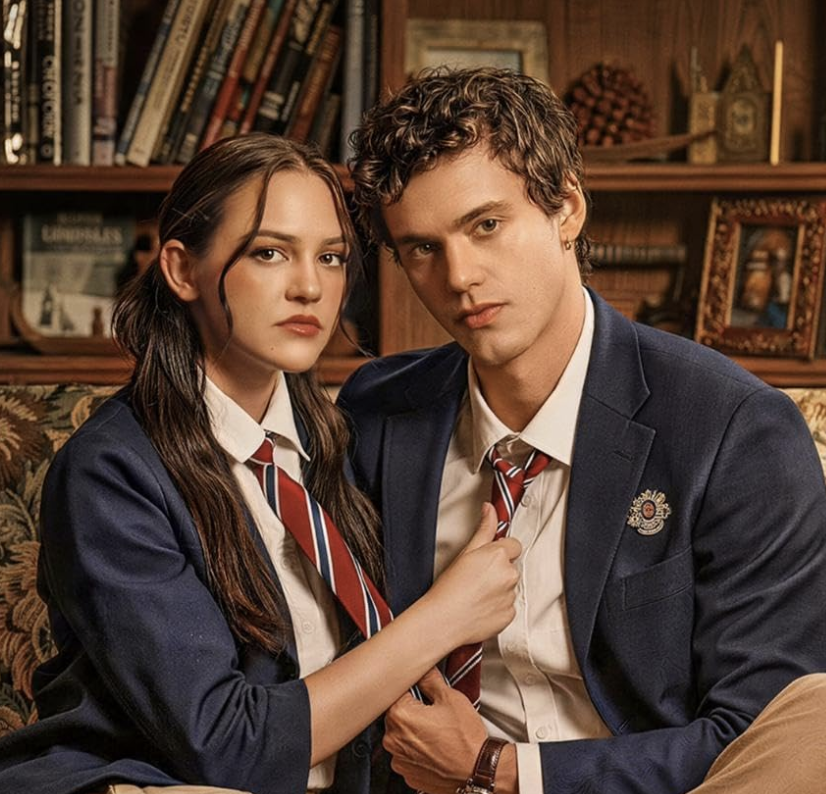
Based on the bestselling novel by Monica Murphy, the series follows Summer Savage, a quiet, observant student whose innermost thoughts are safely tucked away in her private diary—until it ends up in the hands of Whit Lancaster, the school’s golden boy and her relentless bully. After Whit discovers the secrets Summer never intended anyone to read, the two become locked in a complicated game of power, vulnerability, and undeniable attraction that forces them to confront feelings they’ve tried to ignore.
Starring Kirby Elwood and Pablo Kaestli, the adaptation is a very different experience from reading the novel.
I welcomed that.
I appreciated it.
The book felt overwhelming at times, but watching it, though, is almost surreal.
Some moments genuinely made me cringe—not because they were poorly done, but because they were supposed to.
Listening to Summer’s diary being read aloud made me deeply uncomfortable. It didn’t matter that the diary belonged to a fictional character. Diaries are private. They’re the one place where people are supposed to be able to think, vent, and be vulnerable without fear of someone else turning those thoughts into entertainment.
That discomfort is exactly what the show captures so well.
You watch, and you can understand why Summer feels so exposed. It’s not just that someone read her words—it’s that the one place where she felt completely safe no longer belongs to her.
It turned into public fodder.

Kirby Elwood absolutely understands the role of Summer Savage.
She’s a talented, multidimensional actress who never seems afraid to take on emotionally demanding roles, and Things I Wanted to Say gives her plenty to work with. She balances Summer’s vulnerability with a quiet strength that makes you root for her, even when she’s struggling to find her voice.
Some of the camera choices didn’t quite work for me, but that’s a creative decision—not a performance issue.
What I especially appreciated is that this role feels different from many of the characters Kirby has played in the vertical space. Instead of feeling like another variation of the same heroine, Summer has her own personality, insecurities, and emotional journey. It’s refreshing to see Kirby stretch into something that stands apart.
I do have one complaint, though.
The pigtails.
I understand the intention. They’re clearly meant to make Summer appear younger and reinforce that she’s still in high school. Hair and wardrobe are storytelling tools, and they’re supposed to shape how we perceive a character.
But for me, they had the opposite effect.
Instead of helping me connect with Summer, the hairstyle kept pulling me out of the story. Pigtails are so strongly associated with young children that they felt distracting rather than character-defining. Every time they appeared, I found myself thinking about the styling instead of what Summer was feeling.
It’s a small detail, but those choices matter. The best costume and hair design disappear into the story.
This one stood out a little too much.
Before Things I Wanted to Say, Pablo Kaestli wasn’t an actor I was especially familiar with. After this, though, I’ll definitely be checking out more of his work.
He takes on the role of Whit Lancaster—a character who desperately needs therapy. The man has issues.
Whit is angry, reckless, and spends much of the series taking that anger out on Summer. It’s a huge red flag, and the show never pretends otherwise. But it also gives enough insight into his home life to explain where that anger comes from. His parents’ marriage is the definition of dysfunctional, and Whit carries the weight of their failures as though they’re somehow his responsibility.
It doesn’t excuse how he treats Summer.
It doesn’t excuse his misplaced hate. Summer.
It just helps you understand why he’s become the person he is.
I still couldn’t fully understand why Summer was so drawn to him. She’s right when she calls him a coward, because for much of the series, that’s exactly what he is. He hides behind cruelty instead of confronting what he’s actually feeling.
Pablo Kaestli, however, is anything but a coward.

He throws himself into Whit without hesitation, embracing every ugly, frustrating, and vulnerable side of the character. He doesn’t ask the audience to like Whit—he simply commits to portraying him honestly.
That’s what makes the performance work.
By the end, I wasn’t excusing Whit’s behavior, but I understood him. More than that, I found myself hoping he’d finally break free from the cycle he’d been trapped in.
That’s no small feat.
It takes a strong performance to challenge the audience’s first impression of a character, especially one as difficult as Whit. Kaestli manages to peel back Whit’s layers one by one until you stop seeing just the bully and start seeing the broken teenager underneath.
The biggest surprise?
By the end of the series, I actually liked Whit.
That wasn’t my experience with the book.
Kaestli made me believe there was someone worth rooting for beneath all the anger that Whit has. And that’s one of the adaptation’s biggest strengths.
One character I can confidently say I’ll never come around on?
Whit’s mom.
Some characters get redemption arcs. She can keep walking.
As for Things I Wanted to Say, I found it bingeable, chaotic, and surprisingly compelling. Once I started watching, I wanted to see how everything would unfold, even when the characters were making the most frustrating decisions imaginable.
One of the biggest surprises, though, was Raina Silver.
She completely stole scenes whenever she was on screen. I wasn’t familiar with her work going in, but I definitely will be now. Like Pablo Kaestli, she’s an actor I’ll be keeping an eye on because she brings a natural presence to every scene she’s in.
She is another reminder that one of the real strengths of this adaptation is the casting.
Everyone feels like they understand who these characters are, and that commitment helps sell even the more over-the-top and chaotic moments. While the series makes some significant changes from the books, it never loses sight of the chaotic and messy emotional core that made readers connect with these characters in the first place.
Things I Wanted to Say is messy, dramatic, frustrating, and completely bingeable—the kind of show where “just one more episode” turns into finishing the whole thing.
I hope they adapt the rest of the Lancaster Prep series.
After this cast brought the first book to life, I’d happily come back for the next chapter.

