
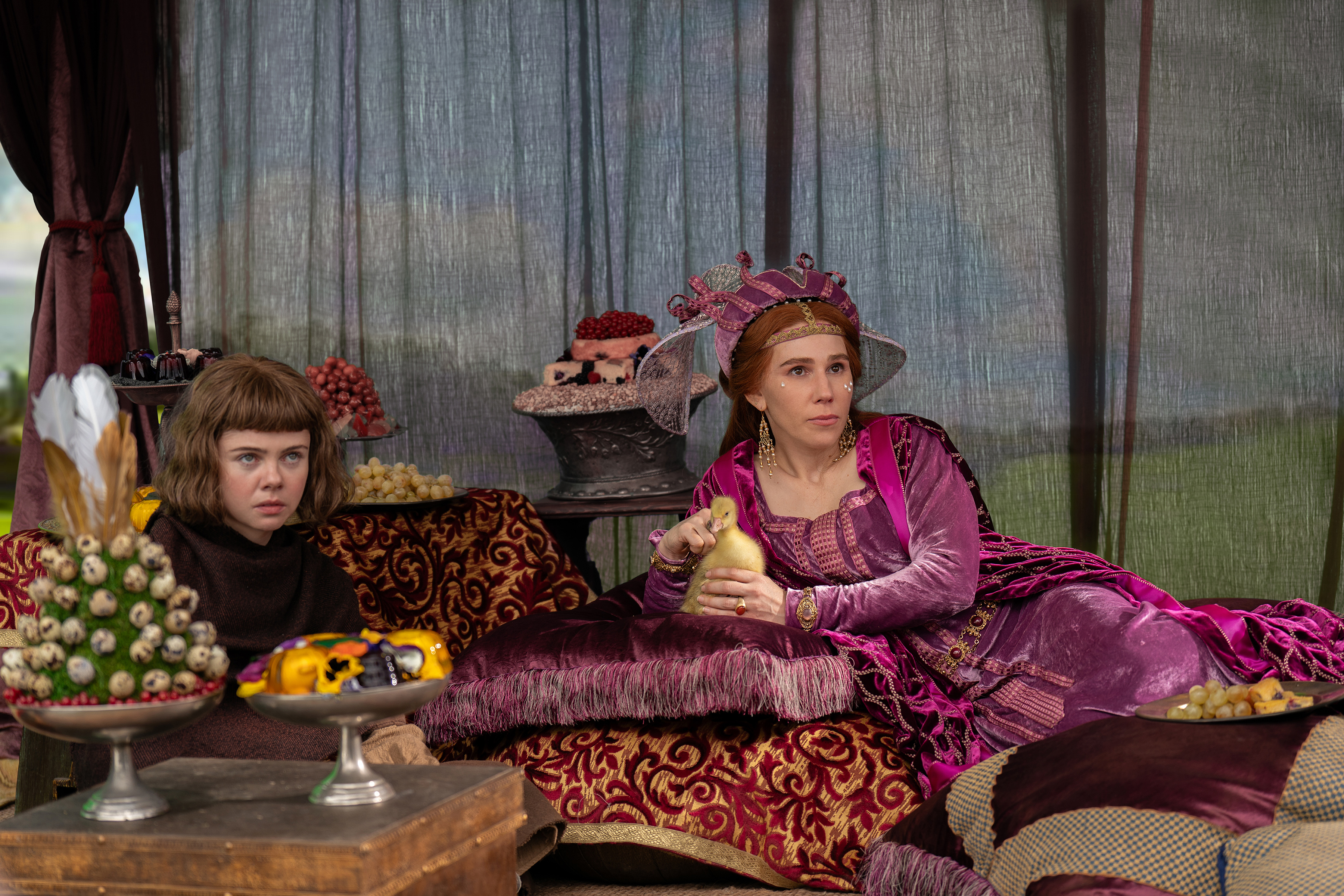
The Decameron is the most surprising TV show that I’ve watched in 2024. Because on the surface you think you know what it’s about. It’s a dark comedy set during the plague and the 1300s. The trailer screams that. And so does the poster and the images released by Netflix. But an episode in, you realize that this is more than a comedy. This is even more than a study of class, which was pointed out in the official synopsis for this show. The Decameron is a show about love. Romantic love, platonic love, familiar love. Just love. And by the time that you realize that this is what the show is about, you’re swept up in it and completely in love with the show itself.
So, let’s break down everything we loved about The Decameron, including its faults because even a show like this one has them.
Everyone was relatable in one way or another

I hated Pampinea and Leonardo’s friends. I even hated Tindari and Licisca herself from time to time. Nevertheless, there was something about each character that I couldn’t help connect with. Pampinea is the villain of The Decameron. That’s an undeniable fact. But I could understand her fight to survive. Her existence depended on a man that she had never met. So during tough times she did what she had to do. The same thing goes for Licisca. She was putting an impossible situation against an immovable object AKA her sister (but at that time owner) Filomena. And when push came to shove, she did the shoving and went along with this lie because she too wanted to survive.
Besides The Decameron being a story about love, I think that this relatability is the strongest part of the story. Because I can hate watch something with no problem. But it shows the strength of a character’s writing and overall season planning, if I connect with everyone. It’s especially more challenging as well when you take into account that there is a stark class issue within The Decameron. I can’t relate to the frivolity that these rich people are living in. I can connect with the servants easily because I’ve been a part of a lower class for my entire life. But it really says a lot about the writing team and the showrunner that while I’m laughing at the madness of it all and having a good time, I’m also understanding why some people do what they do especially when it feels like it’s the end of the world.
Then there’s the love of it all.

The most surprising part of The Decameron is that it’s a love story. There’s the love between two sisters where one is hiding the big secret of their parentage and when it comes out, destroys their bond but also allows a new one to emerge. Then there’s the love story between the married couple, which should be simple but it’s not. They don’t love each other romantically. But that doesn’t take away from the importance of their relationship or the strength that flows through this bond. There’s also the twisted and codependent love between a servant and a master who manipulates her so seamlessly that the servant finds herself torn between the familiar and a new exhilarating kind of love. You’ve even got a form of love that brings together such different people, and sees them die and survive for each other.
Despite the madness of The Decameron, the way that love was intricately woven into the story mix, is more relatable than a straight up drama about life. Because life is weird and twisted like this. It’s not all drama and misery. There are moments of humor, dark humor at that, and plenty of moments where joy and the complicated nature of humanity peaks through. We’re not perfect. And a drama like The Decameron is more honest about the varying level of emotions and experiences that we go through in our day-to-day existence. That’s why I think more people need to watch this show and why I was frankly baffled by the reviews that said the show didn’t know what it was. It did. It was the human experience. Messy bits and all.
Let’s not forget about the grief and loss.

Besides the relatability of The Decameron and its exploration of love, the show unapologetically delves into grief and loss. The plague is lingering all around them, leading them to head out to the country in the first place. But that grief and loss follows them because they carry it within. They can laugh as much as they want to, drink as much as they want to, and play as many games as they want to. But that doesn’t erase this looming presence of the plague or the fact that they’ve lost people and that it hurts. You see that in Misia with her dove, Sirisco with his boss Leonardo, and with Licisca and Filomena’s father. This grief and exploration of loss adds another element to the rich tapestry of The Decameron.
But out of all of the explorations of grief and loss, I think the one that hit me the most was what happened to Neifile and Panfilo. I didn’t think they loved each other. In fact, I thought it was a marriage of convenience that had no substance besides being begrudgingly stuck with each other. And when she gave in to her desires, I thought that was it. But color me surprised when they stopped lying to each other. They loved each other more than anyone in that villa. They knew each other’s faults, weaknesses, and secrets. But they chose each other nevertheless. That’s why I found myself devastated during her final moments, her death, and his sacrifice to be with her and save their friends. That was love and loss and grief tangled up together. And I regret zero of the tears that I shed for them.
Technical bits and bobs.

While I spent the most of this review for The Decameron talking about the writing and thematic choices that I loved, it’s important to note that that’s not all there is to love. This show has a cracking cast, from Sex Education’s Tanya Reynolds to Willow’s Amar Chadha-Patel and Derry Girls Saoirse-Monica Jackson. And within the confines of the show they explore romantic, toxic, platonic, and queer AF relationships while having a diverse cast that knows how to balance comedy with drama. Together, they do this seamlessly to the point where I mourned the loss of great characters because of the actors just as much as their story.
I also really enjoyed the location, the design, and the outfits. I would love to know where the villa is at, if the intricate shrubbery and paintings are real, and who designed all the headpieces. Mainstream media doesn’t give us enough of them and Queen Charlotte can’t be the only one leading the game when it comes to them. And because if there’s anything that history has taught me it’s that the past not having an outlet like technology, led to some crazy fashion and styles. You only saw a drop of that in this show but it was appreciated. The realness of them being dirty, hairy, and messy also helped. It made things feel even more real and like The Decameron took care of every single detail, no matter how small, when it came to creating this show.
The Decameron season 1 is available now on Netflix.
