
Sometimes a movie is a good movie, but a bad adaptation. In some ways, Matthieu Delaporte and Alexandre de La Patellière’s 2024 adaptation of the Alexandre Dumas classic The Count of Monte Cristo feels like it suffers from this very problem. And it’s hard to say that the movie is really bad, even though the 178-minute run-time is at least thirty minutes longer than the movie needs. That’s especially true considering how thin the characters truly end up being once it’s all said and done. But the movie is also not good. And that’s a real shame considering that for the first hour or so, it feels like the movie was as close to perfect as it could have been.
Pierre Niney is a superb Edmond Dantès, and the cast does their best with what is supposed to be the quintessential tale of revenge. And it ends up being a melodramatic and visually stunning look at what happens when you let revenge consume you. The problem, of course, is that all in all, this isn’t a satisfying story. Perhaps that would be okay if the movie had gotten lost while trying to recreate the book faithfully. But instead, the problem is that the movie got lost by deviating from the book.
“[…] it ends up being a melodramatic and visually stunning look at what happens when you let revenge consume you.”

Ironically, even though The Count of Monte Cristo is thought of as a tale of revenge, what makes the book work is that Dantès doesn’t just take revenge on those who wronged him. He also helps those who tried to help him. The movie, however, does away with every good deed from Dantès. This happens even though we get glimpses of those people and enough to tease that they might appear again. There’s no attempt at balance. And the idea of the futility of revenge isn’t explored the way it is in the book.
No, The Count of Monte Cristo is instead a two-dimensional story of a man who was wronged, learned some cool tricks, found a treasure, came back for revenge, got it, and then left on a boat to enjoy his riches. The end. Even the moment where he spares Fernand is painted as Dantès just wanting him to suffer more. He doesn’t deserve to die, so Edmond doesn’t kill him, that’s it.
There’s no lesson to be learned there, just as there’s no lesson to be learned from the losses he suffers, or the people he gets close to. Even Mercedes feels more like a means to an end than a character in her own right. And she’s the person he’s arguably closest to and cares the most about till the end. That’s arguably also true of Haydée, who exists here as a pawn for Edmond, as much as André does.
“[…] there’s no lesson to be learned from the losses he suffers, or the people he gets close to.”

One of the biggest lessons of The Count of Monte Cristo is that the pursuit of justice can sometimes cause injustice. And perhaps the best thing you can do for yourself is to let go of hate and focus on love. This adaptation foregoes that by depriving this version of Edmond Dantès of anything he can love. And instead, they make him a shell of the character Dumas created.
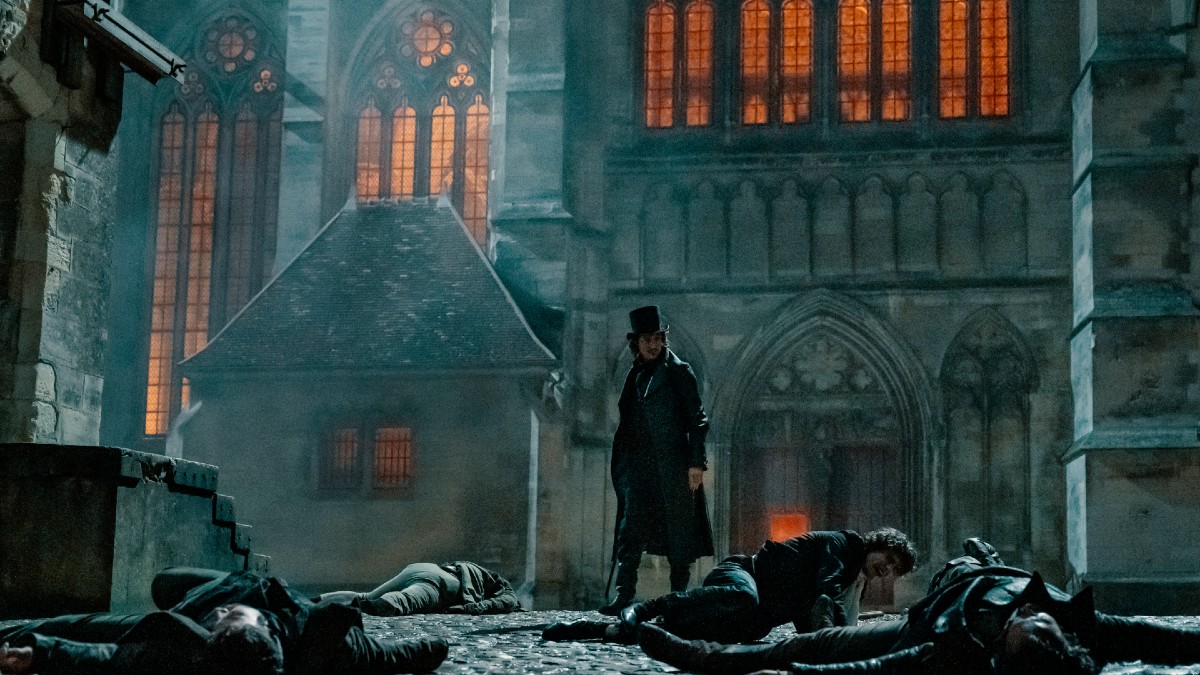
If we only focus on the cinematography, this might just be the best adaptation ever put on the screen. If we had to rank Pierre Niney against others who have played Edmond Dantès, he could come out on top. But a movie is more than visuals. And The Count of Monte Cristo fails as both an adaptation of a beloved classic and a movie about either revenge or forgiveness.
The movie ends with the famous line: “All human wisdom is contained in these two words: ‘Wait and Hope.'” But it feels strangely like there’s nothing to hope for. We will just have to keep waiting for the next adaptation. And perhaps that one will indeed get the point of this book.
The Count of Monte Cristo is in theaters now.

This is the first review I’ve read that sincerely makes sense. Even if the story isn’t faithful to the book, at least give us an idea that you know what the book is about, and why the book is so special. There’s no way the interaction between Abbe Faria and Dantes should be basically nothing but a means to escape and a means to treasure. If there was as much attention to the characters and the dialogue and the point of the story as there was to the cinematography, we’d have a great movie.
Instead, we have something of an action flick with zero character development. And for any movie in which Dantes picks up a sword to fight, we know the person who authored that scene didn’t appreciate the book.
It was refreshing reading your review because I was starting to wonder if I was losing my mind.
Maybe Tarantino should give us an adaptation. At least then we know the dialogue would be excellent.
Agreed. I feel like there was no need to change the storyline like that.