
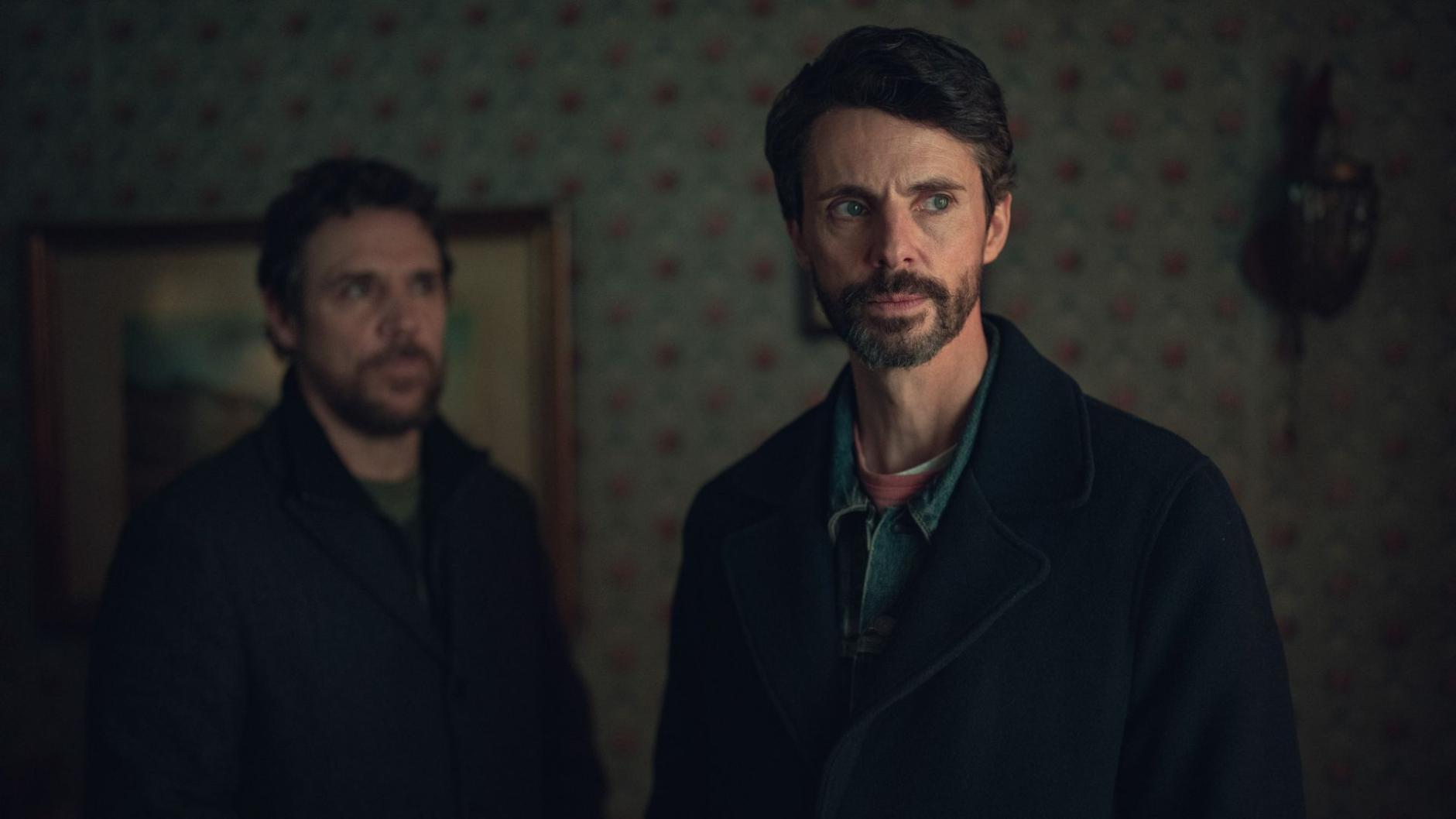
When Dept. Q drops on Netflix on May 29, 2025; many will meet for the very first time the convoluted genius of Detective Carl Morck, played by Matthew Goode. But fans of gritty Nordic noir are aware that this is not Morck’s first rodeo.
Adapted from the international bestselling crime novels by Danish author Jussi Adler-Olsen, Dept. Q has charmed readers through ten globally celebrated novels, starting with The Keeper of Lost Causes and finishing with the explosive Locked In.
The series takes the Copenhagen background of the books and transfers it to the gothic, foggy landscape of Edinburgh. Otherwise, the essence stays: Morck, an exhausted detective with a guilty conscience from a failed mission, is demoted to a cold case department (Department Q) where he’s supposed to become irrelevant.
Instead, he begins to solve the unsolvable.
As Dept. Q showrunner Scott Frank explained to Tudum that the story had been with him “for more than two decades,” adding, “There was just something about it… this notion of something called Department Q stayed with me.”
How Carl Morck Became a Cult Crime Hero

Adler-Olsen’s Department Q series began in 2007 with The Keeper of Lost Causes. They introduced readers to Carl Morck, a scandalized Copenhagen police detective who was healing from trauma, corruption, and grief.
Sent to a basement cubicle and teamed with ever-cheerful Assad (one of the major characters from the books), Morck starts opening cold cases. These aren’t enigmas either, the cases and books themselves. They’re dark examinations of guilt, authority, and social rot.
In the tenth (and last) book, Locked In, Carl himself gets jailed for crimes he never committed, and his faithful team must fight the system and time to get him exonerated. This redemption through dogged pursuit of truth has always kept Morck engrossing to his fans through the years.
As Penguin Random House outlines, Adler-Olsen’s series is “a thrilling conclusion” to a saga in which justice is intimate and aching.
Showrunner Frank has seized this rich source material and reapplied it through a Scottish filter. “Edinburgh has that combination of the modern and the medieval,” Frank explained. It was an ideal place for the dualities: past/present, light/dark. Frank penned all nine episodes himself, directing six of them, in order to maintain tone and plot consistency.
And when it comes to the lead, Goode said that he wasn’t the natural choice: “I wouldn’t have necessarily seen that in myself to play this kind of role.” Frank disagreed, however, saying that Goode would bring “undeniable intelligence with his flintiness” and “emotional depth without sentimentality.”
Dept. Q is a Meditation on Guilt and Redemption

At its core, Dept. Q has never been only about cold cases. It’s about how trauma lasts, how guilt eats away, and how redemption is always messy.
Netflix’s rendition seems to be trying to honor that sense of it, grounding Morck in a different environment but maintaining the thematic roughness that made the books a sensation. As Goode says, “It’s an incredible playpen for an actor.”
And for book lovers, there’s much to anticipate. Nine episodes for the first season might only cover the surface of Department Q’s blackest files. And if Netflix is willing to wait it out, we could quite literally get to see Carl Morck’s entire journey!
