
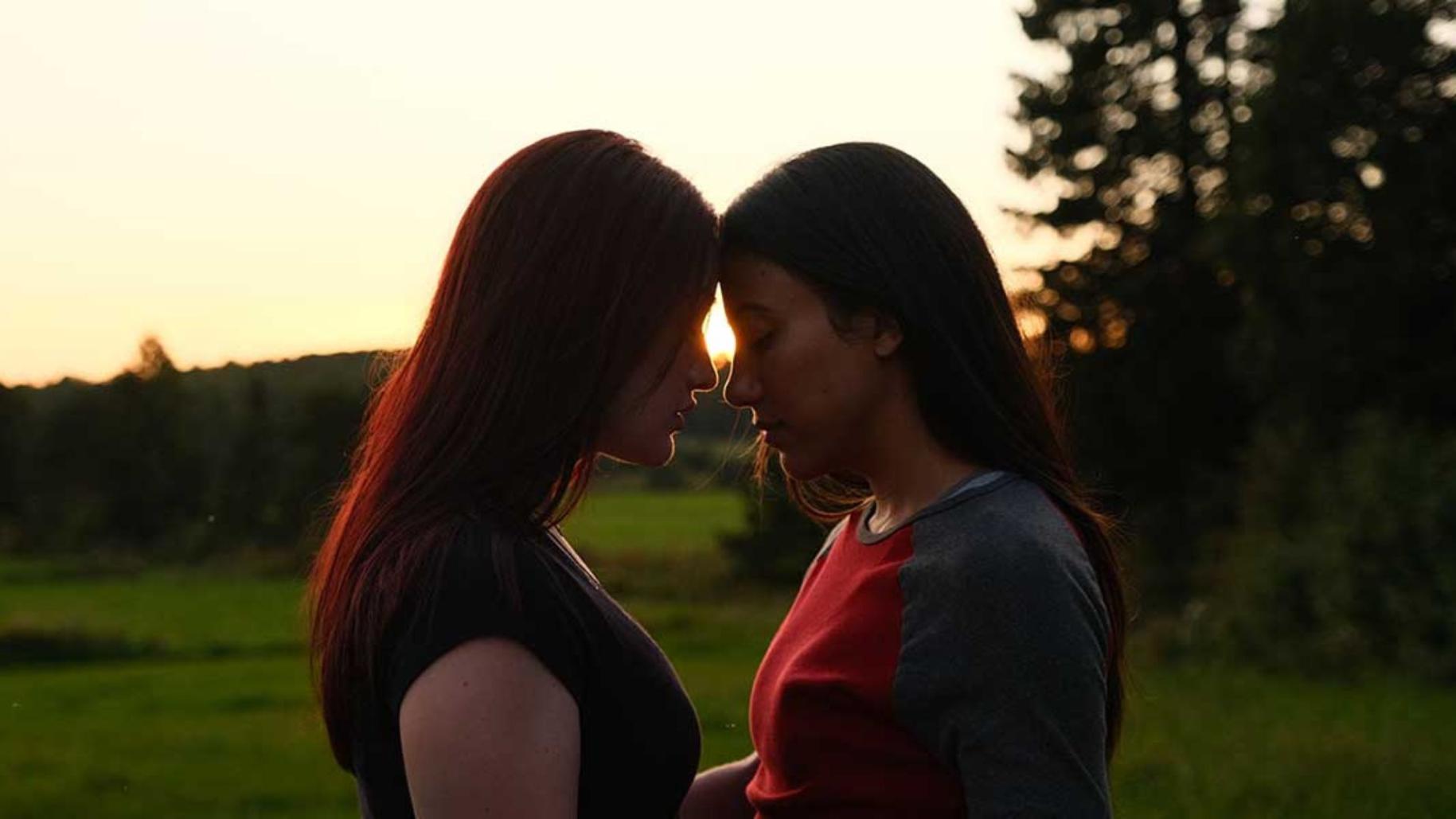
Blood Lines is a film about the simplest yet most complex concept we all have experienced in one form or another: what is family. Because everyone has their own definition of what family is. Some consider family as something strictly by blood. Others consider found family their family. And then there are those who don’t know who their families are because they were forcefully separated from them. And this entire story about family in Blood Lines is wrapped up in a Métis drama told through a queer lens.
First up we have Beatrice, she’s a young woman who begrudgingly accepts her mom Leonore back into her life. As she’s struggling with the complexities of the anger she still holds towards her mother, Beatrice meets Chani. This young woman is having family problems of her own as she has ended up in this town looking for her own relatives after being adopted. She’s one of the many children who were separated from their blood relatives forcefully by the government.
MORE: Love animation and queer stories? Read our review for Lesbian Space Princess here.

As Blood Lines moves along, Beatrice and Chani start a romantic relationship. And they face the problems coming at them together. Beatrice finds out her mother is sick and Chani is there, literally to hold her hand as she grapples with the concept of forgiving her mom and moving forward. And Beatrice is there for Chani as she tries to find her birth mother but also connect with a community that she never knew about or was allowed to be part of because of her adoption.
Blood Lines emphasizes the power of family and community not as a means of denying personal responsibility or the mistakes our families make along the way. It emphasizes family and community because humans are fallible and why carry hate in your heart when you can walk with joy in your life. And Dana Solomon, who plays Beatrice, beautifully brought that struggle to life in this film. You could see her struggling with her past while also embracing the advice from a cast of characters in her community that made this journey all the better. Her Beatrice was passionate, fun, and utterly human in the way she faced her lingering trauma.
Then there’s the lesbian romance of it all.
MORE: If Wednesday and Enid aren’t romantic, then why romantic shaped? We discuss.

We get to see Beatrice and Chani come together as they celebrate Métis culture in Blood Lines. Beatrice takes Chani to the spots that made her feel alive and safe but also the places that speak to who she is as a Métis. And it’s all shot in this beautiful manner that is quiet but purposeful and full of joy. The attention to detail when it comes to Beatrice and Chani also stopped me in my tracks to take in every single moment between them. That’s especially true when Beatrice and Chani shared intimate moments. Those shots were tender and treated with a level of respect, love, and light that I’ve only seen done between Shane and Ilya in Heated Rivalry.
This is where the major plot twist of Blood Lines comes in. Stop reading here if you don’t want to know.
To say I was bamboozled and a little angry that Beatrice and Chani were sisters is an understatement. I feel like it shook the very foundation of this film. And that’s coming after understanding that within indigenous communities, families were separated and you might not know who you’re related to out there. Nevertheless, I think making them half sisters takes away from the romance of it all and makes it so I’m not sure I’ll ever watch this movie again. Because there’s value in exploring different relationships and experiences. But instead of making this a lesbian romance it ended up being a lesbian tragedy.

Now I will say, I still think that Beatrice and Chani can be together. The movie was very intentional in having the elders talk to these young women about how they did nothing wrong because they didn’t know they were related. And Beatrice and Chani have conversations about how they don’t feel like they’re sisters. Plus people ship relatives on House of the Dragon. And they knew that they were related from the jump. Beatrice and Chani didn’t. They can still be together and the film hints at their connection still being alive in the closing shots of this film.
Overall, I enjoyed that Blood Lines made me step out of my understanding of what family is and experience a different community’s understanding based on their culture and the pains that come with being forcibly separated from your own. I just wish that the queer lens that we experienced this film through, didn’t take such a tragic yet ambiguous turn.
Blood Lines screened at the Santa Barbara International Film Festival.
Queerly Not Straight posts Saturdays on Fangirlish with opinion pieces, listicals, reviews, and more focused on the LGBT community. Posts are ONLY published on Fangirlish.
