
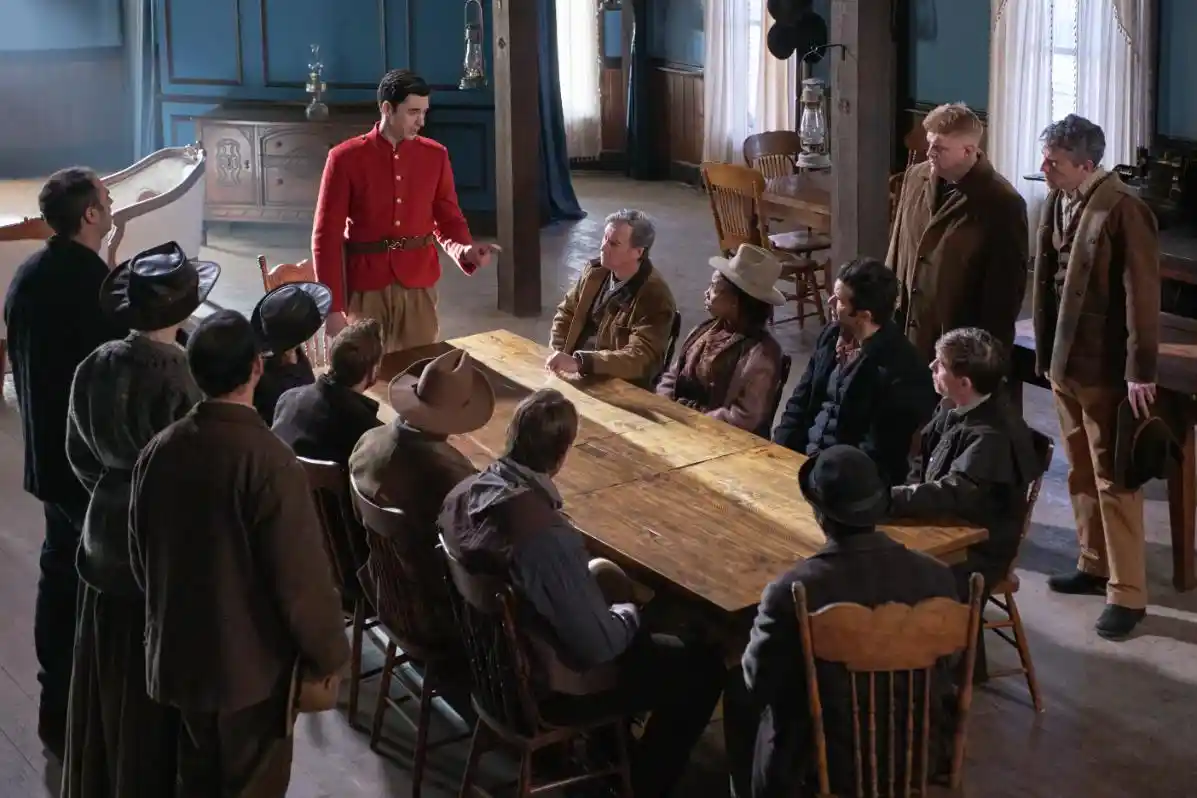
We’re already on episode six of Hope Valley: 1874, which feels wild considering how much ground the show has covered. This series continues to enthrall us in the way it builds its world—layering themes of community, legacy, and family with quieter moments of grief, resilience, and growth. This episode leans heavily into the idea of community—how it forms, how it’s tested, and what it requires from the people within it.
Those answers are never easy.
That said, the timeline remains a little unclear. With how much progress has been made on the boarding house, it feels like months have passed, even though context clues suggest otherwise. Ultimately, though, the exact passage of time matters less than what the episode is trying to convey: a town slowly finding its rhythm and structure.We’re in a town that is finding its way.

REBECCA, SARAH, & GRIEF
Rebecca remains one of the more complex characters in the series. She’s stubborn and guarded, but her motivation and the reasoning why she does everything that she does, it is always rooted in protecting Sarah.
The episode does a strong job of showing how grief complicates communication. Both Rebecca and Sarah are clearly hurting, but neither knows how to reach the other without causing more pain. There’s a quiet heaviness in the way they avoid the topic of Jims death and his upcoming birthday, even as it lingers over everything.
Sarah wanting to talk—but being afraid to—is one of the more effective emotional beats of the episode. She doesn’t want to hurt her Mom. It highlights how grief can isolate even the closest relationships.
Rebecca attempting to push through the day, only to physically collapse, is a clear signal that she hasn’t processed her loss. It also reinforces an important point: she’s not in a place to move forward romantically. Both she and Sarah need stability before anything else can take shape.
I say that as I know that my ship has set sail – Tom and Rebecca, you drew me in.

HATTIE STEALS THE SHOW
Hattie continues to be a standout. She is the moment.
While she can feel a bit inconsistent on the surface, this episode leans into her strengths—her loyalty, emotional intelligence, and ability to offer perspective when others can’t. She serves as a grounding force for Rebecca, often being the only person who can truly get through to her. They have that single Mom connection.
What makes Hattie compelling is the subtle vulnerability beneath her confidence. As she begins to open up more, it add to her character and makes her influence on others—especially Olivia—even more meaningful.
The ripple effect of her presence is clear. Olivia’s care for Sarah reflects what Hattie has taught her, and Hattie’s reminder to Rebecca that she isn’t alone as a single mother is one of the episode’s strongest moments.
The show would benefit from exploring Hattie’s backstory further. There’s clearly more there, and it would add even greater weight to her role in the community.

BUILDING THE BOARDING HOUSE
The boarding house continues to serve as a central symbol of progress for Hope Valley.
Clayton’s delivery of the handcrafted table stands out as a meaningful moment—not just because of the object itself, but because of what it represents. Each piece of furniture, each small step forward, reinforces the idea that something lasting is being built.
More importantly, the community’s involvement in helping Rebecca brings these moments to life. These scenes highlight the show’s greatest strength: its ability to make small acts feel significant. The collective effort speaks to a deeper sense of belonging and shared purpose.
This valley has become a community.

ALEXANDER: A QUESTIONABLE AUTHORITY
Alexander remains one of the more frustrating characters.
There’s a clear intention behind his actions—he’s committed, proactive, and eager to establish order—but his execution often undermines that. He has a tendency to impose decisions rather than collaborate, which creates tension. He is very judgemental.
His decision to move into the boarding house before it’s ready feels less like practicality and more like control, particularly given his apparent distrust of Rebecca. Even more concerning is his choice to use the boarding house as a space for legal rulings without consulting her.
The land dispute between Tom Moore and Doyle further complicates things. While his ruling in Tom’s favor may be justified, the reaction from the prospectors suggests larger conflict ahead. The scene effectively builds tension, hinting at instability within the town.
To his credit, Alexander does show some respect for Rebecca by removing those who disrespect her space—but moments like this feel more reactive than reflective of a consistent approach.

LARS AND THE COST OF FAILURE
Lars’ storyline brings a grounded, emotional weight to the episode.
His struggle to provide for his family—and his growing belief that he’s failing—feels painfully real. The fact that nothing he tries seems to work only deepens that sense of defeat.
His decision to leave is understandable, even if it’s difficult to watch. What makes this storyline effective is the contrast between how Lars sees himself and how the community sees him.
Rebecca stepping in to offer support is a defining moment. By giving his family room and board in exchange for help, she not only provides practical assistance but reinforces the idea that community means showing up for one another in tangible ways.
It’s a risk for her, but one that aligns with the values the show continues to emphasize.

FINAL NOTE
Olivia’s drawing of Rebecca and Sarah, initially comes across as an innocent moment—an example of a child expressing what she sees without understanding the larger implications.
And there are a lot of larger implications coming.
The appearance of that drawing in a Chicago newspaper introduces a potential complication. With Sarah’s grandparents now likely to see it, the show sets up a new layer of tension that could have significant consequences moving forward.
Are they going to come after Sarah?
