
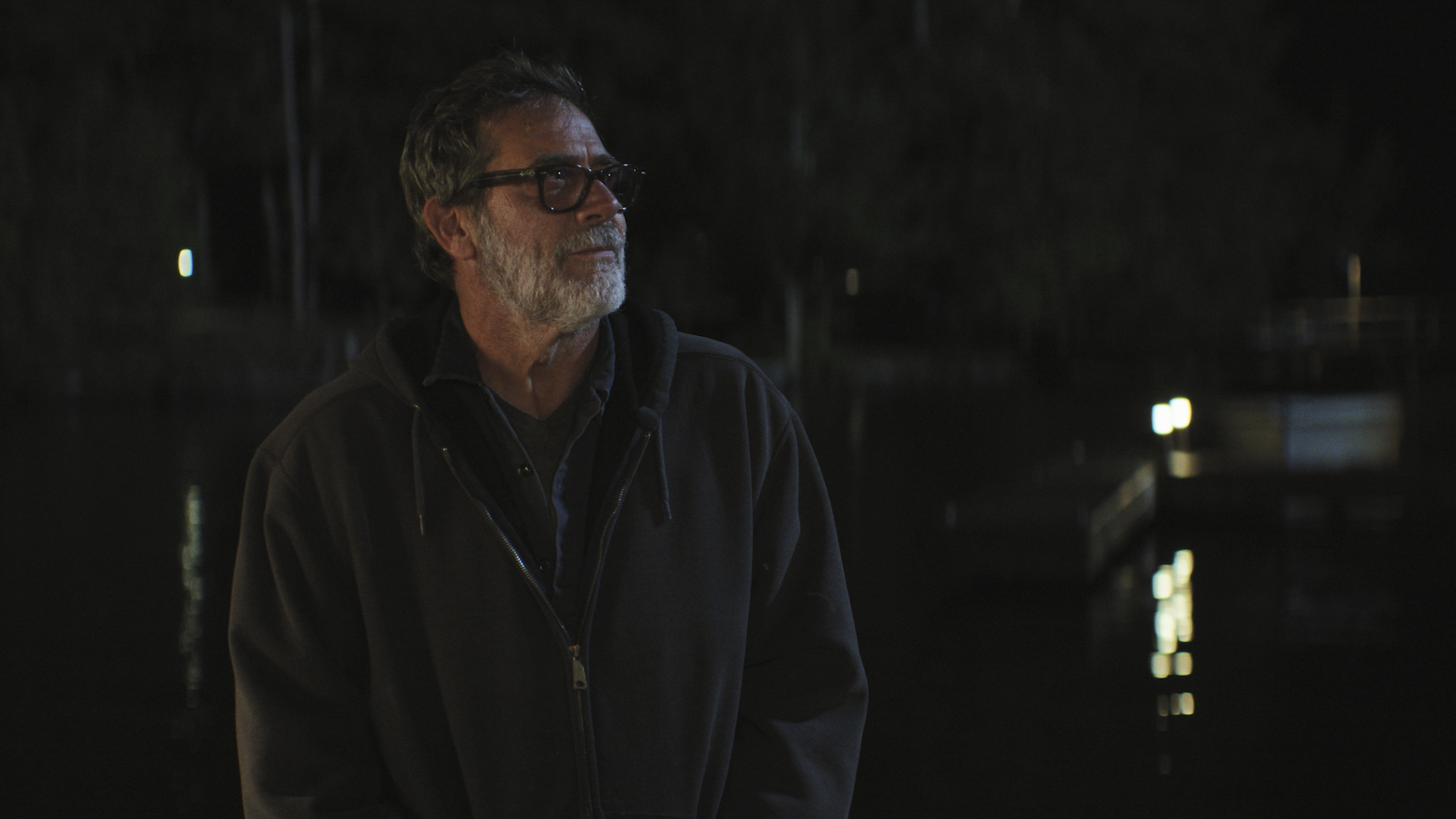
Always Wake Me…
There is a very specific kind of quiet that follows a night you weren’t ready for — the kind where the sun feels too loud and your own heartbeat sounds like a confession. It’s not the sound of regret per say, it’s the sound of your head and your heart questioning choices you’ve made. That is exactly where we pick up this episode, and honestly, it might be one of the most emotionally loaded hours Sterling Point has given us yet. Underneath all the boat rides and camp sing-alongs, this episode is really about one question: who are you when the people who made you have been lying about who they are the whole time?
Running From the Morning, Not From Him
Annie wakes up in Rory’s bed and the first instinct her body has isn’t affection, it’s flight. She wants to run. Not from him exactly — from the version of herself that stayed, that let herself want something, that woke up soft in someone else’s sheets. I am not sure that she regrets her choice to sleep with him, but maybe it’s the lies she told in the heat of the moment. She tiptoes out so carefully, so quietly, and it’s almost sweet that Rory sleeps through it, because it means she gets a clean exit. Except nothing about this summer lets her have a clean exit.
Her dad is walking up the stairs from the dock. Of all people, of all mornings.
There’s something almost funny, in a stomach-drop kind of way, about her dad asking “wait, are you staying here?” like he’s the one who’s owed information right now. Denise didn’t tell him. He didn’t know. And Annie, half a girl still catching her breath from the night before, just goes “nope, nope” like she can deny her way out of a body that is very clearly still there, in his line of sight, at his daughter’s boyfriend’s family cottage.
GET ME OUT OF HERE
Ellis swoops in as Annie grabs his hand for an escape and keeps telling her Dad they’ll talk later. Her dad’s “when? you won’t answer any of my calls” lands with this quiet, wounded authority that doesn’t even get to finish being felt because Annie is already dunking down inthe boat with Ellis asking him to drive, drive, drive. She cannot be in that conversation with her father. Not yet. Maybe not ever, if she had it her way.
What I love — and I say love loosely, because this is a heavy scene — is that her dad doesn’t chase her down demanding answers on the dock. He lets her go. He knows she’s upset and there is nothing he can do about it at that moment, and that restraint says almost as much about him as anything he’ll say later this episode. He’s a man who has learned, the hard way, that you cannot force someone to talk before they’re ready. Though we’re not sure it will always be that way. While we’re wondering if Steven has wisdom or just exhaustion is honestly the whole emotional question of his character right now.
SISTERLY CONFESSIONS
But Annie’s moment? Well that involves vomiting over the side of the boat. Which, yes, is played almost for comedy — “look away, look away” — but it’s also just Annie’s body doing what her mind can’t: purging something. She walks into the house looking rough and Annie lets her know that there was “too many shots.” Except that’s not really the whole story, is it. It never is with her.
What actually happened is that Annie tells Ramona she slept with Ellis. She wanted to say it – to admit it to someone. However there is this undercurrent of dread threading through it because Annie doesn’t live in the world of on-a-whim. I think that is part of her regret and fear over what happened. She didn’t plan it. Everything about her is engineered, scheduled, controlled — and giving herself over to a spontaneous, messy, human moment terrifies her almost as much as it thrilled her.
Then there’s the lie underneath the lie: she told Rory she’d had sex “many times” when in truth, he was the first. That detail hit me because it’s such a specific, particular kind of self-protection – the instinct to seem experienced, when actually you are cracked wide open by something that mattered more than you let on. Annie performs composure the way other people perform confidence. It’s armor. It’s also kind of heartbreaking.
SISTERS KNOW WHAT TO SAY, RIGHT?
Ramona tries to soothe her, but Annie is — and I say this with affection — a lot. High maintenance in the way people are when they’ve never let themselves be anything less than in control. So instead of calming her down, Ramona goes introspective instead, and gives her this genuinely lovely piece of insight: you’ve changed so much this summer. You came here afraid. Now you’re looser, you don’t plan everything, you just live a little. And then, laughing, almost teasingly — “you’re a whore” — the kind of sisterly insult that’s actually a compliment wrapped in love.
Annie stops. Looks at her. Who are you? When did you get so wise?
Ramona’s answer is one word and it says everything: Oona happened.
ADMISSIONS
Which, obviously, sends Annie straight into “wait, did we lose our virginity on the same night?” and Ramona, delighted and a little smug, clarifies she’s classier than that — no first-date business for her. Annie would have been so excited if they did. Another thing for them to bond over. But Annie does admit something quieter underneath the jokes: it hurt. They used a condom. She didn’t really know what she was doing. She just went with the vibe.
There is something so tender and so real about that admission. Not the sex itself, but the not-knowing. The going with a vibe because nobody ever taught her how to just be, how to want something without a five-year plan attached to it. This is a girl who scheduled her own annual exams for her birthday because nobody else was going to do it for her. Of course she doesn’t know how to be reckless. She’s spent her whole life being the responsible one.
For a moment – Annie let herself live. She wasn’t just existing. She was living.
THE OONA OF IT ALL
Meanwhile, Oona and Ramona are finally, finally together, and it is written with so much tenderness. When Oona’s hand starts moving up under Ramona’s shirt, Ramona stops her. Not because she doesn’t want it, but because she’s embarrassed, insecure about her body in a way we’re never fully told the origin of, and honestly, we don’t need the backstory to feel the ache of it.
She whispers it to Oona, and Oona’s response is exactly what you want to hear in that moment: you don’t have to be embarrassed about anything with me, I’m fiercely attracted to you, it doesn’t matter. And Ramona, tests the ground, goes “I bet you say that to all the girls,” because vulnerability is scary and deflection is easier. Oona just looks at her, genuinely confused, like — what other girls, Ramona? There’s no one else. There’s just this.
There is just this moment and this relationship that they’ve both been working towards.Honestly, this felt overdue in the best way – these two people who’ve been circling each other finally landing somewhere soft.
CHANGE
Downstairs, Annie stands in front of a mirror, hair up, studying herself like she’s looking for evidence. Like sex should have changed something visible, something she could point to and say there, that’s different now. But she can’t find it. Because the change isn’t in the mirror. It’s underneath — somewhere she can’t see yet, somewhere it hasn’t caught up to her.
She heads to Rory, where he is waiting to check on her. There’s this soft, slightly clumsy tenderness to their morning-after conversation between these two.
She’s there for a dinner with her Dad, and inquires how he’s been. Rory tells her he’s fine, barely talks and his dad barely talks, maybe eight times in his whole life, and there’s a small laugh between them that eases some of the tension. She thanks him for letting her weird, complicated family invade his space for dinner. He, however wants something different to talk about.
He looks at her and says, quietly, you didn’t say goodbye this morning.
I didn’t want to wake you, she says.
Always wake me, he says. And I don’t know about you, but I believe him.
That’s it. That’s the whole scene. And it lands like a gut-punch of romance because it’s not dramatic, it’s not a grand declaration — it’s just a boy telling a girl that he wants her there even in the unglamorous, half-asleep, morning-breath moments. That he’d rather be woken than miss her leaving. It’s such a small thing to say and such a big thing to mean.
FAMILY DINNER, ANYONE?
And then, the dinner. Oh, the dinner.
Their dad is visibly struggling — choking on food, being reminded to drink water, not knowing where to even begin. Annie, unflinching, tells him he can start with an apology. Connor, more combustible, goes straight for the jugular: you didn’t tell us we have a twenty-two-point-seven-million-dollar island.
Which, fair, Connor’s anger about being left out of the loop is completely valid even if the timing is spectacularly wrong. There are bigger wounds in this room than real estate, and their dad rightly (if a little cowardly) tries to table it. Connor excuses himself for air, because some things you just cannot sit still for.
THE THINGS THEY NEVER KNEW
Then the real story comes out. Their dad didn’t tell them about Ramona because telling them meant telling them about the affair, and that was already more than he could bear to hand his kids. Life in New York had been hard on him and Goldie and they separated. He was in New York, she was in Canada. He swears it was a trial separation.
Then the call came about Annie and Connor’s and it was everything they’d wanted, so they tried to make it work. But Goldie refused to come back to New York. She wanted to stay in Canada, and she wouldn’t return the kids either, so their dad got a lawyer and legally secured custody. He went to Canada to move them to New York, the agreed-upon place. He’s careful, almost desperate, to clarify: he didn’t take them away from her. Everything had been on the table. He just couldn’t live in Canada, and she couldn’t leave it.
This is the part where Sterling Point does something I think is genuinely smart, it refuses to make either parent a clean villain. Goldie wasn’t a monster for wanting to stay somewhere she felt like herself. Their dad wasn’t a monster for wanting his children close. They were just two people who could not want the same life at the same time.
Then Annie asks if he knew about the affair with Joe. Steven is even more careful – asking who told her. Connor is blindsided — wait, what? Annie admits she and Ellis just found out, and pleads with everyone not to tell Ramona, because she’s finally happy and cannot handle another bombshell right now.
And then Connor, putting the pieces together in real time, drops the sentence that reframes the entire season: wait, you can’t be with Ellis then — that’s basically incest.
CONNOR IS CONFUSING
And I can’t help but think that Connor doesn’t understand life and how it works. It’s not incest. Ellis is Joe’s kid, yes. Which makes him Ramona’s half-brother. Yes, Joe was the man Goldie makes her Dad feel strange. Whatever is or isn’t happening between Annie and Ellis deeply, uncomfortably complicated — not in a scandalous way, but in a way that just adds another layer of “we are all more entangled than we realized” to a summer that was supposed to be simple.
Their dad, predictably, flips into protective-father mode and tells Annie she cannot be with Ellis, cannot even hang around him. And it is almost unbearably unfair, because this is a man who withheld the entire truth of their family for years and is now trying to hand down rules based on a truth he only shared moments ago.
Annie calls this out directly and beautifully: do you not hear what you’re saying? Do you not hear how it sounds? What I’m hearing is that Mom was a woman who wasn’t happy in her marriage, wasn’t happy in her job, and came up here to figure herself out — and how is that not okay?
This, to me, is the emotional backbone of the whole episode. Annie isn’t really asking about her mother. She’s asking about herself. She’s watching a woman who left everything behind to go find out who she actually was, outside of a marriage, outside of a role, outside of what everyone expected — and some part of Annie recognizes that drive in her own chest. She wants to be somewhere unplanned. To be reckless and not have an itinerary. She’s not only defending her mother’s choices so much as she’s defending her own right to eventually make some of her own.
Her dad loses it. Yells that Goldie lost her mind up here. And Annie, tears in her eyes but composed in that specific way she always is, just says: thank you for coming up here to apologize. That was a stunning performance. And walks out.
the Mothering We Give Each Other
Annie, sad and defeated at the kitchen table, gets pulled by Oona into something lighter — a trip to Maple Camp to see Maple’s talent show. She resists, then gives in, and it turns out to be exactly the kind of gentle chaos she needed. Maple actually has a voice, genuinely good, and the whole room stands for her.
They end up staying the night, and in one of the quietest, most quietly moving scenes of the episode, Maple casually mentions she got her period this week, right alongside capture the flag and whatever else happened at camp. And Oona doesn’t let it pass by as a footnote — she stops everything and says this needs to be celebrated. She makes her sister a crown. She holds a little ceremony. She makes a whole beautiful deal out of it.
At first it reads almost as too much, a little performative even. But then it clicks: Oona is trying to be the mother Maple doesn’t have, in the exact moment a girl most needs that kind of witnessing. Getting your period is not supposed to be some clinical, silent, shameful thing you just absorb alone — it’s supposed to be seen, marked, honored. Oona is giving her sister the softness nobody gave either of them. That’s not a small gesture. That’s generational repair, happening in real time, in a camp cabin, with flowers.
the Almost-Kiss That Wasn’t the Point
Later, walking Maple back to her cabin, there’s a piggyback ride, and Ellis is there — Maple, characteristically blunt, tells them not to make it weird before disappearing inside, leaving Annie and Ellis standing there in the cold, dancing around everything that’s unsaid.
They talk about how strange it is to be near Ramona and say nothing. Ellis insists it’s his dad’s responsibility to tell her, not theirs — he’s the adult, he should own it. Annie, flustered, blurts that she isn’t dating Rory, but kind of is, but kind of isn’t — a genuinely accurate description of a love triangle nobody signed up for — and then, almost daring herself, asks if he would care if she was.
I’m sorry, don’t answer that, she says immediately.
I can’t tell if you hate me all the time, she admits.
And he says: I can’t think of one thing I don’t like about you.
Really? she asks, and there’s this beautiful, fragile hope in it. It’s a phrase that wee would all want to hear – to be perfect to someone.
They step closer. And then – Annie stops what seems like it is a connection with should we go inside, it’s cold – and honestly, as much as I wanted the kiss, I think the almost doing more work here. There is so much unresolved wreckage underneath them – the Joe of it all, the half-sibling complications, the secrets still buried – that closing that distance right now would almost feel dishonest. The show knows there’s more pain coming before there can be anything real between them, and it makes the tension so much more aching for it.
Joe, the Punch, and a Wound That Never Closed
While the kids are away at camp, Annie’s dad goes looking for them at the cottage, finds it empty, and instead finds photographs of Goldie sitting out on a desk. Something in that image sends him straight to the marina, to Joe, even though nothing about this confrontation seems planned or wise.
He tells Joe he came to get his kids out of there, that they don’t need to be around this — around him, around the wreckage of what happened. He suggests that Goldie coming up here and refusing to leave was, in some way, evidence that she’d lost herself. Joe’s response cuts deep: the fact that what happened to her doesn’t eat you up every single day is honestly kind of insane.
There is something that is sharp and cutting about the way that they both see her struggles differently. They both loved her, but in ways that were so different and so possessive that they both can’t see beyond their mistakes.
Joe is not over it. Not over her, not over any of it. When Steven accuses him of ruining lives, of not even raising his own daughter, Joe pushes back, and it becomes clear that we still don’t have the full picture of why Joe wasn’t in Ramona’s life the way he should have been. That gap in the story feels intentional — a wound the show is clearly saving for later, and I am desperate for that reveal.
Their dad gets angry enough that Joe throws a punch and — I’ll be honest — it was satisfying. Not because violence solves anything, but because there’s something almost cathartic about watching two men who have spent decades avoiding an honest conversation finally hit a wall they can’t talk their way around.
Before walking off, their dad tells Joe to relay a message to Ellis: whatever is happening between him and Annie needs to end. And also, more bluntly: an unfiltered “screw you” that tells you exactly how raw this whole thing still is for him.
Both have wounds that are raw and open.
Childhoods We Can’t Remember
Back at camp, Ramona and Oona share a quiet moment about being there for each other, and there’s something steadying in watching two people commit to holding each other up. I hope, genuinely, that they get to keep balancing each other like that.
In another cabin, Maple confesses to Annie that it feels like her childhood is over, and Annie — gently, imperfectly — tries to convince her otherwise. It’s not an easy sell. Everything is shifting, and the person who should be there for Maple through it, her mother, simply isn’t. Maple asks, almost offhandedly, when does Delta end — and it’s such a small, sleepy question that somehow carries the entire weight of a kid who is growing up faster than anyone is helping her process.
Watching all this, something breaks open in Annie. She excuses herself to get air, and Ellis — who has been quietly watching her be so wonderful with Maple all episode — follows.
He asks if she’s okay.
She isn’t, not really. She admits she doesn’t even remember getting her own period. There’s this whole category of formative, defining childhood moments that she simply cannot access, cannot go back and reclaim, and she doesn’t want to be angry about that, but she is, a little, and she’s letting herself be. She knows nothing is going to fix that gap. Nobody can hand her back the memories she doesn’t have.
HE DOESN’T TRY TO SOLVE IT
Ellis doesn’t try to solve it. He just listens, because listening is genuinely all he has to offer, and honestly, that’s enough. Annie unravels completely — talking about never having a real childhood, about trying to hold her dad and brother together, about scheduling her own annual exams every year on her own birthday because no one else was going to do it. About wishing she could just go sit in a closet the way she used to at home, when things got too loud inside her.
She’s embarrassed the second it’s all out. But he sits down beside her and tells her she doesn’t need to be fixed. She isn’t broken. She just needs to be fixed, she says — and he says, no, seriously, she doesn’t. And she looks up at him and believes it, at least for a moment, and that belief is its own kind of love.
This, more than any romantic beat this episode, is the heart of Annie’s arc. She has spent her whole life being the responsible one, the planner, the fixer of everyone else’s chaos — and what she actually needs is someone to tell her she was never the problem to begin with.
Old Wounds, New Truths
Back at Denise’s, their dad gets ice for his eye while Denise pushes him to call his shark of a lawyer — except he insists the only calls that matter are the ones to his kids, telling them they’re not Canadian, that they need to come home to New York with him. Denise, gently but firmly, tells him: she’s been dead a long time, you have to bury her. It’s such a quiet, devastating line — not literal death, but the death of the life he thought he’d have with Goldie, the death of the version of their family that could have existed if things had gone differently. He can’t let go because he can’t understand why he wasn’t enough for her to stay.
That night, on the beach, Annie asks Ellis to tell her a story so she can fall asleep. He says he’s not good at stories, but he can walk her through how to build a canoe instead. And somehow, that becomes the most soothing thing anyone has offered her all summer — not grand romance, just steady, patient, practical care, delivered so gently that she finally lets herself rest.
Meanwhile, Joe sits at a table when his wife slides a mixtape closer to him and asks where he found it. Ellis left it out, apparently for him. She doesn’t let him dodge — is that really the first thing you’re going to say — and pushes him on whether he was going to leave her for Goldie back when Goldie was away, pregnant, with their child. He can’t quite articulate an answer. You got the life you wanted, I got the life I wanted, he says, like that resolves anything. When she finally asks if Ramona is his, the show doesn’t need to confirm it out loud — we already know. But it needs to be said. Ramona deserves the truth more than anyone in this story, and she is the one who has been given the least of it.
The Reunion, and the Fracture That Follows
Annie, walking alone, runs into Ramona, who has made her a period crown of flowers — an echo of the ceremony she gave Maple, extended now to her own sister. Annie is quietly overwhelmed by it. They talk about the childhood they never got to share, the sibling fights and shared chaos that never happened between them, and how even though it would have been messy, it would have been theirs.
I feel like I never even had her, Annie admits, about their mother.
I feel like I did, Ramona says. Because I have you.
It’s the moment Annie has been aching for all season without saying it out loud, and when they hug, it’s earned in every sense.
But the peace doesn’t last. Back at the cottage. Steven and Denise are waiting with Connor. Annie notices the bruise on their dad’s face — Joe, Connor explains — and Ramona turns to their dad with something sharp underneath her voice: thanks for keeping me and my siblings apart for so long. Denise pushes him to finally tell her everything, and when he hesitates, it’s Denise herself who breaks it: Joe is your father, Ramona.
Annie knew. Ellis knew. They didn’t tell Ramona.
That’s the betrayal that actually lands, in the end. Not the affair itself, not even the parentage — but the silence. Ramona had asked for exactly one thing: no more secrets, no more bombshells. And here was one more, sitting quietly in the people closest to her the entire time.
Devastated, she asks if Joe knew, and before anyone can answer, she runs. Oona goes after her — a sharp, furious “screw all of you” trailing behind — but Ramona is already gone, back on the boat, alone, and something tells me this is not going to end gently.
WHAT I CAN’T STOP THINKING ABOUT
What makes this episode work, underneath all the summer-camp softness and slow-burn romance, is that every single character is quietly asking the same question: who am I, once I know the truth of where I come from? Annie is discovering that being “the responsible one” was never a personality, it was a coping mechanism. Ramona is learning that happiness built on a foundation of hidden truths is never actually stable. Maple is losing a childhood she barely got to have. And Steven — flawed, stubborn, grieving a version of a life he never got — is only now realizing that withholding the truth to protect his kids just meant handing them a harder truth later, more painful than he thought it would be.
Sterling Point keeps insisting that finding yourself and untangling your family are never separate journeys. They are interconnected. They live in you very being and find any person questioning the past and searching for a way to firmly plant a foundation. You cannot know who you are without knowing where you came from, even when where you came from is complicated, painful, and built on things nobody wanted to say out loud.
In between all that heaviness, the show still makes room for period crowns, canoe-building bedtime stories, and a boy who tells a girl to always wake him. That’s the balance this show does so well — the pain and the tenderness, existing side by side, refusing to cancel each other out.
ALL STERLING POINT REVIEWS
- Sterling Point Season 1, Episode 1 Review: The Girl Who Had a Plan for Everything Except This
- Sterling Point, Season 1, Episode 2 Review: The Sister She Didn’t Know to Miss
- Sterling Point, Season 1, Episode 3 Review: What Ramona Was Willing to Let Go Of (and What Annie Couldn’t)
- Sterling Point Season 1, Episode 4 Review: Everybody Wants To Keep the Island, Nobody Agrees On Why
- Sterling Point Season 1, Episode 5 Review: A Camp Rock Birthday
- Sterling Point Season 1, Episode 6: The Morning After, The Truths We Can’t Outrun
- Sterling Point Season 1, Episode 7: Whose Daughter Am I, Really
- Sterling Point Season 1, Episode 8: The Island Doesn’t Let You Leave Easy
