
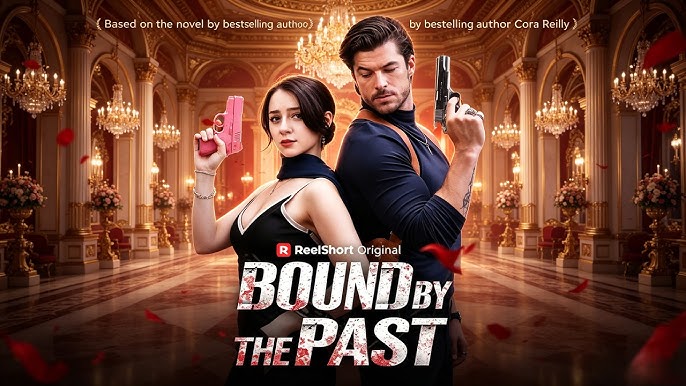
Valentina and Dante Cavallaro are interesting characters.
I want to lead with that, because everything I’m about to say comes from caring about them. When ReelShort announced a sequel to Bound By Duty, I expected something as good as the first one. What we got instead was 33 episodes that felt like a ploy to make money rather than a chance to give fans of the books something to latch onto — something where they’d find what they loved actually brought to the screen.
And that’s a harder thing to sit with than a flat-out bad drama. A bad one you dismiss. This one has real material in it and keeps declining to use it.
What’s there, and what isn’t
What we do have is partially expected. Mafia wars, family dynamics, chaos. All present, all functional.
What’s missing is the heart of the story.
The flashbacks from the book that showed us who Dante was. The circumstances that shaped him into that man. The things he wishes he could change.
And I think that omission tells you exactly what got prioritized in the adaptation, because flashbacks are the most expensive thing you can put in a vertical. Different locations, younger casting, a break in the forward momentum the format lives on. They’re the first thing cut when the goal is volume rather than fidelity. But in Dante’s case they weren’t decoration. They were the load-bearing wall. Cut them and the plot still stands — the man doesn’t.
Dante, unrecognizable
Dante comes across as cold and selfish here.
He doesn’t feel like a man who would defy the outfit for his family. He feels like a man who would betray his family for the outfit. Which is the exact inversion of the character, and it isn’t a small drift — it’s the opposite reading of who he is.
He doesn’t feel like the man from the books, and honestly, that’s okay. Adaptations change people. I’ve never needed a one-to-one translation.
What isn’t okay is changing him without giving me a reason to believe the new version. Because the same actions can read completely differently depending on what you know about the man performing them. Duty at enormous personal cost is tragic. Duty with no visible cost is just careerism. The behavior didn’t change between the book and this. The interiority did, and interiority is the only thing that tells an audience how to feel about a man who does terrible things.
The tension they smoothed out
But what genuinely confused me is the choice they made with Dante and Val’s relationship — to make it feel less distant.
Because that distance was the point. Taking it out removes the exact thing that made them complex.
The drama, the chaos of their relationship — that’s what made them interesting. Here there’s one instance of real tension and then they spend the rest of it more or less on the same page.
And a couple on the same page has nowhere to go. That’s the structural problem underneath the creative one. A married couple in agreement can only react to external threats, which is presumably why we get so much mafia war — the plot has to come from outside because it can no longer come from between them. The first story generated conflict from two people negotiating a marriage neither of them chose. This one has resolved that negotiation offscreen and then has to import danger to fill the space.
It’s a strange thing to do to a couple whose entire appeal was the gap between them. The reaching across the distance was the romance. Close the distance and you haven’t given the audience intimacy. You’ve given them nothing left to want.
An absentee husband and father
Dante Cavallaro is complex.
I know from the first drama that he’s committed to the mafia, and he continues that here. What drives me insane is how hard it is to understand why he’s like this.
In the books he was easier to understand, because we got the backstory, and the backstory made his actions make sense. Not excusable — legible. There’s a difference, and legibility is what makes a difficult man worth watching.
An absentee husband and father is one of the hardest characters to keep sympathetic, and the only tool that works is showing the audience what the absence costs him. Without that, he’s just a man who chooses work over the people who need him, repeatedly, on camera. We’re being asked to root for a marriage while being shown no evidence that one half of it is invested. That’s not moral ambiguity. That’s a gap in the writing where a person should be.
And Valentina deserved better
What’s also missing is learning anything more about Valentina.
She’s been a mystery this whole time, and her backstory matters — it’s tied directly to who she is, the choices she’s made, and how she thinks.
This is the part that frustrates me most, honestly, because a sequel is precisely where you’d address it. The first installment could reasonably keep her opaque; we were meeting her, and mystery was doing work. But 33 more episodes with the same withholding isn’t mystery anymore. It’s a character who hasn’t been written past her function.
And it compounds the Dante problem rather than balancing it. If we understood Val — what she was raised to expect, what she’s already survived, what she believes a marriage is supposed to cost — then his distance would land differently, because we’d be measuring it against her expectations instead of ours. Her interiority could have carried the whole thing. Instead both leads are surfaces, and a romance built out of two surfaces has no friction, which brings us right back to why there’s only one real moment of tension in 33 episodes.
Dante and his daughter
What really gets me is Dante’s attitude toward his daughter.
He comes across as a father who hasn’t grown at all — unreasonable, and neglectful of her. And don’t get me wrong, he knows to protect her. That instinct is fully intact.
But it never feels like it comes from love. It comes from duty.
Which is such a specific and recognizable failure, and it’s the one thing this sequel accidentally captures well. Protection and love look identical from the outside. Both involve keeping someone alive. The difference is entirely in what the protector is actually attending to — the person, or the obligation. Dante is attending to the obligation. He has a daughter the way he has a territory.
The gun
Him giving her a gun feels like a man who doesn’t know who his kid is.
He isn’t thinking about her safety when he buys it. He’s thinking about the life he lived, and he never once considers how his own actions might be the thing that hurts her.
He tries to process life in mafia black and white. He doesn’t stop to think about how a gun for an eight-year-old is so deeply wrong.
And that scene is the whole character in one object, which is why it bothers me that the show doesn’t seem to know that. A gun is a solution to a problem Dante created. He’s arming a child against the consequences of his own profession and presenting it as care. That’s not preparation. That’s a man handing his daughter the bill for his life and calling it a gift.
It’s also a failure of imagination that says everything about how he loves people. He can’t picture a version of childhood that isn’t his own. So instead of asking who she is, he equips her to be who he was — because the only way he knows to keep someone safe is to make them like him. That’s not parenting. That’s recruitment, and he doesn’t have the self-awareness to notice the difference.
The eight-year-old part is the detail that should have broken something open. She’s not a soldier who needs a weapon. She’s a kid who needs a father who doesn’t work in a business where she’d require one.
He wants to be good at this
I do think Dante wants to be a good dad. I think he genuinely loves his wife and his daughter.
It also feels like something he doesn’t believe he can do well.
And that read makes him more sympathetic than the script probably earns, because it explains the retreat. Men who fear they’ll be bad at something often solve it by not showing up — you can’t fail at a job you never fully took. Duty is the safer register. Duty has rules, and rules can be followed correctly. Love has no procedure, and Dante has never once in his life been good at anything without a procedure.
So he does the version he can execute. He secures the perimeter. He arms her. He handles threats. All of it is real effort, and none of it requires him to know a single thing about who she actually is.
The one moment he’s certain
Saving her is something he should do — and it’s the only time I feel like he knows exactly what he wants.
The rest of the time he seems as lost as the rest of us. Searching for meaning.
He needs his daughter to be safe and he loves her, but the drama never shows that love in a way that reads as fatherhood. It shows it in his capacity as a capo.
And that’s the sentence I’d put on the whole sequel, honestly. Crisis is the only language Dante is fluent in, because crisis is where duty and love finally point in the same direction. In an emergency, protecting her and loving her are the same action, and he can do both without ever having to figure out which one he’s doing.
It’s the ordinary days that expose him. Nobody needs rescuing on a Tuesday. A Tuesday requires you to know your kid — what scares her, what she’s proud of, what she’d want. And that’s the version of the man the show refuses to give us, because that version would require the interiority they cut.
The saddest reading is that his best moment as a father is also his most professional one. He’s never more present than when someone is trying to kill her, which means the only relationship he can sustain with his own child is one where she’s a target he’s responsible for. There’s a genuinely tragic story sitting there. This drama walks right past it.
The verdict
All in all, Bound by the Past has maybe two or three scenes genuinely worth the watch, and those all involve visits from the New York outfit.
Yes, there’s drama between the families, and that’s fine. Seeing them was something I did love — it was a reminder of the universe we’re actually in.
Which is a little damning when you sit with it, because the best thing in a sequel about the Cavallaros is other people showing up. Those scenes work because they carry history the drama didn’t have to build. The New York outfit arrives already loaded with alliances and grudges and a shared past, and the tension is immediate. Everything the central relationship is missing — accumulated weight, unresolved business, a sense that these people have a before — walks in the door with the guests. The show borrows scale from the wider world because it never generated any of its own.
What I actually wanted
I just wanted moments that made the Cavallaro family feel like they’d found their footing. That part was missing entirely.
And that’s the whole promise of a sequel, isn’t it. Not more danger — more settling. I wanted to see what these two look like on an ordinary day. I wanted the small domestic evidence that the marriage from the first installment became a life. A shared joke. A routine. One scene of the three of them in a room where nobody needs saving.
That’s what “footing” means, and it’s the only thing 33 additional episodes could have offered that the first story couldn’t. Instead we got more plot, which is not the same as more story.
I didn’t feel resolution. I felt forced storytelling.
The math problem
Ultimately: 33 episodes that could have been folded into the first part.
33 episodes that didn’t need to exist, and an adaptation that fell short.
And that’s the structural indictment, really. If a sequel’s events could be absorbed into the original without losing anything, then it isn’t a second story. It’s overflow. The first drama had a shape — a beginning, a genuine negotiation between two people, an ending that meant something. This one has runtime. The episodes exist because the format rewards episodes, not because there was more to say.
But hey, that isn’t abnormal. Adaptations do this. This one just happened to remind us loudly that some adaptations should never be.
And that — well, that’s the script’s fault.
Because it isn’t the performances. It isn’t the world, which still works. It’s the decision to greenlight a continuation before anyone had determined what it was for. Everything I’ve complained about traces back to the same place: no flashbacks, no interiority, no tension between the leads, no reason for Val to have a past, no space for Dante to be a father instead of a capo. Those are all script choices. Every single one of them was a decision someone made, and most of them were decisions to leave something out.
Give these characters a reason to exist on screen again and I’ll be first in line. This just wasn’t it.
