
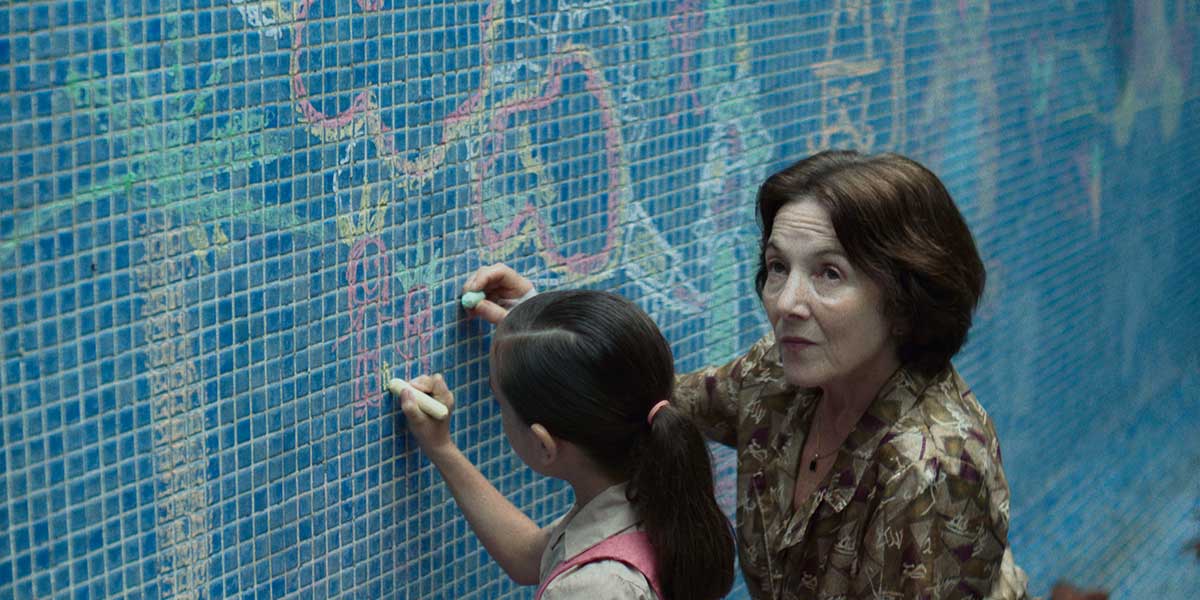
Love is the Monster, from Costa Rican director Neto Villalobos Brenes, is the kind of film that throws us into a dystopian future, but with purpose. Following Gloria (Paulina García), an ailing grandmother who understands she doesn’t have much time to live and would like to spend as much of the time she has with her granddaughter, the movie is less an examination of how the world can go wrong and more a study of the things we’re willing to do and sacrifice for the people we love.
Is love the monster? The movie is strong enough to at least make you consider its premise, and also think really hard about what you would do in Gloria’s circumstances. What will you do to protect the person you love most? Gloria is faced with that devastating question, and the answer is as simple as it is horrifying. Anything and everything.
One of the best things about Love is the Monster is that, for as much as we clearly understand we’re existing in a dystopian future from the beginning (and a female-led one, at that), the film never really stops to give you a running list of what’s gone wrong in this world we’re seeing, much less why it went wrong. How we got here doesn’t matter. Instead, the movie is about the decisions people make within the circumstances they are forced to live in.
MORE: Alice: Pioneer of Cinema TIFF Review: Too Many Men Around
There’s a lot of Latin America to the film, from the visuals that are more akin to Neto’s Costa Rica or somewhere else in Central America than anywhere else, to the systems of inequality that still exist, even in a dystopian world. But there’s also a message that feels very universal, particularly in this day and age. The powerful always protect the powerful, and those without influence will remain at the bottom of the food chain. How we react to that is where the story is, and always will be.

It’s easy to empathize with Gloria, because we’re following her around as she tries to do basic things like spend time with her granddaughter. As someone who used to beg to accompany my grandmother everywhere as a kid, from the supermarket to church, I relate very strongly to their dynamic and their closeness. But this isn’t a kind story about connection. It’s one about fear and inequality, and about how those who exist on the fringes of society have to claw and push and sometimes do horrible things to survive.
All those things considered, can we really blame Gloria, or anyone else, for the questionable moral ground they have to tread? The movie allows you to empathize with both “sides,” even if we’re firmly on one point of view, and yet in the end, it’s all about what Gloria does. What we would do.
MORE: Brace Your Heart TIFF Review: A Brilliant Tale of Resilience and Community
Of course, everyone will have their own answer to this, and I feel like it would be a disservice to this film to give away more information about what happens or why it happens. This confounding mix of fear, rage, and confusion the movie evokes is something that should be experienced without knowing what’s coming next.
Overall, Love is the Monster is the kind of story that makes us not just invest, but think. It’s a particular triumph for Villalobos Brenes because this doesn’t look like the type of story that usually gets us there. This is no The Hunger Games, not visually. And yet, it will leave you asking more or less the same questions, all while feeling that this could actually happen to you.
And then, well… then the question is: what would you be willing to do?
Love is the Monster screened at the Toronto International Film Festival.
