
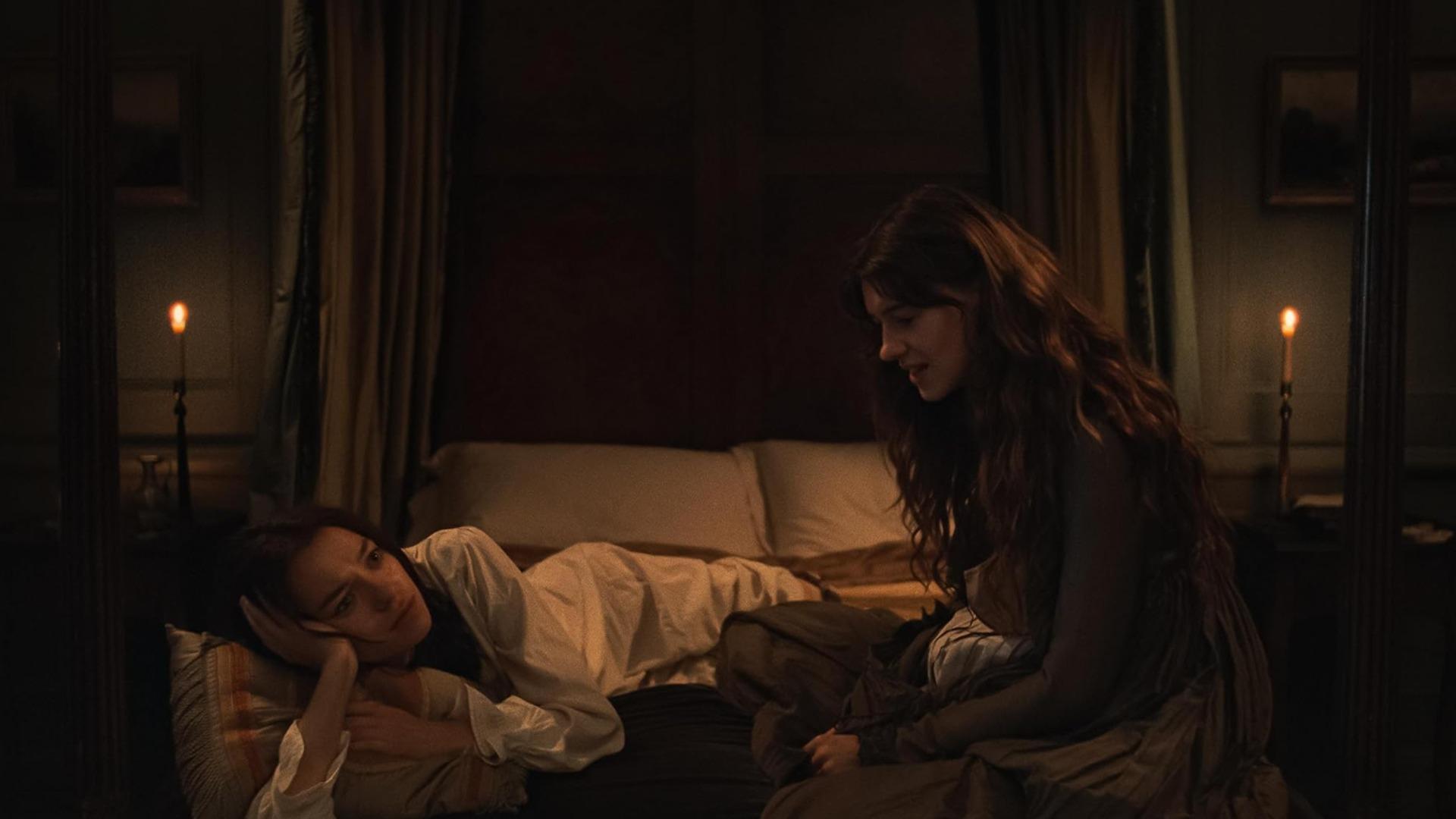
When I saw the trailer for Sense and Sensibility, aside from the romantic moments, there was one line that hit me harder than the rest. It was when Mrs. Dashwood (Caitriona Balfe) says the family will rely on the money her deceased husband left them, and her practical oldest daughter Elinor (Daisy Edgar-Jones) responds simply with, “What money?”
What a succinct way to express the premise! Jane Austen’s story begins with the plot hook that the loss of their patriarch leaves the Dashwood women in difficult financial circumstances. We all know what that feels like, right? The new film version of Sense and Sensibility makes the Dashwoods’ money problems relatable and clearly shows the connection between love and money during the story’s time period.
MORE: If you want more about this new adaptation of Sense and Sensibility, start by reading our review!
Downsizing

Courtesy of Focus Features
Copyright
© 2026 FOCUS FEATURES LLC. ALL RIGHTS RESERVED.
Patriarchal laws of Jane Austen’s time dictated that estates passed from father to son, so the recently widowed Mrs. Dashwood and her daughters are left with very little to live on. Mr. Dashwood’s son from an earlier marriage will inherit their home. On top of that, the opening sequence of this new film establishes the personalities of the characters as it reveals their loss of financial security. While Elinor is focused on the reality, Marianne (Esme Creed-Miles) reacts dramatically. Their mother insists on being almost obtusely optimistic. And her response to Elinor’s blunt statement of their finances is, “Numbers can mean lots of things.”
This new Sense and Sensibility makes the change in the Dashwoods’ circumstances even more extreme than in the book, and the visual components emphasize that. Their new home, Barton Cottage, in this adaptation is smaller, darker, and older than in any other on-screen version. Their neighbor and distant relative, Sir John Middleton (Turlough Convery), brings them game to eat. Elinor begins a garden. And in our age of soaring grocery prices, this makes us feel even more of a kinship with the Dashwood women as they try to sustain a life in a world working against them.
There’s more that calls forward to today’s economy too. The way John Dashwood (Tom Brooke) and his greedy wife Fanny (Stacy Martin) hoard their new inheritance and avoid sharing it with his stepmother and half-sisters easily brings to mind today’s billionaires. John’s pathetic attempts to give them a tiny piece of the estate, like a bit of furniture or housewares, only highlight how avaricious they are. And that creates a further disconnect and shines a light on class divides.
MORE: Deep dive into Sense and Sensibility by reading our interview with the director, Georgia Oakley!
True Value

Romance is another thing that hasn’t gotten easier over the centuries. Austen understood how much love can be affected by money, especially in a time when women lacked control over their own destinies because of it. So much so that her novels are pretty much all about that, especially Sense and Sensibility. And while our focus is on the Dashwoods, even the supporting characters like Willoughby (Frank Dillane) choose wealth over anything else where marriage is concerned.
Austen also grasped the fact that love was like its own economy during her time, and that is still true. Certain superficial differences have popped up in the past 200 years, but it’s still all about supply and demand for anyone who wants to participate in conventional dating while also looking at the societal norms that are still thrust upon women. And then at the same time, eligible men like Edward and Colonel Brandon (Herbert Nordrum) in the 2026 film are a commodity. Their worth is directly correlated to their scarcity in Austen, just like it is today, and she builds wonderful dramatic tension in this story out of that foundation.
Character development comes out of it, too. When Marianne begins to appreciate Colonel Brandon after expelling Willoughby from her system, her praise of him includes the word “worth.” The financial interpretation of that is obvious. And part of adapting classic literature like Sense and Sensibility is making decisions like this, decisions that relate to the modern audience, and this version does that. The Dashwoods’ money problems in Sense and Sensibility easily find a place in 2026.
Sense and Sensibility is now playing in theaters.
