
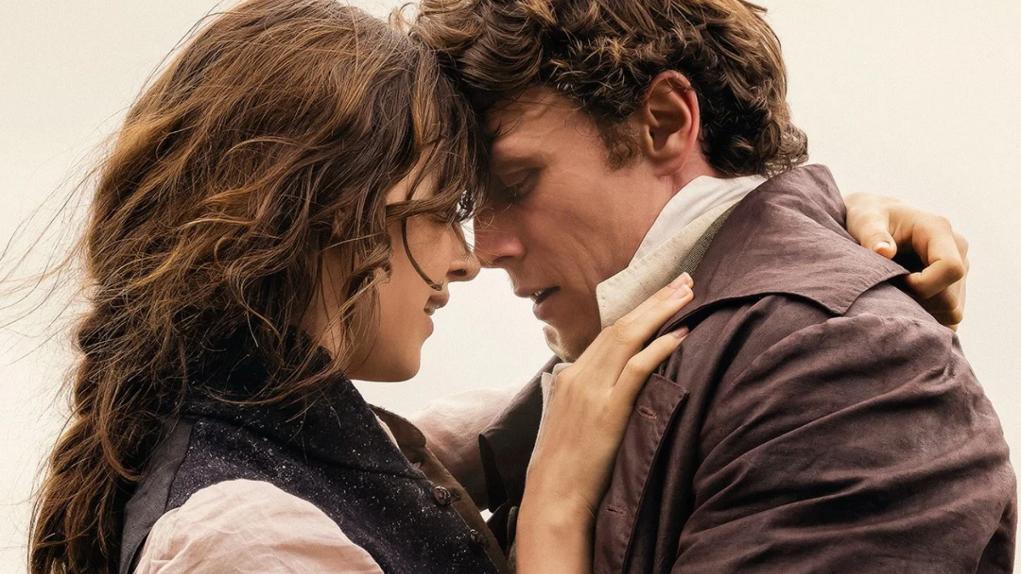
When it comes to Jane Austen, the film and TV industry isn’t a stranger to adaptations or remakes. Pride and Prejudice has had many adaptations. Some were faithful adaptations like the 1995 BBC miniseries starring Jennifer Ehle and Colin Firth. Then there were modern retellings like Bridget Jone’s Diary or Pride and Prejudice and Zombies. Other of her books like Mansfield Park, Emma, and Persuasion have had a similar fate. And now in 2026, Georgia Oakley is trying her hand at another Austen book: Sense and Sensibility.
Like all of Austen’s books, Sense and Sensibility has had multiple adaptations, whether mini-series, faithful feature films, and loose retellings. And under Oakley’s directing, actors Daisy Edgar-Jones and Esmé Creed-Miles are going to bring the Dashwood’s to life. But right from the jump, it felt like there was something a little different about this adaptation. It felt a little too dark for some and a little too modern for others. For Oakley herself, who Fangirlish interviewed, she’s always seen Sense and Sensibility as a contemporary tale.
MORE: The 10 Best Jane Austen Adaptations

Courtesy of Focus Features
Copyright
© 2026 FOCUS FEATURES LLC. ALL RIGHTS RESERVED.
“I think for me, it has a lot to do with the fact that obviously the book was written more than 200 years ago. And the lives of young women have changed significantly in that time, obviously,” Oakley said. Sense and Sensibility was published in 1811. At the time, women had no voting rights and couldn’t own property. And your social status was often dictated by whether you were single or married.
Oakley went on to add, “But also the fundamental contradictions of what it means to be a young woman haven’t actually changed nearly as much as we would like to think. And I think that’s what drew me to [Sense and Sensibility] initially. It was just like, to me, she’s writing about themes that are inherently contemporary.” This is tied to why Oakley felt like this book is a classic worth revisiting. Because the lessons in it, they don’t get old.
For Oakley, a woman life in 1811 is similar to that of someone in 2026 because of what we’re promised as women vs what we actually get. “It’s this negotiation between what a young woman is promised by life, and what she hopes to expect from her life. And then what the world is actually prepared to offer her, and the gap between those things. Which I think, as women, we are constantly negotiating that.”
MORE: The Other Bennet Sister Episodes 1-3 Review: The Best Pride and Prejudice Adaptation in Years

Courtesy of Focus Features
Copyright
© 2026 FOCUS FEATURES LLC. ALL RIGHTS RESERVED.
Another thing that Oakley really connected with, and that also made this story relatable to 2026 sensibilities, was the relationship between the two sisters Elinor and Marianne. Because yes, this is a story about romance, marriage, and women truly just trying to make it through the day in a society that doesn’t value them. But it’s also about the sisterhood between Elinor and Marianne and how that keeps them going in moments where they feel like they’re free-falling.
When it came to non-negotiables in Sense and Sensibility, the sisterhood between these two was key. Almost the heart, in fact. Oakley said, “framing the story around the sisters, kind of foregrounding their love story, as opposed to the love stories of the suitors, which is, for me, how I interpreted the book anyway. But that was like the cornerstone of how I wanted this version to be.”
Other non-negotiables had to do with the look of the movie, something that has been talked about all up and down the internet. Because for some viewers, the movie looks too dark and lacks color. When it comes to filming, Oakley said that “other non-negotiables were things like shooting on 35mm film, which was a big one, because it’s quiet tricky to shoot something like this, at this budget, on 35mm. But I pushed for that, and that was a non-negotiable for me.”
MORE: Digger Review: Start the Riz Ahmed Oscar Campaign Now

Courtesy of Focus Features
Copyright
© 2026 FOCUS FEATURES LLC. ALL RIGHTS RESERVED.
35mm film allows for a more organic feel to the film in question. And for many filmmakers it’s preferred over digital capture, that has become commonplace in the film/TV industry. As someone who watched Sense and Sensibility, and reviewed it, this desire for Oakley to make this movie grounded and organic through the film technique used, can be seen in other facets of this adaptation. Most notably… the hair.
Or maybe not just the hair. When the trailer for this movie came out, not only were people aghast at the supposed darkness on screen. They didn’t understand why the Dashwood’s weren’t prim, proper, and done up like most period dramas want us to believe. And while yes, every generation has specific styling that is acceptable, I can vouch for women being relaxed, letting their hair down, and just being utterly human.
For the Dashwood sisters in particular, we see them in moments where their hair is down, they have no shoes on, or their looking a bit messy. And that might be shocking for some. But Oakley is standing by her decision, particularly the hair. “There’s a time and place for the hair that we know as like, how women wore their hair in Regency times. And you do see that in the film.”
MORE: Elsinore TIFF Review: Andrew Scott, Come And Get Your Oscar

Courtesy of Focus Features
Copyright
© 2026 FOCUS FEATURES LLC. ALL RIGHTS RESERVED.
“But a lot of times, these girls are just at home, you know, digging in their garden, planting vegetables and stuff. Like, why would they have had that perfect hair that they would then wear to the ball? Why would they have it then?” And it’s these exact things that Oakley had conversations about with her actors when it came to girls just being human. “There are scenes in the film when you see them without shoes. There’s a scene where Marianne’s lying in bed, and you see her feet.”
So while it may be shocking to some who are used to a specific kind of period drama, for Oakley, it helped her connect the characters to the viewer. “For me, that was important. Because sometimes with films like this, we are kept at arm’s length from the characters. And we are, you know, they’re sort of like hidden behind these pristine costumes and pristine hair. […] And so for me, it was really important to imbue the story with a few of those moments. So we could understand these are human beings, just like us.”
When Sense and Sensibility hits theaters on October 16th, fans of the book will have to make their own decision of what Oakley has shared. And hopefully, this movie will also bring in new fans to enjoy the book and maybe get into Austen themselves. Until then, Oakley is already looking for her next project. And as a fan of all things sapphic, what she told me during our interview has me excited.
MORE: Miss Austen Review: In Which Jane Is Awesome

Courtesy of Focus Features
Copyright
© 2026 FOCUS FEATURES LLC. ALL RIGHTS RESERVED.
Period shows or movies aren’t a new thing. There will be a remake after this version of Austen’s book. And there will be other books that follow. But one thing you can depend on is that they’ll usually center straight couples. Netflix’s Bridgerton is about to shake that up with Francesca and Michaela’s romance in Season 5. So I wanted to ask Oakley if she’d ever dip into a sapphic period drama, especially after her work on Blue Jean.
Surprisingly enough, Oakley is already 10 steps ahead when it comes to this idea. She said, “I would be down. I would definitely be down. There are some great books actually that I’m looking into that are sapphic period dramas. So I would definitely be down.” And I can’t wait.
Sense and Sensibility hits theaters October 16, 2026.
