
Mino spoilers for Interior Chinatown ahead.
Thought-provoking and thrilling, Interior Chinatown is a profoundly sharp satire that examines Asian stereotypes and representation through humor and unmatched wit. It showcases how, when you lack awareness, you become blind to the limitations society will place on you.
Based on Charles Yu’s best-selling novel of the same name, Hulu’s 10-episode miniseries centers around Willis Wu (Jimmy O. Yang), a background character who works at Chinatown’s Golden Palace restaurant in Black & White, the in-show TV procedural that parodies Law & Order. Unaware of his role and the show, Willis aspires to do more with his life and be part of the action. As the show progresses, he works his way out of the background and into a starring role. But his true motivation lies in solving the mystery of his older brother who went missing 12 years ago.

The show’s pacing feels too slow at times, and, overall, feels longer than it needed to. But it’s an otherwise great series. The cast, also led by Agents of S.H.I.E.L.D.’s Chloe Bennet as well as Ronny Chieng, all deliver strong performances that balance one another well. The production/creative teams make stellar choices in developing a very meta show. Even the side stories become more fulfilling when they eventually connect to the main plot. However, to fully appreciate Interior Chinatown, it must be viewed with proper time, care and attention.
Madness, Mystery and Creative Mastery in Interior Chinatown

Right away, Interior Chinatown intelligently establishes its satirical tone when Willis explains to his best friend, Fatty Choi (Chieng), the cold open of police procedural TV shows. He mentions the show opens with an individual who will either be the witness or victim of the crime for that respective episode. Soon after, Willis sees a woman get abducted as he performs his mundane task of taking out the trash — which is exactly what he wanted so he could have excitement and a legitimate story to be in. But even then, his eyewitness account doesn’t immediately place him at the center of the story.

The show then cuts to the credits for Black & White. It’s just one way Interior Chinatown cleverly establishes its in-universe show and showcases its creative storytelling.
Lighting changes distinguish the regular world from the TV production. Certain angles on the police procedural strategically hide background elements that deter from the leads. The show will rewind if things don’t play out according to the script. Characters glitch via TV static as the explicit distinction between the Black & White universe and the offscreen world diminishes.
The Social Commentary of Interior Chinatown

Searching for identity, being blinded by ambition, and responsibility to society versus self are just a few of the themes that Interior Chinatown tackles. These ideas are explored primarily through Interior Chinatown’s main characters. However, because Willis isn’t a lead character in Black & White, the show can also navigate these topics through offscreen characters like Willis’s parents, the police precinct’s janitor, and even the police department’s tech guy.
In terms of cultural critiques, Hulu’s meta miniseries mostly highlights the negative treatment Asians are often subjected to in media and by society.
Willis’s initial role as a background character aligns with the reality that Asian actors are often extras with no depth or real importance besides filling up space to create a believable setting and rarely the leads. Willis tries to be more than that but discovers the TV world’s limitations on how and where he gets to take up space. When he tries to get into the police precinct, the door cannot open for him and will promptly shut before he can ever enter the building. Why? Because the generic background character has no place in the police precinct.

Willis has to figure out which roles he can take on to gain the access he needs. The closed doors that Asians and other minorities often encounter in entertainment become literal in Interior Chinatown. It’s a great metaphor for the lack of access Asians have and the extra work put in to attain better opportunities.
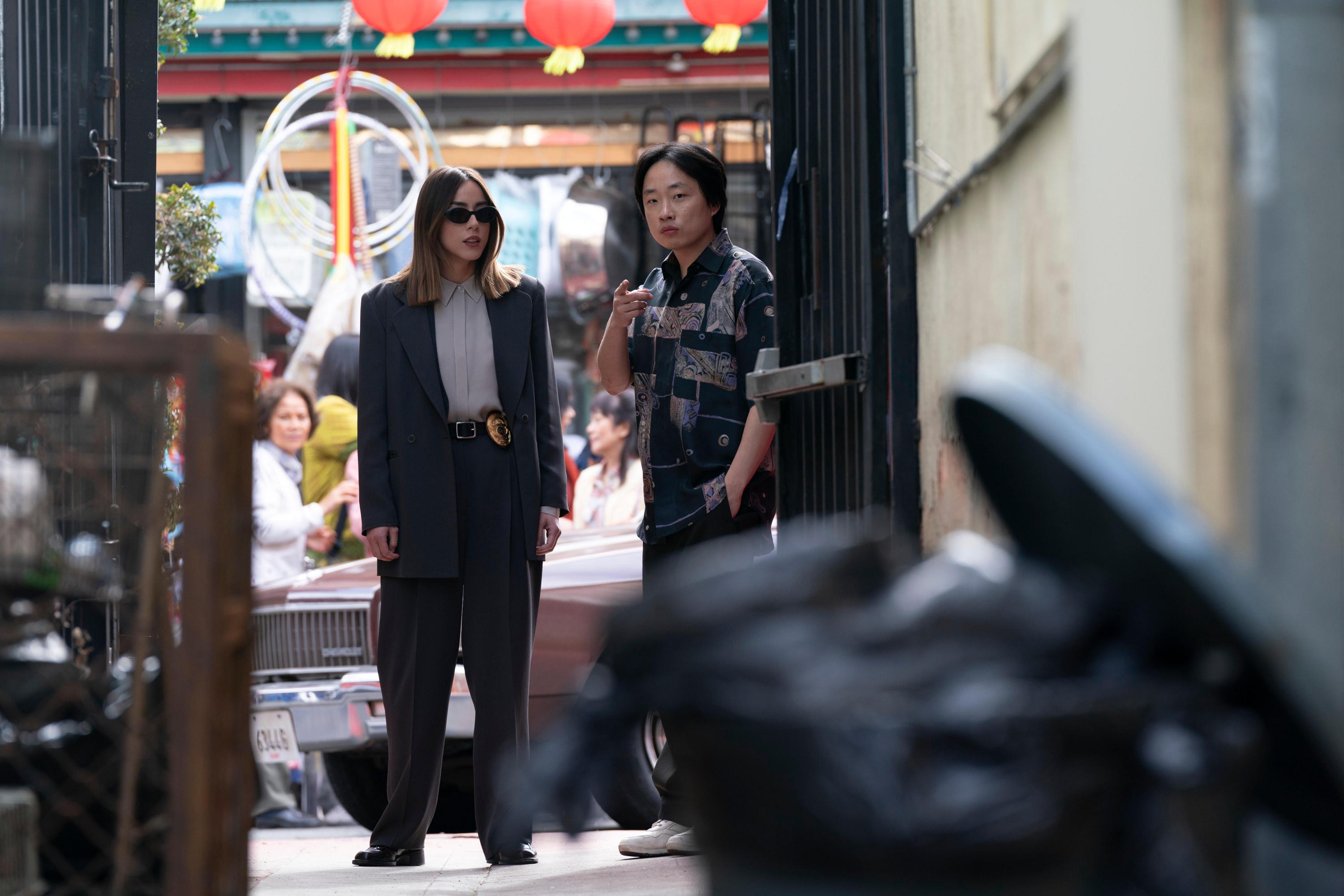
Bennet’s Detective Lana Lee, the supposed “Chinatown expert,” is essentially the police department’s diversity hire who doesn’t even possess insider knowledge such an expert would have. She also gets set up as the incompetent detective on particular cases to set up Detective Sarah Green (Lisa Gilroy) for the find.
Meanwhile, Fatty is sadly but brilliantly used as an example of Asian culture being fetishized into trends for white people when white patrons turn him into a fad to visit the Golden Palace restaurant.
Taking Interior Chinatown From Page to Screen

The heart of Yu’s book is present in the Hulu show, but the series is adapted to prioritize visual storytelling and thoroughly integrates more characters to explore themes more deeply. It has an increased focus on the mystery and uses that to guide expansion. Even if it still centers on Willis, this different approach shows how the plot affects, shapes, and connects many individuals to create a fuller narrative.
It feels reminiscent of an idea from Simu Liu’s memoir, We Were Dreamers: Your story is never just your story, because it only happens as a result of the stories that came before.
The book, on the other hand, has a stricter emphasis on Willis’s perspective and isn’t quite centered on solving the missing person’s case of his older brother. After watching the Interior Chinatown show, the innovative screenplay-esque novel seems easier to comprehend.
Each episode title, from “Generic Asian Man” to “Tech Guy” appropriately explains the various roles Willis plays throughout the miniseries. They help track his progression, growth, and learning. But the titles also parallel the novel, whose acts were named similarly.
