
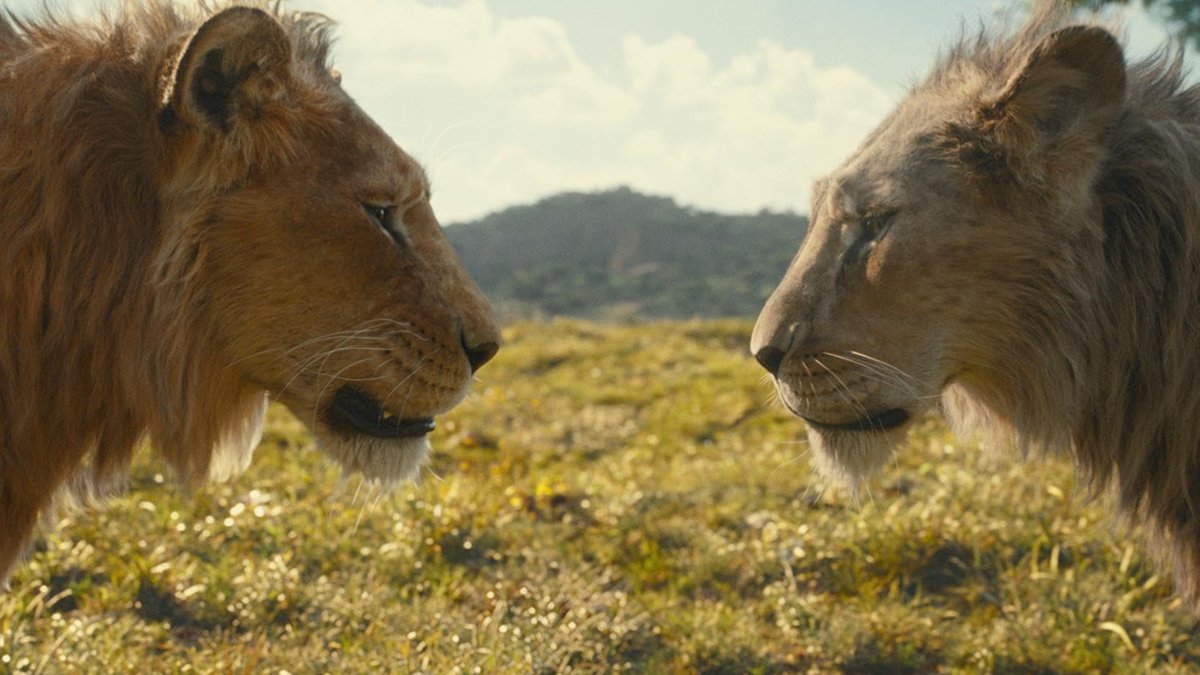
Disney’s extensive production of live-action versions of their beloved animated classics is essentially a cash grab more than anything else. However, the resulting films themselves have varied from the good (The Jungle Book, Cinderella) to the worth watching (Beauty and the Beast) to the not-good (Maleficent, Alice in Wonderland). Now they have turned their attention to a prequel for one of everyone’s favorites. Mufasa: The Lion King is well-directed with good voice performances but the CGI animation is still a significant obstacle.
1994’s The Lion King was a part of Disney’s animation renaissance that began with 1988’s The Little Mermaid and provided generations of children with timeless family entertainment. These films were good AND profitable. They returned the studio back to the critical glory of its pioneering early films. Heavily influenced by Hamlet, The Lion King followed lion cub Simba as he lost his father, Mufasa, and then returned home as an adult to reclaim the kingdom from his treacherous uncle Scar. It was wonderful storytelling. The 2019 live-action remake, not so much.
Mufasa: The Lion King suffers from a mediocre story, and even though the CGI technology has improved over the years, the characters still feel a bit lifeless no matter how realistic they look. The acting and directing are its saving graces. Those elements keep Mufasa watchable.

“It’s what kings must do.”
Though this is Mufasa’s origin story, this film also functions as a sequel. A framing device introduces Simba’s daughter, Kiara, voiced by Blue Ivy Carter. That name should sound familiar, as she is the daughter of Beyonce, who again voices Simba’s mate Nala, as she did for 2019’s The Lion King. Kiara is not a new character. She first appeared in the 1998 straight-to-video sequel The Lion King 2: Simba’s Pride, which is actually better than this film.
The wise yet wacky mandrill monkey Rafiki tells Kiara the story of her grandfather. Mufasa (Aaron Pierre) is separated from his parents by a flash flood and is rescued from crocodiles by another cub named Taka (Kelvin Harrison Jr.). Taka’s father is the king of his pride and it doesn’t matter how quickly the two cubs have started calling each other “brother,” they don’t take kindly to strays. Taka’s mother welcomes Mufasa, though. Taka and Mufasa grow up together.
You’ve probably already figured out that Taka eventually becomes Scar. How that plays out involves flimsy conflict and a small degree of retconning to The Lion King. Screenwriter Jeff Nathanson seems to have made a list of things to give a backstory to instead of carefully fleshing out a plot. We know Mufasa is going to meet all the characters we know and eventually reign over Pride Rock but does Taka’s jealousy really have to manifest over Sarabi (Tiffany Boone)? He goes bad over a girl? Really? And there was no hint of this history in The Lion King.

“Everything the light touches belongs to me.”
Before Scar goes evil, though, there has to be another villain here. That title goes to Kiros (Mads Mikkelsen). He’s the leader of a pride of ghostly white outsider lions who are forcing other prides off their lands. Mikkelsen should do more voice work because he is excellent at conveying Kiros’ single-minded will to dominate. He has a great voice to begin with, and it really works when he’s playing the bad guy. Pierre also manages to make Mufasa his own, despite the fact that he is following in the legendary footsteps of James Earl Jones. Audiences should also know that Seth Rogen and Billy Eichner voice Timon and Pumbaa again. Be prepared for that.
Besides most of the actors, Barry Jenkins’ direction is a standout of this production. He crafts a lot of dynamic shots here, keeping the camera moving or using extreme close-ups to good effect. The natural landscapes of the cinematography here can be quite beautiful. The photorealistic imagery works much better for that than it does for the animal characters. This being a new story and not a remake affords Jenkins the freedom to do more with the visuals and he makes the effort. As for the music, Lin-Manuel Miranda provides the original songs. He’s been Disney’s go-to guy for years now and the songs here are less inspired than his other work. Miranda is so talented that they are still good, just less exciting by comparison.
Part of the brilliance of The Lion King is the way Mufasa guides and influences his son. Even after the trauma of Mufasa’s death scene, his presence over the rest of the story is undeniable. His journey could have been more fitting for such an iconic character. Instead, we have to deal with lapses in logic like: Mufasa allows Taka to stay but will not speak his name anymore? Huh? Why does the “brother” who betrayed you get to stay at all, Mufasa? Thank goodness there is direction and acting worth watching in Mufasa: The Lion King because the story did not get the royal treatment the title character deserves.
3 stars out of 5
Mufasa: The Lion King is now in theaters.
