If you’ve talked to a fan of…well, pretty much any show that’s been cancelled in the last few years (and there have been many), you’ll hear a lot of the same complaints. Shows get cancelled too quickly. They are no longer given a chance to breathe and develop gradually and grow their audience. Canceled shows are the norm. In part, that’s due to the rise of streaming services, which have shifted expectations about television and how it’s consumed – both by viewers and the creators themselves.
In this roundtable, we discuss how this shift in expectations – and the recent spate of quality shows cancelled well before their time – has changed how we as fans engage with content. As well as what (and how much) we’re willing to trust when it comes to the longevity of shows.

1. Are shows being canceled faster than before? Or does the interconnectivity of fandom make it feel that way?
Jade: I don’t have actual statistics to work off, so I don’t really know for sure. But I’d be willing to bet it’s a bit of both. Of course, there have always been shows that got cut every renewal cycle. However, it seems as though networks used to be willing to give shows a little time to grow an audience. There are some classic series that simply wouldn’t exist today if they weren’t given that time. Whereas now, it feels like making it past a single season is remarkable, and making it past two seasons is downright miraculous.
That said, I’m also sure we hear about canceled shows more than we would have in the past. Prior to the Internet, if a show that you didn’t watch was canceled, you probably didn’t know about it. Now, fandom will make it their entire raison d’être to make sure everyone in the world hears about their show’s cancellation, so they can maybe convince The Powers That Be to bring it back.
Lizzie: I think we are definitely more aware of it, but shows are also being canceled faster. And I think that’s especially frustrating at a time when we should recognize shows have a lot more value than who’s watching live or who is watching the first 7 days or any other arbitrary markers used to make these decisions. I also think part of the reason it feels this way is that shows are not being promoted enough! So, that makes it feel like the show was canceled before you ever actually knew about it.
“…it seems as though networks used to be willing to give shows a little time to grow an audience.”
Shana: I agree that it’s a little bit of both. Those of us who were around in the dark ages of VHS recordings and no onscreen TV listings probably all remember some shows that didn’t really get the time to grow an audience (looking at FOX and Models, Inc., actually!). Some would even air maybe one or two episodes before just…disappearing.
So, it’s not like these early cancellations are an entirely new problem. But. I do think with information being so easily at our fingertips — if you can get past the search engine’s top-ranked AI slop, of course — and fandoms being both very connected and very loud, the problem seems even bigger than it actually is. Add in more “content” existing, and therefore more up for cancellation, and we’re in a place where the perception might not be exactly the same as the reality.
But make no mistake: The situation is bad. Arguably, it’s even significantly worse than it used to be, with the people at the very top levels just flagrantly, out in the open, treating a cast and crew’s hard work as nothing more than a tax write-off. And whether or not things are as bad as they seem, it still hurts.
Jennifer: I’d say it’s a mix of both. As someone in their early 20s, I also don’t have the statistics or much of a lasting memory of how network television was in the pre-streaming era because I was a child watching stuff like Disney while my parents obsessed over shows like Friends, Lost, Grimm or ER when they were airing weekly in real-time. All this to say that I believe popularity and conversation have always been a driving force in how long things stay on the air.
“…Most television shows don’t give their stories the time or patience to grow.”
I don’t necessarily believe more shows are getting cancelled nowadays but we’re more aware of these decisions because of social media and the existence of the internet. With the internet, we’ve formed a direct relationship between the media we consume and the conversation it creates. If something doesn’t create too much of a buzz on the internet then distributors believe the show isn’t good enough to keep going – which is the biggest problem here.
In the pre-streaming era, people talked amongst themselves about the media they watched. They didn’t necessarily have easy outlets to agree, disagree, or comment in public spaces unless they spoke to other fans in person. In my mind, that process of conversation and discourse whether positive or negative is much slower – although more intimate – than it is today. We have the opportunity to message, tweet, or write about anything we watch at the click of our finger. It’s very easy, unfortunately, for streaming services to decide if the effort to renew something is worth it, and if not, they pull the plug right away in most cases.
That’s another problem for shows in a post-streaming era. A big one, I think. Most television shows don’t give their stories the time or patience to grow – I’m not sure whose fault it is entirely that streaming shows get less than ten episodes per season – at a natural pace that makes sense for the story. To conclude, I believe the internet existing alongside a post-streaming era of television and media has had a negative effect on early cancellations but that doesn’t mean it didn’t exist before. We now just have the tools to see when it happens.

2. Fans fear that this cancellation rush may make viewers less likely to invest in new content. What shows, if any, have made you reluctant to invest in a new series?
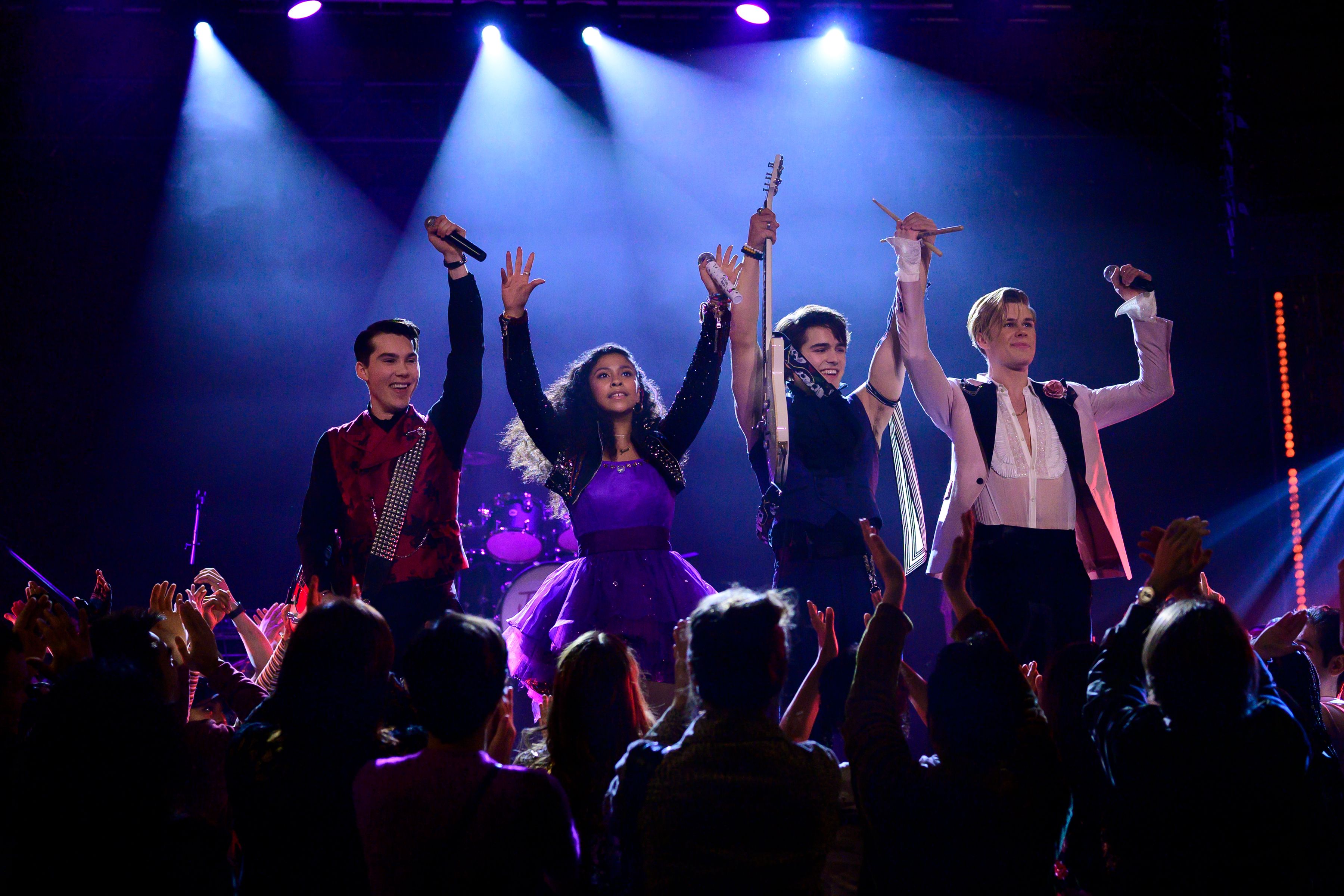
Jade: I wouldn’t say that I’ve become leery of watching new shows in general, but the more original or “breaking the current television mold” of a concept, the more leery I am that it’s going to be canceled. I’m thinking particularly of Zoey’s Extraordinary Playlist or Julie and the Phantoms or My Lady Jane. All had really unique concepts. Or even the Quantum Leap revival (still. bitter.)
Lizzie: Jade gave a very good list, all shows I’ve watched and mourned. But I think the one that always sticks with me is Pitch. It was such a unique story and then… they let it die. And then there’s One Day at a Time, of course, which had so many more authentic stories to tell.
Shana: I’d like to be able to say that I’m more careful about what I watch, or I wait until a series is guaranteed to last before I bother, or something like that. I can’t say any of the above, though, because I just love TV and always have. The only thing that keeps me from watching everything, right away, all at once is time. (What even is time???)
Even so, I’d also be lying if I said I hadn’t been kinda “meh” on starting new shows since the Evil cancellation. How you can be in your fourth season, have so much storytelling left to go — finally be hitting some of your most interesting stuff yet, really — and still get killed, I’ll never understand. Some people will say four seasons were a gift. And I’ll agree. But…ugh. I can’t decide if I’m more heartbroken or mad after that one. Especially since, you know, the series also started killing it on Netflix’s top 10 after that terrible decision was already made.
“I think the one that always sticks with me is Pitch. It was such a unique story and then… they let it die.”
Jennifer: I wouldn’t say a show’s cancellation has made me reluctant to give new shows a chance but it has made me cautious. When a show doesn’t interest me at first glance, I’ll go into it with a shred of hope that it’ll continue, which is dangerous I know, but I do try to enjoy the season for what it gives story-wise. However, the sting hurts bad when you lose a show that you genuinely believed had a great fandom presence and a great story to continue over time. I’m thinking of Julie and the Phantoms, Saved By The Bell (reboot), Anne with an E, and The Vampire Academy.
I do have to be honest here and say that when I lost those shows – which I believe weren’t even in their prime of story-telling and popularity because that’s how good they were – I haven’t allowed myself to love a show as deeply as those unless I know it’s renewed before I start it. That feeling has made me wait to start new things. It’s an act of caution but also to protect myself from a potential loss when things are just getting good.
That’s the worst part: knowing exactly where a story could’ve gone if you gave them more time or opportunity to grow. I think this has a direct impact on the current generation who doesn’t have a long-lasting show to fall in love with. I know we all remember the choices we used to have about “which season is the best or rewatch multiple times cause it’s your favorite?” and it makes me sad to think that everyone, especially the young girls, who are growing up after Pretty Little Liars don’t have an answer because most popular shows nowadays don’t last past two or three seasons.

3. Who do you trust? Are there networks or streaming services you trust less than others?
Jade: I don’t know that there are, necessarily. I joke that I’m leery about NBC and Netflix because they’ve canceled so many of my personal favorites, but I don’t know if they have any more or less than ABC or Apple TV+, or anyone else. Actually, maybe I trust Netflix a little less. Not because they’re more prone to cancel a series, but I’ve heard that their contracts make it impossible to shop a canceled series anywhere else. At least with networks like NBC or Fox or whatever, fans can tell themselves there’s a chance.
Lizzie: I think if you haven’t been hurt by one particular network or streamer you’ve just gotten lucky. The rules are the same all over.
Shana: So far — and I’m sure I’m going to jinx something by saying so — Apple has been terrible about promoting shows. Yet, they’re pretty decent about renewing them. At least that’s been my experience with everything of theirs that I’ve enjoyed and even some series I didn’t know existed until there was buzz, then went ahead and watched.
“…Apple has been terrible about promoting shows.”
Currently, Paramount+ and Netflix are on my you-know-what list. The former are there because of how they did Evil dirty and, on a less personal note, there have been stories about business things that don’t exactly inspire confidence. Netflix, I think, probably speaks for itself. I can’t even keep track of the number of shows they’ve canceled before giving them a chance.
Jennifer: I’d feel bad naming them on a list for best to worst because all services in my opinion have shows and media worth watching no matter what. And like Shana said, I wouldn’t want to jinx their future quality of production. But I will say Netflix is at the bottom. I believe they rely too much on how popularity translates into demographic statistics and viewership.
The whole world doesn’t need to watch a show or film for it to be worth watching and making more than others. In terms of network television, I’d say I trust ABC and NBC the most. That’s based on the fact that they let most of their shows grow and renew them to at least five seasons if audiences love it. Although, I know there’s uncertainty for renewal anywhere you look. I believe that as well. Nothing’s safe and all things do end at some point.

4. Has your experience with shows that are prematurely canceled changed how you choose what to watch?
Jade: Well, like I said, the more original and interesting a show’s concept, the more I’m going to go into it assuming it has one foot in the grave. If it sounds like 15 other shows on television at the moment, I’m less concerned about its longevity. Though as I think about it, maybe that’s not really too different from the past.
Lizzie: No, but only because the job doesn’t really allow it. I know a lot of people who now watch until a show has a second season under the belt or has been renewed before they’ll even touch it. So there’s that.
Shana: I don’t think so. At least not consciously.
Jennifer: I don’t think so. I think getting attached to shows that are prematurely canceled has made me wary to get invested. If I know the show I’m watching has already been canceled or left on a cliffhanger, I’ll know to expect an unfinished ending. It’ll suck. But if the premise is interesting and draws me in, I’ll still watch and think about what could’ve been.

6. Has it changed how you consume the shows you watch?
Jade: Now that is definitely different. It seems like any show has to be an instantaneous mega-hit or it’s put on the chopping block. The importance of binge-viewing to streaming services makes it less likely I’ll check out their shows, sadly. I rarely have time to binge anything. So if it doesn’t matter when I watch a show because I won’t be able to watch it all in that very narrow window of time, it becomes less of a priority and falls down to the bottom of my “to see” list.
For any show, it’s hard not to say, “Well, I’ll wait and see if it gets a second season before I tune in,” even though I know waiting will make a second season less likely. But I’m also less patient when it comes to plots. This is awful because as a viewer, I love the steady build or slow burn that can span multiple seasons. But as a fan? If my ship isn’t making out in the Pilot, I’m like, “CHOP CHOP! We don’t have time for this! You might get canceled at the end of this season. So let’s get this show on the road!” Which really sucks. But I hate getting stuck with really interesting long-form arcs that are canceled on a cliffhanger that I’ll never see resolved.
Lizzie: Yeah, I think even unconsciously you’re trying to predict what’s gonna last and what won’t last, and depending on that mental calculation you might let yourself get more invested or less invested in something, which is kinda sad. It would be good if we were only thinking about if a show is good or if we’re enjoying it!
“I think even unconsciously you’re trying to predict what’s gonna last and what won’t last.
Shana: Weirdly, I think I take longer to watch them. Until I recently binged the 9-1-1, I had actually stopped doing those longer catch-up binges. Even with series currently airing, I’m not as obsessive about keeping up with them as I used to be. Just feels like why bother? I can save some for later when there probably won’t be anything left to watch.
Jennifer: The possibility of early cancellations with the shows I fall in love with nowadays has made me more passionate about sharing my love of them online. I’ve made my passion and love for the shows – like The 100, 9-1-1, or Lucifer to give some examples – known on all media platforms. I make sure to tell people what I’m watching or why I love something.
Of course, it’s impossible to say that one person’s effort in making sure networks or distributors are aware that people are watching the media they put out will save a show. But it’s always worth the conversation in my eyes. I also believe that the uncertainty over a show getting renewed makes me want to enjoy the story as much as possible for what it is.
To that, I’ll add that the looming threat of cancellation has pushed me into watching early 2000s-2010s network shows. Ex: Bones, Parks and Rec, Jane The Virgin, or Castle in recent years. I think it’s the feeling of watching characters that have the opportunity to grow over time that has others doing the same thing. Those shows feel like a fleshed-out story. If current television won’t give it to us, why not return to a time when they did and hope people see what we miss?

7. Has it changed how you participate in fandom?
Jade: I think it’s changed how I tell myself I’ll participate in fandom. I mean, I tell myself I’m not going to get too attached to any show, just in case. But you know how it goes. You don’t choose the fandom. The fandom chooses you.
Lizzie: Yeah, I think my fandom days are over. I can create stuff and tangentially engage in it, but I’m not gonna actively participate in fandom anymore. But I’m not sure this has to do with shows being canceled or fandom being… well, fandom.
Shana: I don’t even know. Most of my interaction with fandom was on Twitter. But you won’t see me keeping an active presence there these days.
Jennifer: I’ve engaged in fandom discourse for at least ten years now. I will say that I’m not as active on Twitter as I was when I was in high school. But the love of sharing my interests or starting conversations about them online hasn’t gone away. It’s something I’ll always love doing and early cancellations of shows don’t push me away from fandom activity. If I love something, I will talk about it.

8. How do you think all of this will change how shows get made?
Jade: Unfortunately, I think it’s even harder to sell original, unique shows than it used to be. And I doubt it was ever that easy. I think we’ll continue to see really short seasons when it comes to original content by streaming services. It’s easier for fans to binge 6 episodes than 18 or 22. This isn’t always a bad thing because it does cut down on “filler” in a season. But sometimes a show needs more time to tell the story they want to tell, you know?
It would be nice if there was a move toward a limited series of guaranteed duration. Something like “We’re green lighting this for three seasons, but then that’s it.” Then creators can tell a story with decent pacing, without having to worry about a premature cutoff. As it is, I think we might start seeing the gradual phase-out of long-form arcs. Creators might just shift toward more “stand-alone” seasons. And season will offer a satisfying ending while leaving open the possibility for more stories to be told. But that’s probably just wishful thinking because I really really hate the unresolved cliffhangers.
Lizzie: I don’t think writers are thinking about this as they start writing, thankfully. But I think it does affect ongoing shows because you want to keep going! So sometimes, that means making decisions you might have not made.
“…it’s even harder to sell original, unique shows than it used to be.”
Shana: I think we can trust writers to still come up with great ideas for stories. But whether or not we ever hear about them…well. If you look around, the “safe” procedural is certainly back with a vengeance. (Not that it ever really left). The same goes for a ton of “safe” reboots, revivals, remakes, recycles…anything that starts with “re,” really.
Jennifer: I believe early cancellations and the importance of viewership/popularity surrounding a show have an impact on quality. I feel like networks are playing it safe nowadays. There’s been a wide range of success in reboots and revivals because the original material was successful in the past. As someone who craves original content, attempting to recreate cultural eras/times of television is the wrong move.
There’s nothing wrong with the occasional reboot. That’s especially true if we revisit old characters and continue their stories. But rebooting old media for the new age is leaving no space for new ideas. New writers and stories deserve to be prioritized by networks. I’ll conclude with one last wish for networks. Please allow shows to draw out their story and plot throughout multiple seasons. Don’t rush something we’re supposed to believe happens in a week. Give us time to fall in love. You may not have the patience but we do.
