

It feels like we have been waiting forever for The Love Hypothesis, and the movie proves that the story’s appeal was never only its fake-dating premise or its very attractive, emotionally constipated scientist. At its best, the film is about Olive Smith learning that she does not have to make herself smaller—in love, in friendship, or in science—to deserve a future.
Revisiting the story – the book – with the adaptation in mind made its potential much clearer: this is a romance built on deliciously awkward chemistry, yes, but also on grief, ambition, vulnerability, and a heroine whose greatest obstacle is believing she is allowed to want more.
Olive’s Journey Is the Heart
Lili Reinhart’s character of Olive is the emotional center of the film, and she captures something difficult – Olive is not simply “awkward” for the sake of a rom-com persona. Her social anxiety, tendency to over prepare, and instinct to retreat. As we all would understand that comes from a deeper place – a deeper fear of inconvenience, rejection, and disappointment.
Olive is brilliant. She knows her research and has a clear career goal. She wants to study pancreatic cancer because her mother died from it, and that personal history transforms her academic ambition into something much more meaningful. Olive’s work is how she tries to create meaning from loss.

That is why the movie’s academic setting matters. Science is often portrayed on-screen as either sterile background decoration or a shorthand for “these characters are smart.” Here, Olive’s research becomes part of her character journey. She wants to make a difference, but she has to confront the insecurity that makes her assume she is not accomplished enough, articulate enough, or worthy enough to take up space alongside established academics.
It’s important and it is inspirational.
The cocktail party sequence captures this. When Olive is pressed to speak about her work, she is clearly overwhelmed—not because she does not understand her research, but because she is being asked to perform confidence in front of people who seem ready to judge her. Her instinct is to minimize her connection to pancreatic cancer, saying she simply enjoys a challenge. That answer is telling. It is easier for Olive to sound detached than to reveal the grief underneath her ambition.
Later, when she finally tells Adam why pancreatic cancer matters to her, it becomes one of the film’s most moving scenes. Olive lets someone see the emotional reason behind her work. For a character who has built her entire life around preparation and self-protection, that is an enormous act of trust.
By the end, Olive’s victory is not merely getting the guy. It is advocating for a professional future that does not come at the cost of her dignity, safety, or autonomy. When she turns down Dr. Benton’s toxic “opportunity” and seeks funding at Stanford instead, she proves that she is no longer willing to accept the idea that she should be grateful for whatever scraps powerful people offer her.
That is a real heroine’s journey. She is the real story.
Olive and Anh Are the Real Love Story
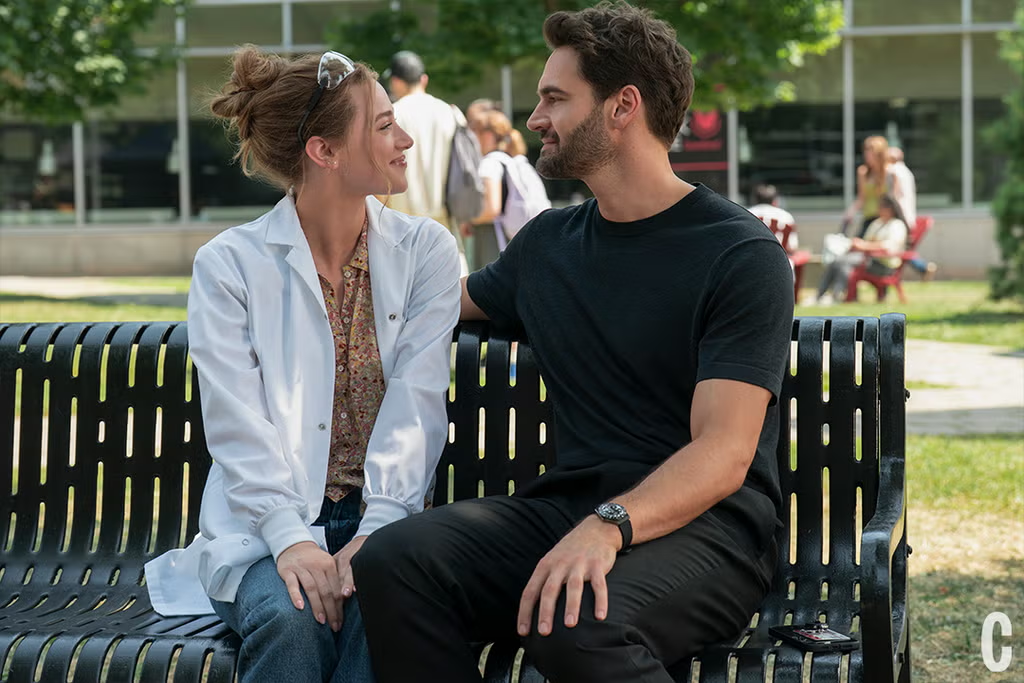
Yes, Adam and Olive are the central romance, and yes, their chemistry is completely swoony. But Olive and Anh’s friendship gives the movie its soul.
From their first meeting in class, Anh sees Olive’s instinct to fade into the background and refuses to let her do it. Olive wants to sit in the back; Anh brings her to the front. Olive is comfortable being unnoticed. Anh treats her presence as something worth celebrating. It is a simple dynamic, but it establishes exactly why their friendship works. Anh sees Olive’s value before Olive fully sees it herself.
Their bond grows through junk food, reality television, late-night conversations, and the everyday intimacy that defines genuine friendship. The film understands that best friends do not only appear for major plot developments. They become family through small gestures.
That is why the Christmas scenes are so powerful. Anh refuses to let Olive spend the holiday alone at Stanford and makes sure she gets home to be with her family. The lantern moment is genuinely emotional because it shows that Anh’s love for Olive is active. She does not simply tell Olive she cares; she makes decisions that prove it.
Anh is the besties we all need in our lives.

Rachel Marsh brings so much warmth to Anh. She is funny, dramatic, blunt, and unapologetically curious, but she never becomes a one-note “wild best friend” archetype. Anh is emotionally intelligent. She knows Olive is lying about Adam almost immediately, but she also understands why Olive is lying. Instead of punishing Olive for the fake relationship, Anh recognizes that it began because Olive wanted her to be happy.
And then, because Anh is a truly elite best friend, she admits that she kept creating situations for Olive and Adam to spend time together because she could see what Olive could not – they made each other happy.
That is not manipulation. It is faith. It is friendship. And sometimes friendship means taking a risk.
Anh understands that Olive needs to make her own choices, but she also knows that sometimes we need someone to remind us that we are allowed to reach for joy.
Malcolm provides a different but equally important kind of friendship. He is the chaos to Olive’s order, the person willing to tease her relentlessly, question her overworking habits, and make her laugh when she is too deep in her own thoughts. His arc is messier, especially after he is fired and initially directs his frustration toward Olive. But the film gives him room to apologize, while also allowing Olive to set a boundary. Friendship does not mean accepting everything. It means caring enough to repair what has been broken.
Adam’s Arc Is About Empathy
Tom Bateman’s Adam Carlsen is a difficult character to get right because the movie needs him to be intimidating without making him irredeemable. Adam has the reputation, the posture, and the facial expression of a man who could ruin your academic future before finishing his coffee. He is “Dr. Evil” to the students around him, and, honestly, the nickname makes sense at first.
Adam is brilliant, demanding, blunt, and completely disconnected from the impact of his behavior. When a student tells him that failing her dissertation prevented her from getting home before her dog died, Adam responds with a detached comment about bad luck. Olive’s reaction is exactly right – being academically rigorous does not require being emotionally careless.

The film’s smartest choice is that it does not excuse Adam’s cruelty simply because he is hot, brilliant, or secretly sad. It challenges those things. He argues that a PhD program is not preschool, but her point remains, people deserve humanity in every environment, especially one where the stress and stakes are so high.
Adam’s evolution is about understanding that fear is not respect.
Olive does not try to fix Adam, but she gives him a reason to examine the way he moves through the world and the way people see him. He begins listening. He helps Olive prepare for her conference presentation. Adam attends her party and makes an effort to connect with her friends. He offers support rather than criticism. He notices when Olive is overwhelmed and, instead of demanding an explanation, offers her a way out.
His “let’s go” at the conference is one of the most romantic moments in the film—not because it is flashy, but because it shows he is paying attention. He recognizes that Olive needs rescue before she can articulate it herself.
That is love. It is not saving someone from their own life, but noticing when they need a safe place to breathe.
Fake Dating With Real Stakes
The fake-dating setup begins in the most ridiculous and iconic way possible: Olive panics when Anh catches her without a boyfriend, sees Adam by a water fountain, asks whether she can kiss him, and then kisses him before he can fully respond.
It is a rom-com scene through and through—chaotic, mortifying, and instantly memorable. It’s a meet cute. But the story wisely acknowledges that Olive crossed a boundary. Adam points out that she kissed him without consent, and the ending later returns to this moment in a way that makes the romance feel more intentional.
Their arrangement has practical stakes for both of them. Olive needs Anh to believe she is over Jeremy so Anh can pursue him without guilt. Adam needs Stanford to believe he is committed to staying and finishing his research rather than becoming a professional flight risk.
On paper, it is a mutually beneficial deal.

In practice, Olive and Adam are hilariously terrible at pretending to be a couple.
The coffee-shop date, the faculty picnic, and the cocktail party all work because neither one of them knows how to perform ordinary romance. They stand too far apart and appear physically uncomfortable with casual touch. They look like two people completing a difficult lab procedure rather than flirting.
That awkwardness is the point. They are so busy attempting to look convincing that they do not realize their real connection is showing in the quiet moments. Those moments? Adam walking Olive home, Olive defending Adam’s potential for change, their private jokes, their instinct to find one another in a crowded room.
The chemistry becomes undeniable after Olive shares the truth about her mother. Hands held, walking, just the two of them and no need for a show. Adam’s kiss outside her apartment is not simply a reward for emotional disclosure. It is the moment their attraction becomes attached to real knowledge. He sees her grief, she sees his gentleness, and they both realize this arrangement is no longer pretend.
Boston Exposes the Truth
The SBD conference gives the film its most romantic stretch and its most devastating turn.
Olive’s presentation is a triumph. She belongs at that conference, she knows her work, and she has earned the chance to share it. But the cruel comments she overhears in the restroom—that she only got the opportunity because she is dating the keynote speaker—show how quickly women’s professional accomplishments are reduced to their relationships.
The pain of that scene is that they are repeating Olive’s deepest insecurity – that she has not earned her place.
Adam’s response is beautiful because he does not ask her to justify her feelings. He does not insist that she return to the event or pretend the comments do not matter. He simply takes her away. Their conveyor-belt sushi dinner allows them to speak honestly about the fact that their fake relationship is supposed to end on Monday, even though neither wants it to.
Adam finally admits that he did not set out to be the kind of mentor people fear. Olive, in turn, tells him he did not deserve to be treated harshly either. They begin to see each other not as a problem to solve or a role to play, but as people with wounds, regrets, and the ability to grow.
The hotel scenes are pure rom-com gold: two beds, the pillow-smelling moment, Adam carrying Olive because her presentation shoes are destroying her feet, and his sincere insistence that no one has ever looked better than she does in an oversized conference T-shirt.
Then there are the heart-shaped M&M’s.
For a man who struggles to say what he feels, leaving Olive a small, thoughtful gesture is Adam’s way of showing affection. It is simple, but that is why it works.
Benton and the Cost of Silence
We hate Dr. Benton.
Dr. Tom Benton is the film’s true villain because he reveals the uglier side of academic power. He presents himself as a supportive mentor, someone who recognizes Olive’s talent and wants to give her an opportunity. But he uses that opportunity to corner her.
His proposition is coercion. It is harassment. Benton offers Olive lab access only if she sleeps with him. He threatens to steal her work and attacks her confidence. He weaponizes her grief over her mother and tells her that her story will only take her so far. There is nothing about Tom that doesn’t prove he’s scum.
The scene is infuriating because Benton understands the power imbalance. Olive is a young researcher trying to build a career. Benton has status, influence, and the ability to change her future. He believes that gives him the right to demand access to her body and future.
It does not.
The story also understands why Olive cannot immediately tell Adam. After Benton emotionally tears her down, Adam is distant because he believes he is letting her go for her own good. Olive needs someone to listen, but Adam’s withdrawal makes her feel as though she cannot trust him with the truth.
MVP MOVES
This is where Anh once again proves she is the MVP.
She tells Adam what happened. She does not minimize Olive’s strength, but she also refuses to let Adam confuse his good intentions with good actions. He may have thought he was protecting Olive, but he abandoned her emotionally when she needed him most.
Adam confronting Benton is satisfying because it restores some accountability. It shows he loves Olive, because he’s willing to sacrifice everything for her. Benton tries to threaten Adam’s career, but Adam makes clear that Benton’s behavior is the real danger—especially once the confrontation is publicly documented.
The most meaningful part, though, is Adam’s final return to Olive. He admits he fell in love with her, and then he asks permission before kissing her.
It is a full-circle ending. Their relationship began with Olive kissing Adam without letting him answer. It ends with Adam making space for Olive’s choice.
That is growth and that is consent. That is the kind of detail that makes a romance feel earned.
Final Thoughts
The Love Hypothesis succeeds because it understands that romance does not solve every problem. Love cannot erase grief, undo workplace abuse, or make academic systems fair. But it can give people the courage to be honest, seek help, demand better, and believe they deserve a life that is bigger than fear.

It is a return to the romantic comedy in the best sense: funny, emotional, a little innocent, a little not innocent, and completely committed to the idea that love is worth risking disappointment for.
Sometimes finding love means taking a chance.
Sometimes it means letting your best friend drag you out of the back row.
And sometimes it means kissing the intimidating professor by the water fountain—then finding out he is the person who sees you most clearly.

I really enjoyed this thoughtful review. The way it captures the story’s blend of humor, heart, and vulnerability felt genuinely engaging and reminded me how meaningful it can be when a story makes its characters feel truly seen.