
As a certified monster lover, Wicker was a surprising disappointment. And this is after weeks of anticipation where I thought I was getting a fun monster romp with plenty of explicit situations centered on a woman exploring her passions, her body, and the things that she wants to do in her life. In many respects we got that in Wicker. But it was all overshadowed by the dour reminder that gender roles and the societal expectations put upon women are soul sucking parasites that ruin everything. And it’s made all the worse when jealousy steps into the picture.
But just because Wicker’s not for me, doesn’t mean that I don’t see the value behind the movie. Because we dream of complex female characters, and here is one. We dream of unconventional love and happily ever after. We have one here. And we ask for original storytelling with special effects that aren’t AI garbage. We have that here. So if you’re still excited for Wicker, go and check it out. If you already have, read on for my review on the good, the bad, and the ugly of Wicker.
MORE: Sense and Sensibility Review: Does This Classic Really Need Another Remake?
The Good: An Unconventional Love

At its heart, Wicker is a story about choosing kindness. Because there will be different people in our lives leading vastly different journeys. But it’s the way that we treat them that also reflects on the kind of person that we are. And the way that every single villager treated the Fisherwoman spoke about the ugliness that they held inside. Meanwhile, the Fisherwoman was doing things against social convention that made her happy and that saw her discovering things about herself that she never thought were possible.
Olivia Colman is an absolute riot as the Fisherwoman. She’s crass, quick with a comeback, and probably the kind of woman that I would be if I was in those times. When she asks the Basketmaker to make her a husband, she has no idea what she’s in for. But she steps into this new life willingly, everyday falling deeper in love with her Wicker Husband. Which, I love that there was an emphasis on the Wicker Husband being his own person who chose the Fisherwoman, despite the moments of doubt and hurt that they both faced.
Like I mentioned earlier, Wicker is about choosing kindness. But it’s also about choosing forgiveness in the face of pain. And the unconventional love that the Fisherwoman and the Wicker Husband hold for each other is tested in a way that the viewer might not be able to handle. But that’s how love is. And I like that Wicker showed the good parts of married life, including the very sexually gratifying ones. But they also showed the bitterness, jealousy, and pain that comes with having something that others covet and you cherish.
MORE: Elsinore TIFF Review: Andrew Scott, Come And Get Your Oscar
The Bad: Not a Monster Romp

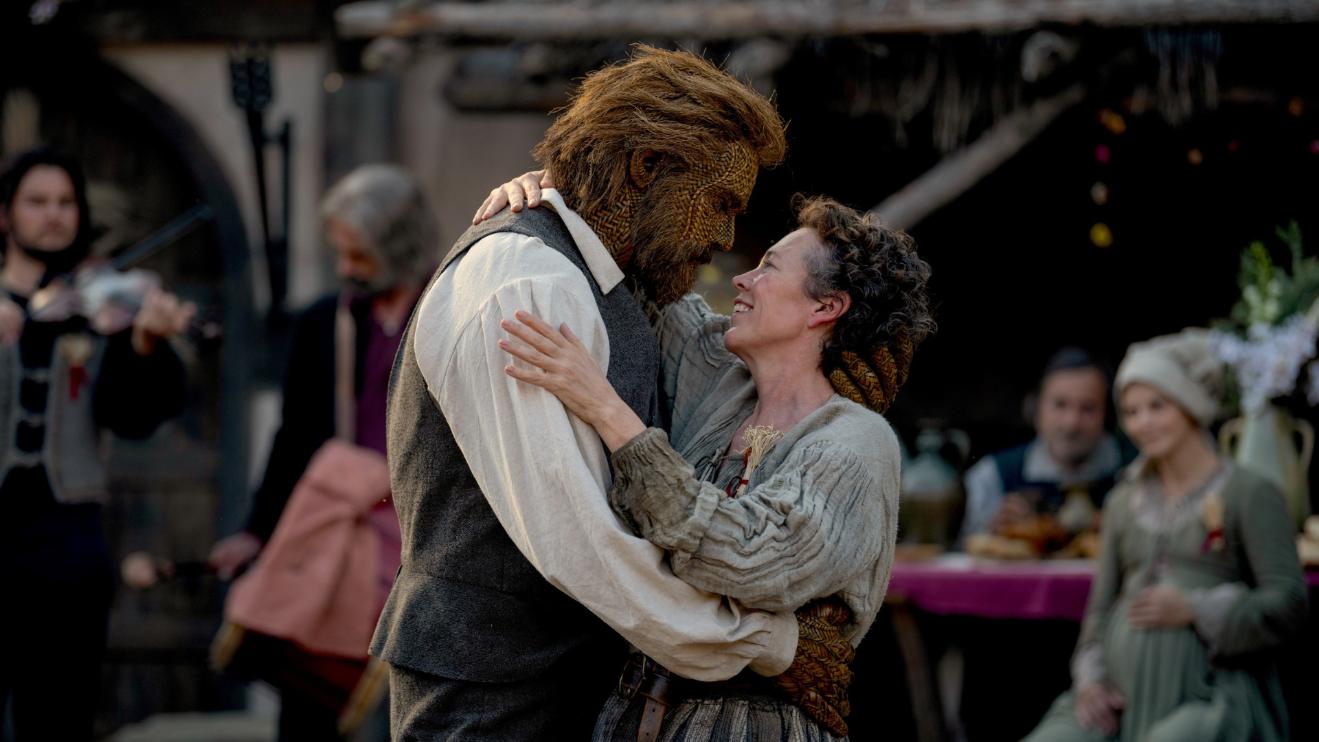
The part that I struggled with the most when it comes to Wicker is that I entered this movie thinking it was going to be a fun monster romp that I could have tongue in cheek conversations with my friends about. And in many respects it was that. When the Fisherwoman marries the Wicker Husband, they lose themselves in each other’s bodies. And that euphoria is not performative, not for anybody else in the village. It’s for them. And even later on, there’s a super intimate and sensual dance that the Fisherwoman and her Wicker Husband share in front of the townsfolk that is not to show off. It’s another expression of their love.
But this is where the fun monster romp of Wicker ends. Because this is less of a sexy film and more a grim fairy tale about a woman who breaks away from social convention and gender norms, in turn making others jealous of what they have. Once the wives see that they can have and can ask for passion, partnership, and love from their husbands, they want that. When they can’t have it, they label the Fisherwoman and the Wicker Husband’s relationship as unnatural. The same thing goes for the men. When their wives ask them for more or they see how dedicated the Wicker Husband is to his Fisherwoman wife, they try to destroy his marriage due to jealousy and the ugliness inside their hearts.
Together the villagers try to crush the Fisherwoman and Wicker Husband’s spirit. Fortunately they don’t. But I wish I would have known ahead of time that Wicker was less a monster romp and more a deep analysis of gender roles and societal expectations. And before anybody says, critical analysis is dead. I do this day in and day out. And I do go into these movies with an understanding of what I’m going to receive based on the marketing campaign. Also, the short story isn’t available. So for months on end I’ve been seeing ad after ad about how I was going to have a really fun time watching this movie. Spoiler alert, I had a fun time for maybe 20 minutes. The rest I was angry at the villagers for trying to poison what the Fisherwoman and the Wicker Husband had while reflecting on how people would act like that in our world.
At the end of the day, Wicker is a romance with that happily ever after we were promised. But I came for an escape and all I got was a reminder of the cruelties that come with being a woman, no matter the time, age, or world.
MORE: La Bola Negra TIFF Review: This is Why It’s Important to Preserve LGBTQ+ Stories
The Ugly: The Wicker Baby Aftermath

I hated Olivia Colman’s character at one point in Wicker.
The villagers’ jealousy at what the Fisherwoman and the Wicker Husband had led to deception and lies that implicated the Wicker Husband as having an affair with one of the villagers and having a Wicker Baby. In response, the Fisherwoman hurls a lamp at the Wicker Husband, setting him ablaze and leading to him running off into the forest and her thinking he’s dead. Truly, I didn’t think I could come back from this point in Wicker.
I understand the hardship that the Fisherwoman went through, the poisoning of her mind by the villagers, and how she felt like the one thing that was hers was ripped away from her. It’s good buildup and makes for a flawed character. But a part of me still can’t forgive the violence that went in throwing the one thing that could kill the Wicker Husband at him. It was the Fisherwoman letting the ugliness of the world transform her into one of the bitter villagers who looked down upon her. And I didn’t see a way back for this character, even after they reunited and he forgave her. A part of me still doesn’t see a way back.
Nevertheless, I do like that Wicker took such a shocking and bold risk with this moment. Because I’m always begging for complex female characters and here she is. And even though I’m still having trouble accepting her motivations or the anger that led her to this place, that’s good writing in my book. This kind of writing is transformative, makes you angry to the point where you just want to fling something at the screen, and makes you question yourself and what you would do if you were in her shoes. So yes, Wicker might’ve not been for me. But I’m always down for a movie that makes me stop and think, even if I probably won’t pick this movie up again if given the chance.
Wicker is now in theaters.
