
Enjoyment? Full enjoyment. *insert desi hand flick*
Picture This is a picturesque representation of desi culture. As a desi, I always look forward to seeing genuine, authentic representation. Representation that isn’t forced or explained to meet the non-cultural audience. Also, before you ask me “How can we relate to someone not [insert here].” In the same way minority individuals find something to relate to in mainstream media.
Masterfully crafted by Prarthana Mohan, the film relies on subtle cues to an audience familiar with the culture’s history. It also introduces perspectives people from all walks of life can understand. From family to friendships to the uncertainty of the future, this film exposes us to difficult conversations and wholesome family moments. Like I said, there is something for everyone.
Family
For South Asian families, appearances can be everything. This family had me cackling at the lengths they would go to preserve that pristine image back home. From the fake family photos to the parents’ significant others’ acceptance of being left out of the limelight, it is a testament to cultural stigma.
I particularly enjoyed the mom and dad going off the rails at each other – in private of course. Whether it is Laxmi telling him that “throwing him” was the best decision of her life, or Mukul silently cheering at Laxmi’s hypothetical death, the banter completes South Asian families. Our love language is insults, unless we don’t like someone. Then it’s just meant to be insulting.

However, we do love each other. Despite the generational trauma and the built-in coping mechanisms, this family works together to deal with stigma and complicated feelings. Laxmi adores Mukul’s significant other, and Pia and Sonal unite to will the family to live their truth. They strive to fight for the relationships that matter the most.
Side Note: While this family may be highly dysfunctional in its relationships, it is an absolute unit in fashion—full-serving every event.
Honourable mention to Laxmi for being the family’s pillar. She puts everyone in line, from meddling to ear-pulling, and she also embodies the brilliance of South Asian women. Someone who doesn’t know how FaceTime works but makes BANK at her job, who uses blackmail for good reason, and someone so unfiltered and genuine. Thank you to Sindhu Vee’s comedic genius for embodying such a bold woman.
Our families are rollercoasters, but in the end – it’s family. Everyone can relate to it, but desi people love to see these realistic and complex nuances represented respectfully without villainizing anyone. Understanding the learned behaviors and the culture adapting to the new age; everyone in this family has something to gain and lose.
Men

Let’s take a minute to talk about Pia’s dates. We have a manchild, cultural appropriater and flat-earther supreme, and a 50-year-old man in a 30-year-old’s body. Personally, this part of the film was culturally accurate and hilarious, because the marriage mart is this. As Sonal said, it takes a minute to whip them into shape.
I enjoyed how the movie didn’t shy away from poorly raised men from all cultures and how egocentric they can be. For example, the manchild embodies everything we try to avoid, because no – just absolutely no (there are no redeeming qualities). Also, despite the charm and whiplash the flat-earther gives us, cultural appropriation and stupidity will never be cute. I mean, Charlie’s reaction to Yoga is all of us.
Finally, there is Akshay. He is adorable, smart, funny, and perfect, except he loves your mom. By the way, I entirely called it, and you know what—good for Laxmi. As Pia so promptly points out, she deserves to be happy. That doesn’t make nearly killing Akshay with nuts and then stabbing him with an EpiPen twice any less hilarious. Despite being the perfect desi guy, he is still not the one for Pia.

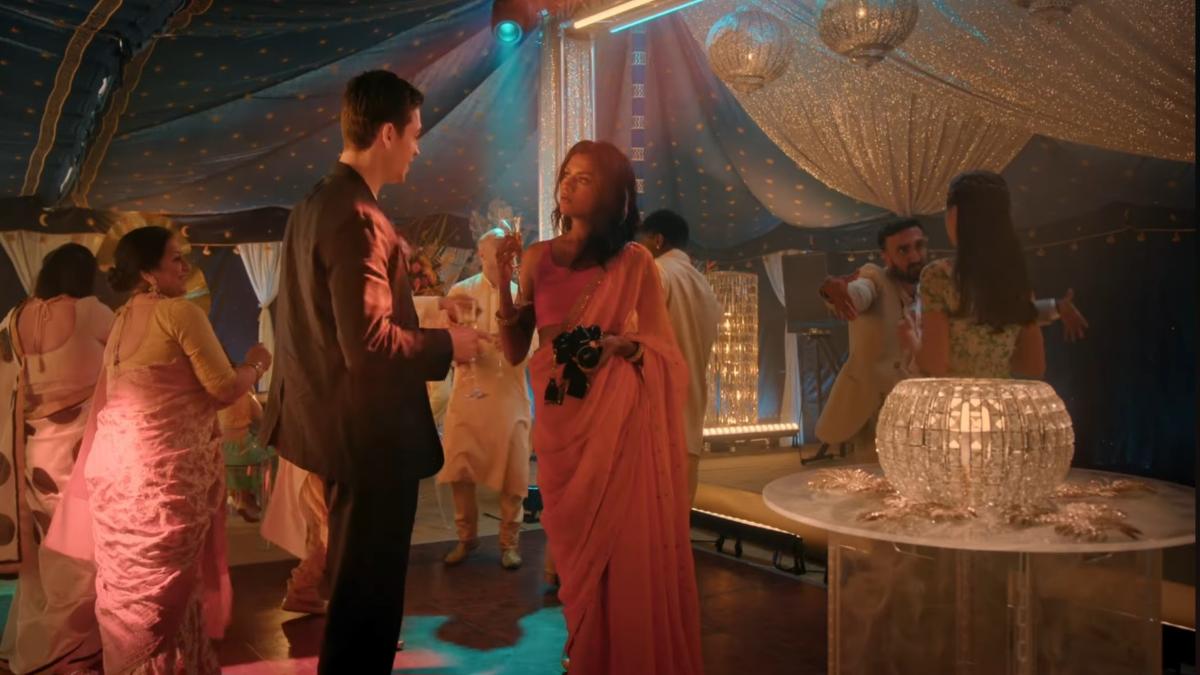
Then there is Charlie. There is a reason the above photo was included. Let’s say I was heartbroken when he changed from a Sherwani to a boring suit. #JusticefortheSherwani
Charlie understands Pia and her culture. Having been through the caretaker cycle – something many desi people, including myself, have been through, he understands the importance of family. Charlie and Jay are the two guys who know what her family and future mean to her. Granted, with a bit of communication, Charlie and her may not have lost out on so much time.
He always respected her and everything she stood for. He was the one for her and the one who—despite Pia’s awful mock flirting at the film’s beginning—only had eyes for her. So ultimately, despite how much our culture emphasizes the perfect desi guy, sometimes it’s about the perfect guy for you.
Future Plans

Culturally, family and men can be a bit of a mess, but the future? Even worse.
Not knowing what you want to do, whether you are helping out your family or if you wish to abide by or destroy cultural expectations, is all part of the game in a South Asian woman’s life. Pia’s fortitude and focus on building her life independently and free from expectations embody resilience.
She faces pushback throughout the way, especially every time she mentions she doesn’t want to get married. Eventually, her mom believes those jewels will be better used to save her shop than acquire dust if the stipulation is marriage. The storyline purposely defies the traditional cultural norms of marriage, age, and success.
It allows us to relate to this nontraditional, borderline awkward, passionate, laser-focused individual on her dreams. She thinks practically, and she values options beyond the traditional marriage mart. She also emphasizes the importance of being yourself, even if that means being the rebel with a cause at family functions or the odd one out in the family.
Pia’s success at the movie’s end is a huge testament to her culture and how it defines what she does and does not want for herself. But throughout it all, she stays true to herself; never wavering or settling. She also doesn’t belittle anyone for enjoying the traditional route, because to each their own.
It’s All About Culture
Culture can be difficult to navigate, but that doesn’t mean there aren’t wonderful aspects. Some people don’t want the traditional lifestyle, but that doesn’t make it any less noble. It’s about what you want for yourself, and that’s why culture is expansive enough, that you can make changes that suit your life.
As a South Asian, what I may not be fully onboard with is minimal compared to my love for my culture—for the connection and compassion of a community that few have. Yes, there are things that all families are now unlearning, and it’s not a perfect process—there are growing pains.
This film thoroughly celebrates beautiful South Asian culture, from the clothes to the events and dance/music to interactions between family and friends. It imbues hilarity in every taunt and ear pull, especially when Laxmi blackmails Pia with her potential death. It’s the romedy representation desi people have been looking for. From the crazy aunties seeking Charlie’s number to the overtly nosy and borderline inappropriate outside counsel – this movie is all aspects of South Asian fun.
But it doesn’t shy away from complex conversations and challenging aspects of culture that can be tough on our authentic selves. It doesn’t fail to make you laugh at all the pain and all the joy. This film brings it all together from the child whose idea of fun is math tricks to the onerous burdens for children (yes, even the favorite child *insert eye roll*).
So, thank you to Simone Ashley for bringing us the South Asian romedy lead we have always wanted, and for being brilliantly hilarious. This movie was and is home for some of us, and it’s a feeling we won’t be quick to take for granted.
Picture This is available to stream on Amazon Prime now.
