
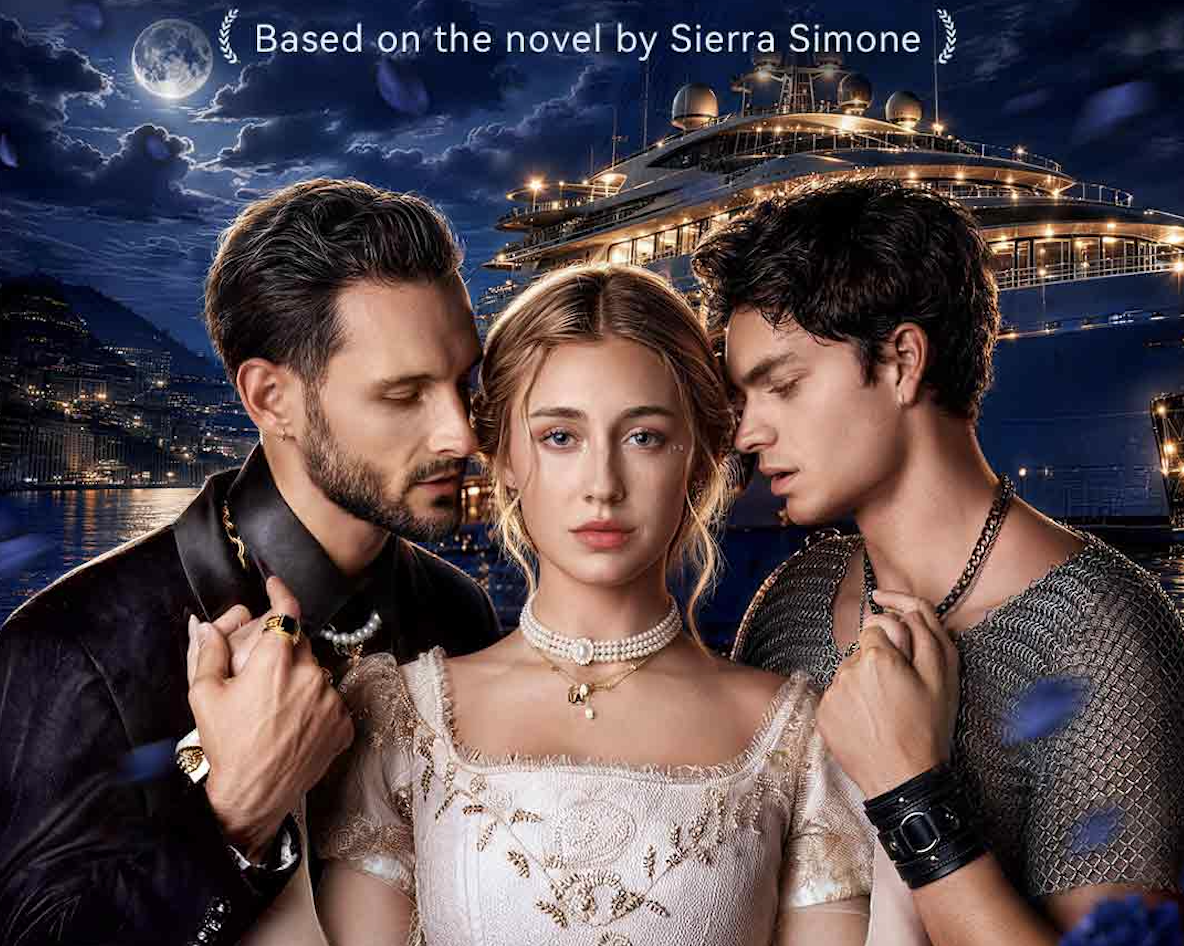
This is my fault, as I said with Salt Kiss you could be watching worse. Worst happened.
Nico Tortorella and Jake Lively are doing real work in book two of the Lyonesse trilogy. The writing is not.
Why was this greenlit
Here we are, and I have suffered through another Sierra Simone vertical adaptation, and I need time to recover. Not in the good way. In the way that makes me wonder again why this was greenlit in the first place.
The books were less than great. Less than good, even. But you give me a cast that includes Nico Tortorella and Jake Lively and I’m going to watch. That’s just a fact about me, and it’s the only reason I made it through Honey Cut.

And what these books and these adaptations really made me think is that somebody in this story needs therapy, because these characters and this plot are some genuinely messed up stuff. Yes, I know people want different things, and I am not here to kink shame. Do your thing, sincerely. It’s not the kinks that make this bad.
It’s the writing. The writing is sooo bad.
The kink isn’t the problem, the craft is
I want to be precise, because it matters. People obviously love Simone’s books, and if you love things, great — I love romance, I love spice, I love characters growing, and that can happen in any kind of book. I respect it wherever it shows up. And translation to the screen, any size screen, is always going to be different from the page.
But the page was bad. And I was hoping there’d be a way to translate this that didn’t feel like it was missing a plot.
There is one, technically. A love triangle and a man with enormous control issues. Honey Cut is the middle book, which means it’s the marriage installment — Isolde is inside this arrangement now, tasked with seducing a husband who won’t be seduced, with Tristan in the house. That’s a good engine on paper. A plot, though, is a sequence of decisions with consequences, and this mostly runs on three people being in proximity while the score swells.
Nobody tracks time in this show
The biggest problem with these adaptations is the timeline. It doesn’t read like time is passing. It feels like it’s supposed to be more time, and it plays like days. It felt like Tristan and Isolde crossed an ocean in a couple of hours. It felt like they got married the exact second the boat docked.
And this isn’t a nitpick, it’s load-bearing — especially here, because Honey Cut is fundamentally about the erosion of an idea of marriage and replacing it with a marriage that isn’t convenient. Intensity in romance is manufactured almost entirely by duration. The longing has to accumulate. The restraint has to cost something over weeks. A marriage has to feel lived in before it can feel like a trap. Compress it and the feelings don’t read as inevitable, they read as arbitrary.

The missing timeline made it genuinely hard to understand why anything was as intense as everyone was playing it, or where the tension was supposed to be coming from. Vertical format can absolutely do this — I’ve watched shows on this side of the industry establish years of history in three episodes. It takes a script willing to mark the passage. This one just cuts.
Mark, and the confusion of it all
I get being in love with your boss. That’s a whole genre and I’ll take it.
But Mark Trevena is a very specific kind of awful, and Tristan’s love and attention and loyalty toward him has always confused me. Mark acting like a monster and then flipping into a man scorned also confused me. He’s clearly someone who experiences pain and gets hurt, but his inability to process a single feeling is bizarre — not compelling-bizarre, just unreadable. The show wants a tragic control freak and delivers a mood generator.
And what makes me laugh is that Tristan and Isolde aren’t better, which should be the whole thesis of a middle book. The two of them treat Mark like the devil while running lies roughly as crappy as his. Nobody in this triangle has clean hands. That could absolutely be the point, except the show never notices — it keeps framing two of them as victims of a man they’re actively manipulating.
Also, and I repeat this for the record: no one, NO ONE, should ever have a dance off. That was too much.
It doesn’t get good until episode 55
Honey Cut didn’t get good until episode 55, when Mark finally drops the walls and admits what he feels. He isn’t in control, and it terrifies him, and that’s actually a real scene. Tortorella plays it well.
But the hypocrisy is that Tristan and Isolde still can’t take responsibility for themselves or say plainly what they want. And Mark’s change arrives out of nowhere, because you’ve just spent over 45 episodes going what is actually wrong with this man. There’s nothing about him that’s appetizing. Nothing that reads as can’t-live-without. Nothing about any of these three that makes you care.
That’s the real failure. A late vulnerability beat only works if it confirms something you half-suspected. If it’s the first human moment a character has had in 50 episodes, it isn’t a turn, it’s a rewrite — and in a middle installment it’s especially costly, because book two exists to deepen what book one established. This one spends its runtime restating it.

I need convincing about the love
I don’t care about threesomes or dominance. What I care about is that nothing here explains how a girl who was devoted to the church arrives at I am in love with two men. Or how they’re both in love with her. When did that happen? Which scene?
There’s nothing that makes me believe anyone is falling for anyone. Nothing that makes me believe anyone is caring for anyone. Which is why the central struggle — three people trying to figure out how to love each other — doesn’t land, because the show skipped the part where they started. And by Honey Cut, that’s no longer something you can catch up on. Book two needs the foundation to already be there.
The lack of character development, source material that reads like bad fan fiction, and the only saving grace being one of vertical’s fast-rising stars and Nico Tortorella in the cast. Both of them are giving more than this script deserves. Tortorella brings the menace, Lively brings the yearning, and neither can generate a relationship out of pages that never built one.
This series is definitely a choice, and it’s not a good one.
Honey Cut is streaming now on ReelShort.

