
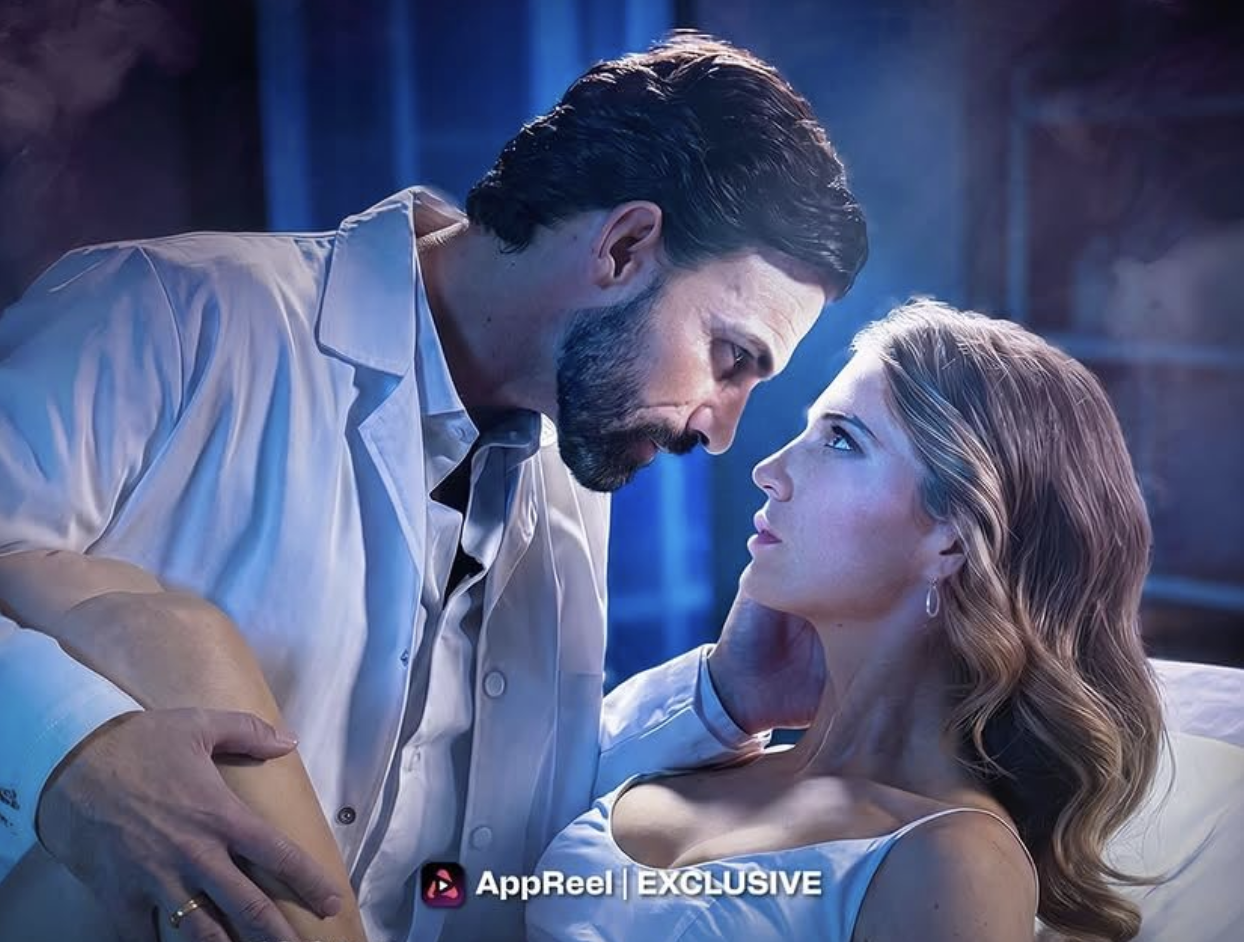
I know what you’re probably thinking: if you don’t have anything nice to say, maybe don’t say anything at all. But when it comes to My Gynecologist Lover, I honestly do not have much praise to offer. In fact, I pretty much hated this drama—and that is frustrating to admit because it stars Jayda Stephens, who is clearly a talented actress and deserves material that gives her more to work with.
So, where do I even begin?
IMPULSE
The setup is straightforward: Sarah catches her husband in bed with another woman, Veronica. When Sarah confronts them, neither of them seems especially concerned about the damage they have caused. Veronica cruelly weaponizes Sarah’s infertility and IVF struggles against her, while Sarah’s husband calls her cold and places the blame for their problems squarely on her shoulders. Sarah, understandably, starts thinking about revenge.
And look, I am not going to pretend I do not understand that impulse. If someone’s husband cheated on them, especially in such a cruel and humiliating way, revenge would absolutely cross a lot of people’s minds. Taking him to court? Making sure you are financially protected? Getting everything you are entitled to? I can understand that.
But tracking down the husband of the woman your spouse is cheating with—and immediately beginning a relationship with him—is where this story starts asking too much of its audience.
NOT GOOD
I know dramas require us to suspend disbelief sometimes. That is part of the fun. Big emotions, messy betrayals, unbelievable coincidences, and over-the-top twists can all work when the writing gives viewers a reason to go along with them. The problem is that My Gynecologist Lover never earns that trust. Instead, it feels like the script is moving characters wherever it needs them to go, regardless of whether their actions make emotional sense.
And that is the show’s biggest issue: the script is simply not good.
RELATED: Salt Kiss Review: There Are Worse Things That You Could Be Watching
For a streaming app trying to establish itself in an increasingly crowded market, the quality of the storytelling has to matter. It is not enough to take a familiar premise—cheating spouse, infertility struggle, revenge romance—and rearrange it slightly. Audiences have seen these storylines before. That does not mean they cannot still be compelling, but they need sharper writing, stronger characterization, and some sense that the people on screen are behaving like actual human beings.
SATURATION
When a market becomes saturated, viewers need a reason to choose your story. They need characters they can connect with, emotional stakes that feel earned, and a plot that makes them want to keep watching rather than questioning every decision. Unfortunately, this production does the opposite. It presents painful, potentially rich material but never digs deep enough to make it believable or affecting.
Sarah’s IVF journey is one of the clearest examples. She has supposedly been through repeated failed attempts, which is physically, emotionally, and financially exhausting. Yet the show treats her as though she would simply accept every word her husband says—that her fertility struggles are entirely her fault—without ever seeking another opinion or asking bigger questions. That does not feel like a believable response from someone who has endured that much.
After multiple unsuccessful IVF cycles, most people would want answers. They would speak to doctors, seek second opinions, investigate other possibilities, and try to understand what was happening to their own body. Especially when infertility treatment can take such an enormous toll, it does not make sense for Sarah to accept her husband’s accusations as fact without questioning him, the situation, or the information she has been given.
NO
And then the drama expects us to believe that, after all of that, Sarah would sleep with her gynecologist—someone she has just met—because her husband hurt her.
No.
Sarah can be devastated. She can be angry. She can want revenge. She can make messy choices. But those choices still need to feel grounded in who she is and what she has experienced. Here, they do not. Instead of building a convincing emotional spiral, the show jumps from one shocking plot point to another. It wants the audience to be scandalized, but it never gives us enough substance to be invested.
What the drama does instead is ask the audience to accept that David—the gynecologist—becomes completely invested in Sarah almost immediately. Within what feels like no time at all, he is prepared to leave his wife, give up his practice, and throw his entire life into chaos for a woman he barely knows. The show wants us to read that as grand romance, but it never does the work to make it believable.
DAVID IS ONE DIMENSIONAL
David is supposedly settling scores with his wife, but he is not really doing much of anything beyond attaching himself to Sarah’s situation. There is no meaningful buildup to his decisions, no convincing emotional journey, and no real sense of why Sarah specifically becomes the person he is willing to upend his life for. A character making a huge, reckless choice can be compelling—but the audience needs to understand the emotional logic behind it. Here, it just feels like the plot needs David to make dramatic sacrifices, so he does.
RELATED: Just One Kiss Review: When Your Heart Wakes Up And Picks Your Best Friend
And no, I am not saying Erik Fellows is a bad actor. I do not think that is necessarily the issue. My problem is with how David is written and how little variation Fellows is given—or brings—to the role. David often speaks in the same flat, overly serious tone, to the point that he starts to feel less like a romantic lead and more like the famously monotone teacher from Ferris Bueller’s Day Off. It becomes distracting, especially because the story is asking us to see him as passionate, impulsive, and deeply in love.
THAT IS ROMANCE?
The romantic scenes do not help. Every time David and Sarah move in for a kiss, it feels awkward rather than intimate, like he is coming in far too aggressively while she seems visibly uncomfortable with the moment. There is no spark, no tension, and no sense of emotional connection between them. The show keeps insisting that these two are meant to be together, but it never gives us a reason to believe it.
Sarah often looks like she is frustrated to be in the scene, while David comes across less like a swoony, complicated love interest and more like a parent about to lecture a child for acting out. That may sound harsh, but the lack of chemistry is impossible to ignore. The series is built around the idea that their relationship is this irresistible, life-changing connection—and when that relationship does not work, the entire drama starts to collapse around it.
THESE TWO GIVE US A HEADACHE
As for Vanessa and James—the two people having the affair—the show eventually wants us to believe that they regret what they have done and want their spouses back after being dumped. But by that point, it is hard to feel anything except exhaustion. These characters are written as so relentlessly selfish, manipulative, and clueless that the idea of anyone choosing to take them back feels less romantic or dramatic than physically painful.
Every time Vanessa and James appear, the story stalls. We spend so much time watching them insist that they want their marriages back while continuing to behave like the people who destroyed those marriages in the first place. They want forgiveness, access, and control, but they show very little accountability. The show seems to expect their desperation to create tension, yet it mostly makes them deeply irritating.
BEHAVIOR
Their behavior also raises a basic question the script never meaningfully answers: why are they together? If they are so determined to win back their spouses, why continue clinging to each other? If they are unhappy, why not confront the actual problems in their marriages—or at least accept the consequences of their choices? Instead, they bounce between begging, manipulating, calling, showing up uninvited, and making everyone around them miserable.
Maybe the intended payoff is control. Maybe they cannot stand losing the people they treated badly because losing them means losing the power they believed they had over them. That could have been an interesting angle, but the script never develops it with any real insight. It simply repeats the same behavior until it becomes frustrating rather than revealing.
THE PROBLEM
The script tries to force too much into one story: betrayal, infertility, revenge, medical ethics, marriage breakdowns, obsessive exes, and a whirlwind new romance. Any one of those elements could have supported a compelling drama if the writing had taken time to develop the characters and their motivations. Instead, the series piles them on top of each other, mistakes shock value for drama, and never gives the story room to breathe.
At a certain point, nearly every development feels like another law being broken, another example of people behaving horribly, or another reason to wish the show had gone in a completely different direction. The drama wants to be scandalous and addictive, but it ends up feeling messy, hollow, and exhausting.
Honestly, it was bad.
AT THE END OF THE DAY
At the end of the day, My Gynecologist Lover feels like a drama built around shocking ideas rather than a story it actually knows how to tell. The series has all the ingredients for something messy, emotional, and potentially addictive: a cheating husband, a woman dealing with the heartbreak and physical toll of failed IVF, a revenge-fueled affair, broken marriages, and characters who are forced to confront the consequences of their choices. But none of those elements are handled with the care, depth, or credibility they need.
Sarah’s pain should have been the emotional center of the story. Instead, the show reduces her devastating circumstances into an excuse to push her into increasingly unbelievable decisions. David is meant to be the passionate, unexpected love interest, but there is no convincing foundation for his sudden devotion to Sarah or the extreme choices he makes for someone he barely knows. Their relationship is supposed to be the show’s central romance, yet it has no chemistry, no buildup, and no emotional payoff.
Honey Cut Review: I Survived Another Sierra Simone Adaptation And I Need A Minute
DESPERATE
Then there are Vanessa and James, who should have brought tension and consequences to the story. Instead, they become repetitive obstacles: manipulative, frustrating, and constantly demanding access to the people they betrayed. Their desperation to get their spouses back could have revealed something interesting about entitlement, guilt, or control, but the script never takes the time to explore any of it. It just keeps repeating the same behavior until every scene with them becomes a chore.
That is what makes this drama so disappointing. It is not that the premise is too ridiculous for television—television can absolutely make outrageous, soapy storylines work. The problem is that the writing never earns its twists. It asks viewers to accept rushed relationships, questionable professional behavior, characters who make decisions that do not match what the story has told us about them, and dramatic turns that exist only to keep the plot moving.
IN CONCLUSION
There may be talented people involved, including Jayda Stephens, but even a strong performer can only do so much when the script does not give them believable emotions, layered motivations, or dialogue that feels natural. My Gynecologist Lover had the opportunity to tell a dramatic story about betrayal, infertility, revenge, and rebuilding your life after heartbreak. Instead, it delivers a frustrating collection of bad choices, weak character development, and plot points that feel more exhausting than entertaining.
Some dramas are messy in a way that makes you want to keep watching. This one is messy in a way that makes you want your time back.
