
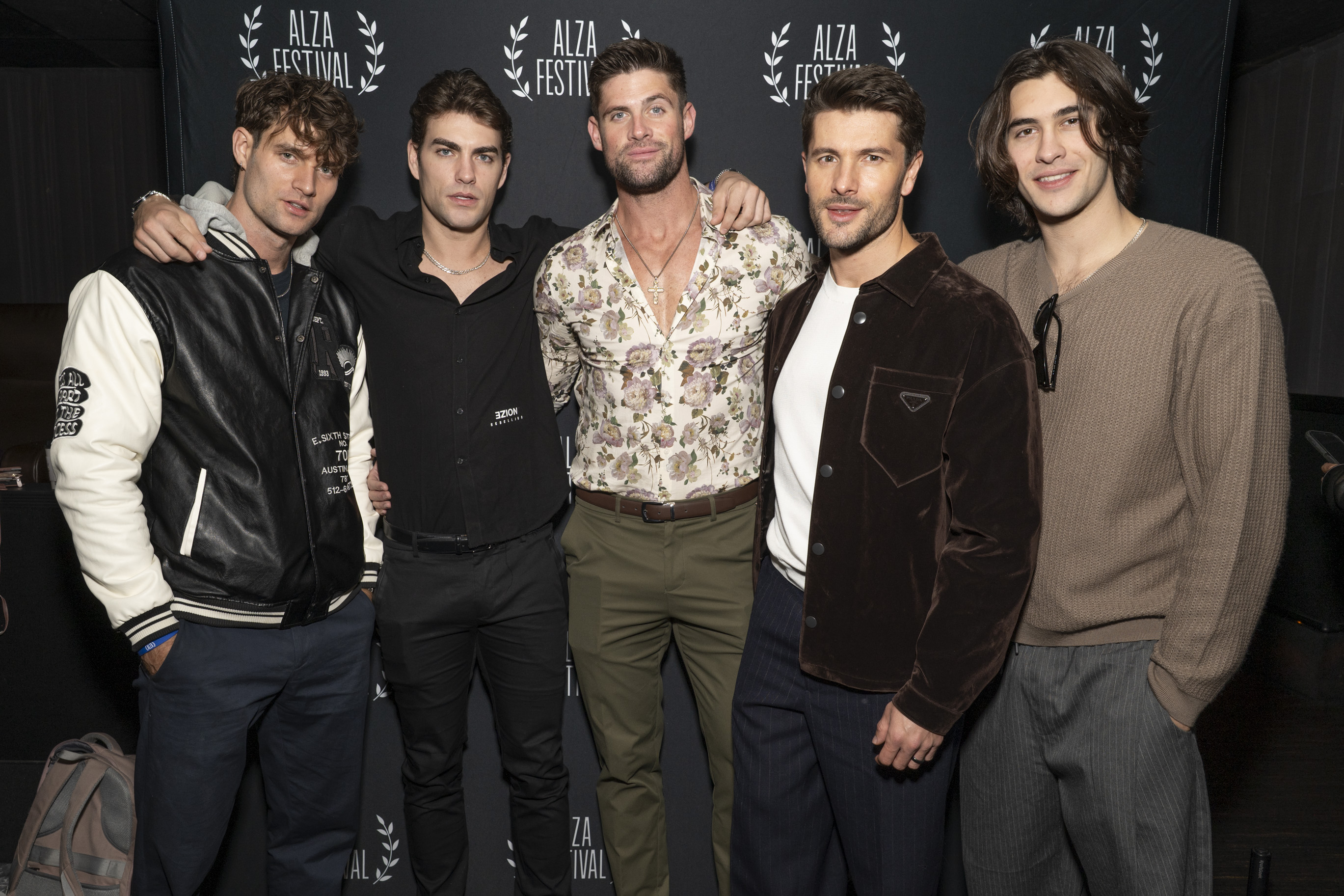
Five actors, five very different leading men, and enough romantic chaos to keep the group chat busy.
The Men of GammaTime came to ALZA Festival to talk about vertical dramas, but honestly? They also gave us plenty to discuss about why we keep falling for fictional men who range from walking green flags to objectively terrible ideas with excellent chemistry.
Because yes, we’re here for the fake dating, the bad boys, and the rich guy we swear we cannot stand. But hearing the actors talk about the care and work behind those stories? That’s the kind of behind-the-scenes content that makes a fan even more invested.
Here are five things we learned—and immediately needed to talk about.

Cayman Cardiff says the secret to on-screen chemistry is making your co-star feel safe
Listen, a good romantic scene can have us replaying the same thirty seconds an unreasonable number of times. But Cayman Cardiff talking about what makes that chemistry possible? Somehow equally worthy of our attention.
For Cayman, believable romance starts with making sure his co-star feels safe, supported, and cared for. That includes advocating for them on set, which is the kind of behind-the-scenes detail that makes us appreciate the person playing the romantic lead just as much as the character.
The swoony stuff matters. Obviously. We would never disrespect a perfectly timed kiss. But knowing that trust and respect are part of the foundation makes those moments hit a little differently.
And these actors don’t necessarily have weeks to find their rhythm. With some vertical dramas giving them just five to seven days together, that connection has to develop quickly.
So while we’re watching two characters fall in love, Cayman is thinking about how to make the person opposite him comfortable enough to help sell that love story. A green flag, both in theory and in practice. We love to see it.

Shayne Davis loves a red flag redemption arc
And then there’s Shayne Davis, reminding us that sometimes our fictional taste and our real-life standards are two entirely separate conversations.
In GammaTime’s Stolen to Save Her, Shayne gets to explore the darker side of vertical romance, and he said the morally complicated material comes pretty naturally to him. Which, as a fan, is exactly the kind of thing that makes you curious about how he approaches a character you probably should not be rooting for—but absolutely will.
His explanation for the appeal of dark romance centers on the fantasy of a bad guy wanting to become good for the right woman.
Is that a sound basis for choosing an actual partner? That is not the conversation we are having. We are discussing fictional yearning, emotional complications, and the very specific satisfaction of watching a man discover that having feelings might require him to change his behavior.
Shayne also pointed out that questionable romantic decisions are hardly new to entertainment. Shakespeare was working with messy relationships long before we started watching them unfold vertically.
The screen may be smaller. Our willingness to get invested in a complicated fictional man remains unfortunately enormous.

Seth Edeen proves fake dating is never just fake dating
Seth Edeen’s role in I Hate You, Let’s Date brings us to a trope we will apparently never get tired of, and frankly, why should we?
Fake dating is a gift. Two people agree to pretend they have feelings, establish boundaries they are almost certainly going to make emotionally inconvenient, and then expect us not to notice when the pretending starts looking suspiciously sincere.
Please. We came here specifically to notice.
With Seth, the appeal is getting to watch that familiar setup play out through another leading man: waiting for the performance of a relationship to become something neither character can comfortably explain away.
That’s what makes a story like this so easy to get invested in. We know the premise. We have our suspicions about where it’s going. But we still need to see the moment when an interaction stops feeling like part of the arrangement.
We’re not watching fake dating because we believe everyone will maintain sensible emotional boundaries. We’re watching because we want to see exactly how those boundaries fall apart.

Luke Dodge might make you fall for the guy you swore you hated
Luke Dodge understands that sometimes the romantic lead needs to be a little unbearable before we’re ready to become embarrassingly invested in him.
Talking about the troubled-rich-boy archetype, Luke explained that he leans into the character’s obnoxious side first. The audience needs a reason to dislike him before getting to see the softer person underneath.
And honestly, we appreciate an actor who understands what the audience needs. If we’re going to go from wanting a character off our screen to anxiously waiting for his next scene, let us experience the full journey. Make us work through our feelings. Give the group chat something to argue about.
What makes Luke’s approach interesting is that the initial frustration is intentional. He isn’t skipping straight to making the character lovable; he’s giving that eventual change somewhere to go.
He also offered a reminder that all of this happens on a demanding schedule. GammaTime shoots around 12 pages a day on some projects, and Luke has experienced 15-page days.
His preparation involves repeated readings, working scene by scene, and reviewing the next day’s sides the night before.
So while we’re debating whether his character has earned forgiveness, he’s putting in the work to make that debate possible. A useful reminder that making romantic chaos look effortless takes effort.

Volodymyr Pielikh thinks the hottest glow-up is actually loving yourself
Volodymyr Pielikh’s biggest takeaway from GammaTime’s The Summer I Turned My Sexiest wasn’t simply the romance. It was watching the female lead become more confident in her own body.
And this is where the conversation gets a little more personal, because there is something deeply satisfying about a story that doesn’t treat its heroine like a problem waiting to be fixed.
He explained that the transformation resonated because it wasn’t about replacing the woman or changing her body to meet someone else’s standards. It was about her becoming confident in herself.
That distinction matters. We can enjoy a dramatic reveal, but a woman recognizing her own worth gives us something beyond a single big moment to cheer for.
Volodymyr said he received thousands of messages and comments from people who connected with the story. Some even approached him in person to tell him about its impact.
Imagine working on a romance and then hearing directly from viewers who saw something of themselves in it. That’s a different kind of payoff from getting people invested in whether two characters will kiss.
The love story may bring us in, but a heroine realizing she doesn’t need to become someone else to deserve one? That’s something worth staying for.

There’s more to these leading men than the trope
What made this panel fun wasn’t just hearing about the fictional men. It was getting a better sense of the actors thinking through how to play them.
Cayman’s focus on trust, Shayne’s interest in morally complicated romance, Luke’s deliberate approach to an initially unlikable character, and Volodymyr’s appreciation for a heroine’s confidence gave us different reasons to care about the work behind the swooning. And Seth’s fake-dating setup? A reminder that a familiar premise can still have us eagerly waiting for feelings to complicate everything.
We showed up for the romantic chaos. Hearing the thought behind it gave us a little more to fangirl over.
