
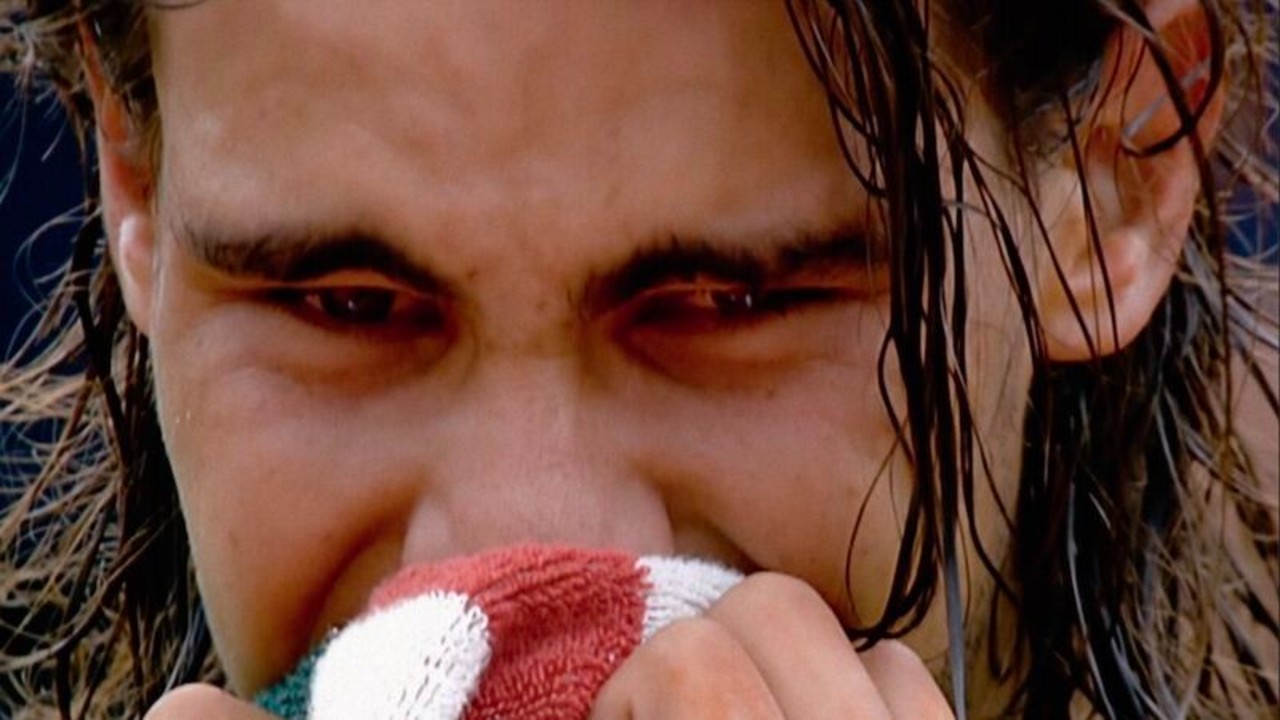
When it comes to someone as famous as Rafael Nadal, arguably one of the best tennis players in the history of the game, it’s easy to believe that we’ve already seen it all. He has, after all, been a public figure for over three decades. Cameras have followed every step of his journey from long-haired kid in cargo pants to the man setting a Roland Garros record that will likely never be broken.
But Rafa, a 4-episode Netflix documentary, does something very few sports documentaries these days manage to do: teach us something new about not just Rafa Nadal the athlete, but Rafa Nadal the man.
Perhaps the problem with a lot of these documentaries is that it feels like we’re getting them too soon. Sure, Carlos Alcaraz is an exciting player, but his career is still in its infancy. Does he need a documentary? And yes, Emi Martínez won a World Cup with Argentina, but his story and whatever his legacy will end up being isn’t set yet. Can’t the documentary wait a little?

Rafa has no such problems. With Nadal having retired in 2024, the documentary can examine the end of his career, go back to the beginning, and even spend some time exploring the highs, the lows, and the players that intersected with Nadal the most: Federer and Djokovic. But this isn’t a documentary about Nadal’s greatest rivalry (Federer, without a doubt), or even about how the two men (and later, Djokovic, making them the Big Three) shaped the game for decades.
No, this is a documentary about a man who fought against his own body and, often, cripppling anxiety, to become the kind of athlete people look up to as a symbol of resiliency. You think you can’t take another step? Well, Rafa Nadal won a Roland Garros Grand Slam while in so much pain that his father had to carry him to his room at night!
Of course, the documentary doesn’t suggest that’s a good thing. Reality is reality. But the documentary also tries very hard not to pass judgment on Nadal’s decisions. Instead, it just presents him and his family as the ones who bore the consequences of his choice to push his body and his mind to the limit, time and time again.

There are facts to be found here, like Nadal’s Müller-Weiss syndrome diagnosis at 19 (a rare, degenerative foot condition characterized by the spontaneous death of bone tissue), the often absurd pressure he was under due to his uncle Toni’s training methods, and the way he had to reinvent himself as an athlete time and time again to compensate for his body breaking down. But above all, there’s just a man who loved tennis and who tried to always give it his all, until he just couldn’t anymore.
Are the best athletes the ones who walk away at the height of their game? Or, should we admire those who continue fighting until the end even more? You can make your own decision there, but it’s hard to watch this documentary, to see Nadal fall and get up time and time again, and fault him for the decision to keep trying. And it’s really, really hard not to admire him for not giving up.
Ultimately, Rafa is the kind of documentary that will appeal to those of us who have followed Nadal’s career from the beginning, and to those who come into Rafa ready to learn what has made him one of the defining names in tennis. And that makes it one of the few sports documentaries that is absolutely worth watching, not just as a celebration of a career and a legacy, but as a piece of entertainment trying to tell a compelling story.
Agree? Disagree? What did you think of Rafa? Share with us in the comments below!
Rafa is now streaming on Netflix.

ICON. Best athlete of all times. And this comment is not about sports, but values.