
Hockey romances are everywhere right now, and honestly, I get it.
We’re living in an era of yearning again. People want stories about impossible crushes, bad timing, and someone seeing your worth before you see it yourself. There’s something inherently satisfying about watching a character discover they deserve more than the person who convinced them they didn’t.
That’s the space Revenge Puck lives in.
Before diving in, though, I have to acknowledge some of the usual vertical-drama nonsense. Everything is somehow attached to a contract. People communicate through ultimatums instead of conversations. There is unnecessary violence. And, as always, there is an exhausting amount of pressure placed on women to be responsible for every aspect of a relationship while men avoid accountability for their own shortcomings.
Thankfully, this series has one thing working heavily in its favor: the enemies-to-lovers trope.
Adam Johns and Blake Ashburn hate each other. Their rivalry on the ice is well known, and everyone around them seems invested in keeping it alive. Caught in the middle is Lucy.
A sports photographer and Adam’s girlfriend, Lucy has built more of her life around Adam than she probably realizes. At games, she’s focused on him and only him. The problem is that when you make someone the center of your world, it’s easy to miss everything happening around you.
Including the fact that they’re treating you terribly. They’re cheating on you.
Lucy learns that lesson the hard way when she discovers Adam has been cheating on her with her roommate. Instead of taking responsibility, he does what too many mediocre men do: he tries to make her feel like the problem.
It’s frustrating to watch, but it’s also what makes Lucy immediately someone to protect. She’s not just dealing with heartbreak. She’s dealing with the realization that someone she trusted has spent a long time convincing her she’s worth less than she actually is.
She doesn’t know that part of her story yet, though.
Naturally, she ends up on a rooftop with a beer and a full-blown pity party. Unfortunately for her, Blake Ashburn is there.
Blake overhears everything she says and offers the kind of advice that sounds terrible when you’re heartbroken: get over it and move on.
Lucy is not interested in hearing any of that.
What she doesn’t realize yet is that Blake’s role in this story was never really about revenge (even when he doesn’t see that either). It’s about helping her rebuild the confidence Adam spent so much time tearing down.
And that turns out to be why the story works.
One of the things I appreciated most about Blake is that when Lucy is at her lowest, he doesn’t take advantage of it.
After she passes out in what has to be one of the least dignified moments imaginable, Blake gets her home safely, makes sure she’s okay, and leaves it at that. Yes, he uses the opportunity to push his fake-dating idea, but the important thing is that he never treats Lucy’s vulnerability as something he can exploit.
I think that’s a large part of why Revenge Puck works.
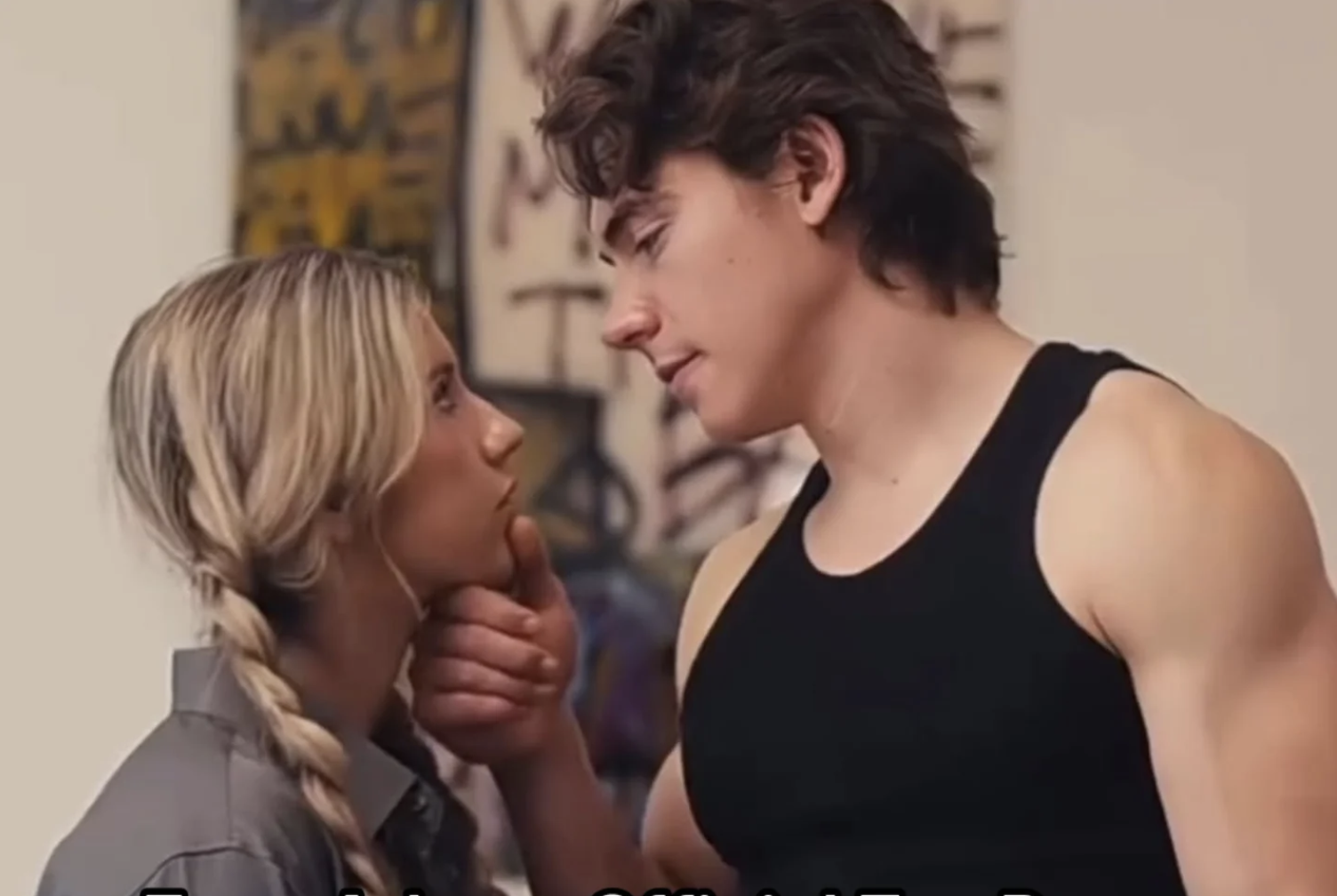
The fake-dating trope isn’t exactly groundbreaking. Neither is the hockey rivalry. What makes the story land is the chemistry between actors Hannah Lowery and Evan Adams and the fact that their relationship feels grounded in something more than attraction.
This is a story about two young adults trying to figure out who they are.
Lucy is rebuilding her confidence after spending years with someone who convinced her she wasn’t enough. Blake is trying to prove that love can look different than what she’s experienced before. They challenge each other, frustrate each other, support each other, and slowly become the thing the other person needs.
What makes Lucy’s journey relatable isn’t the romance itself. It’s watching her learn to trust her own instincts again. Adam spent a long time making her question herself. He stole her independence and broke her confidence until she started seeing herself through his eyes instead of her own.
When Adam finally admits he was wrong, Lucy doesn’t suddenly become immune to him and forgetful of the past. She falls back into old patterns. She kisses him and makes a mistake.
And honestly? That felt more realistic than if she’d simply told him to get lost. People don’t always walk away cleanly from relationships that hurt them. Sometimes they need multiple reminders of why they left in the first place. Lucy’s reminder came in the form of disgust and the realization that this was wrong.
What I appreciated is that Blake doesn’t respond by turning into an alpha-male parody. He doesn’t start a fight. He doesn’t punch a wall. He doesn’t challenge Adam to some ridiculous showdown.
He leaves.
He’s hurt, and he acts like someone who is hurt. Which brings us to the real question underneath all of this.
Blake doesn’t actually want revenge?
He doesn’t care about winning?
What he wants to know is whether Lucy chose him and whether she cares about him. He wants to know whether everything they’ve built together meant as much to her as it did to him.
And that’s a much more interesting conflict than anything happening on the ice.
What ultimately sells Blake and Lucy isn’t the relationship itself. It’s the way Hannah Lowery and Evan Adams make you believe every emotion underneath it.
And I’m not just talking about the romantic moments.
The strongest scenes between the two aren’t built on physical attraction. They’re built on vulnerability.
It’s in the way they look at each other. The hesitation before saying something important. The small gestures that reveal what they’re feeling before either character actually says it out loud. The way Blake’s expression softens around Lucy. The way Lucy slowly starts letting her guard down around him.
The relationship works because both characters spend so much of the story wanting to be chosen. That’s what gives the romance its emotional weight – not an ex and the drama that surrounds the past.
For a while, it feels like they’ve finally found their footing. Which, of course, is exactly when the story decides to create more chaos.
Lucy is still carrying all the insecurities Adam left behind, making her the perfect target for manipulation. When her former roommate sets up a situation designed to make it look like Blake is cheating, Lucy falls for it.
And honestly, that’s frustrating to watch.
Not because it doesn’t make sense, but because it does.
One of the hardest parts of rebuilding your confidence after a toxic relationship is learning to trust your own judgment again. Lucy knows Blake cares about her. She knows Adam undermined her self-worth. Yet the doubt still creeps in because that’s what insecurity does.
The misunderstanding doesn’t last forever. When Lucy overhears Adam bragging about sabotaging Blake and learns the truth about what really happened, her priorities become very clear. Suddenly, this isn’t about revenge, jealousy, or proving anything to anybody.
It’s about Blake.
For the first time in the story, Lucy stops reacting to everyone else’s actions and starts making decisions for herself. She runs onto the ice to warn him. She speaks up. She exposes Adam. She refuses to stay quiet. More importantly, she finally stops letting other people define who she is.
That’s really what Revenge Puck is about.
Not hockey.
Not fake dating.
Not even revenge.
It’s about a woman rebuilding the confidence someone else tore apart.
The romance just happens to be the vehicle that gets her there.
And while the script occasionally leans into some truly cheesy dialogue, the film succeeds because Lowery and Adams are good enough to ground it emotionally. This isn’t their first vertical together, and it shows. They understand how to play off each other. Their scenes feel natural, their chemistry feels effortless, and they consistently find ways to make familiar material feel genuine.
Revenge Puck isn’t reinventing the genre. What it does do is remind you why these stories work in the first place. Sometimes people don’t need someone to save them. They need someone to remind them why they were worth loving all along.
