
We are reminded that we have no business being in the water. The water is someone’s home and always has been.
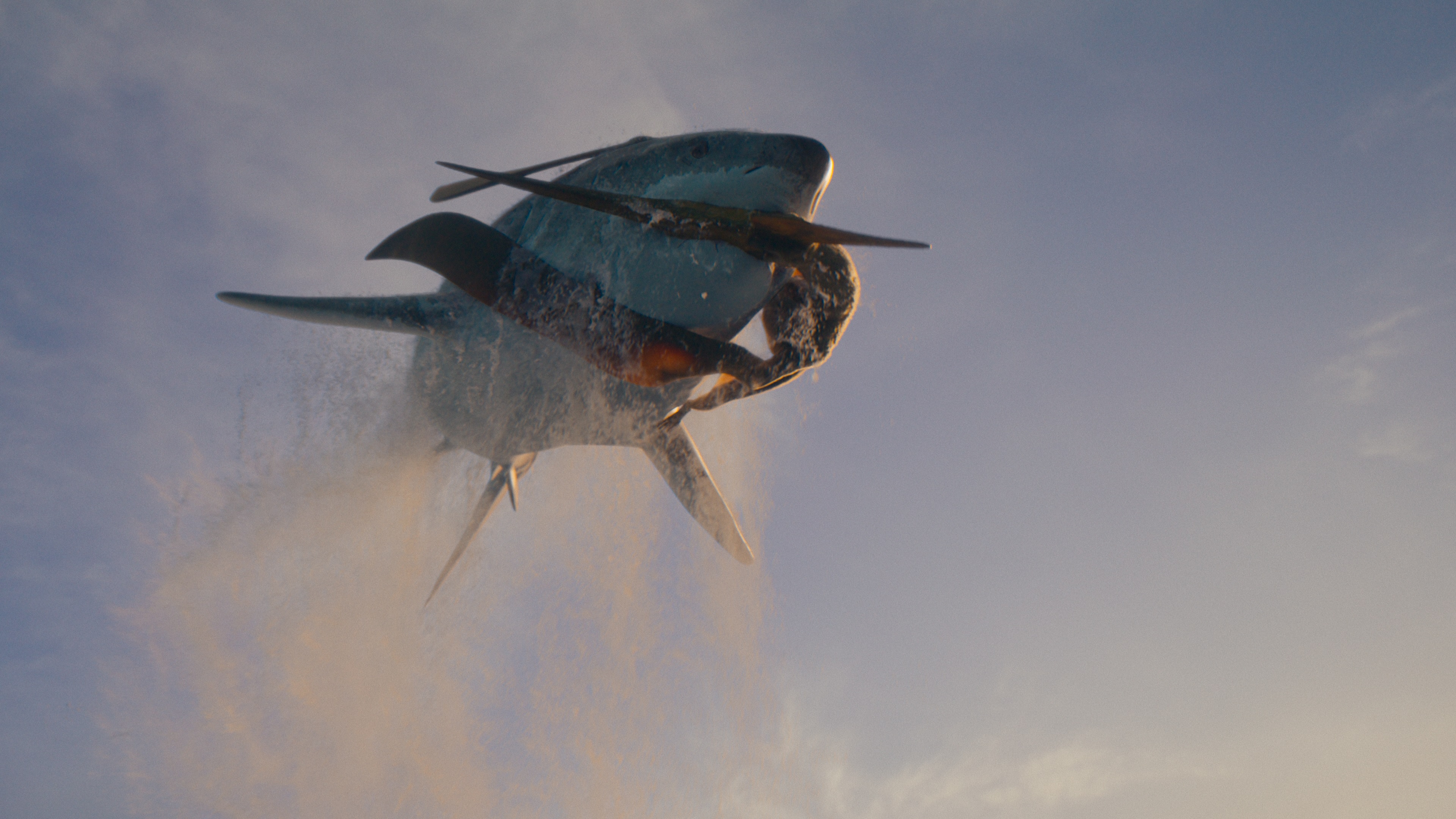
We love learning about the Earth, its history, and the animals that once inhabited the Earth. We’re debuting a clip from Surviving Earth, all about the massive marine reptiles called pliosaurs. We’d be scared to death if we saw them in the water.
Plesiosaurs went extinct roughly 66 million years ago during the Cretaceous-Paleogene event. They have been widely popularized by legends like the Loch Ness monster, though there is no evidence of them. They aren’t characterized as dinosaurs, but as marine animals.
Surviving Earth is a landmark series showcasing how life not only survived but thrived through Earth’s most catastrophic environmental crises. Using cutting-edge CGI, viewers are transported back to a world of never-before-seen creatures and their remarkable survival stories. From the giant sea scorpions of 450 million years ago to the mighty mammoths and sabertooths of 450,000 years ago, Earth’s epic story is vividly brought to life. Traverse landscapes shaped by meteoric strikes, volcanic eruptions, plunging sea levels, and scorching heat storms.

Cretoxyrhina is an extinct genus of large mackerel shark that lived about 107 to 73 million years ago during the late Albian to late Campanian of the Late Cretaceous.
Cretoxyrhina was an apex marine predator capable of reaching up to 26 feet in length and weighing over five metric tonnes. It swam in the Late Cretaceous seas of North America, using burst speeds of up to 43 mph to hunt mosasaurs, plesiosaurs, and large fish.
And yes, we’re falling down a rabbit hole to learn about these animals.

Spinosaurus is a genus of large spinosaurid theropod dinosaurs that lived in what is now North Africa during the Cenomanian stage of the Late Cretaceous period, about 100 to 94 million years ago.
Surviving Earth is co-produced by Universal Television Alternative Studio, a division of Universal Studio Group, and UK production company Loud Minds.
