
SPOILER ALERT AND WARNING: The following contains spoilers for Chicago Med Season 11, Episode 16. It also contains a mention of suicide and sexual assault.
Chicago Med Season 11, Episode 16 is the best episode of the whole season, and fans won’t be surprised by that. That’s because the episode is called “The Book of Charles,” and anyone who’s watched the NBC show for any length of time knows that Oliver Platt is its foundation. The episode asks a lot of him and of the audience, and Platt delivers.
Like its predecessor “The Book of Archer,” this episode zeroes in on Dr. Daniel Charles and what makes him tick. Charles has been on this up and down track throughout Season 11, as he took some time away from the hospital yet that happened off-screen, so viewers never really felt like he actually went anywhere. But his crisis is in full force during “The Book of Charles,” in which he gets hit with blow after blow. Showrunner Allen MacDonald penned the episode and he pulls no punches; the opening scene finally shows Charles’ volunteer work at the suicide hotline, and the implication is that the man he speaks to takes his own life. It’s never said, though, enabling that likelihood to haunt both Charles and the audience for the entire 40-odd minutes.
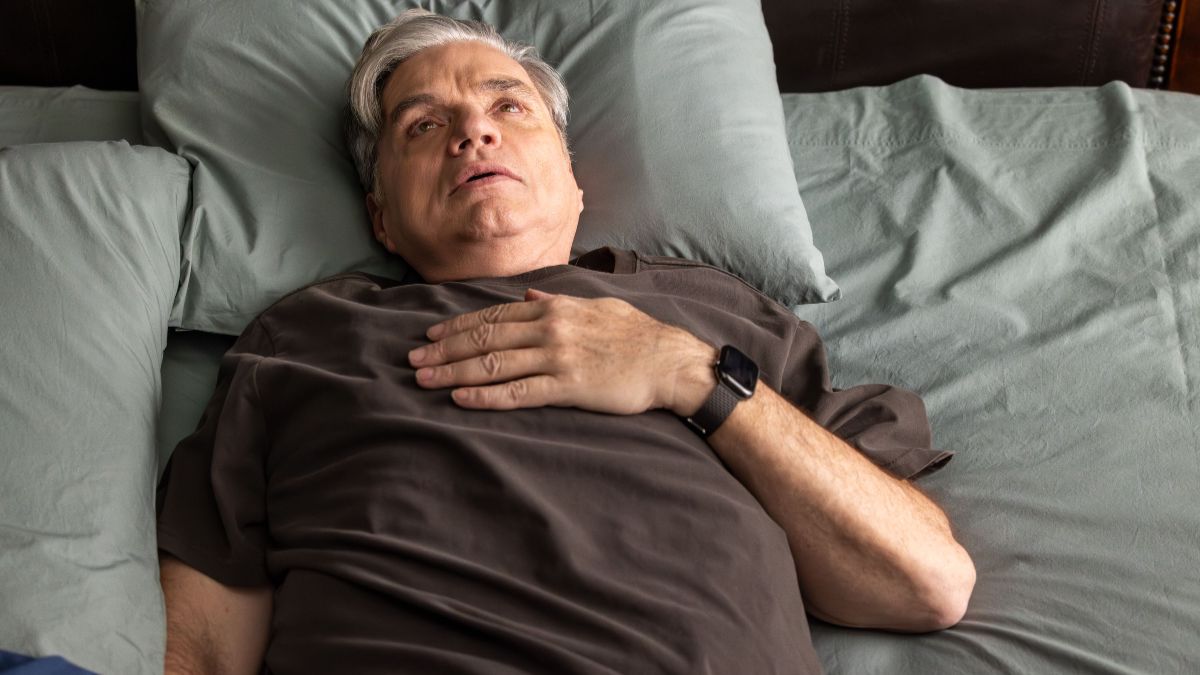
And it’s all downhill from there. Viewers have a general idea of what MacDonald’s aim is: he’s stacking problem after problem until Charles finally snaps. But it doesn’t matter, because the audience always wants to watch whatever Oliver Platt does and because they’ve never seen Charles on a knife’s edge. They’re both scared and curious about what’s going to happen at the end. MacDonald doesn’t just give him one big hurdle; this episode has a few hot-button beats. Charles and Dr. Mitch Ripley try to treat a man who may have been drugged and raped, but is in denial. Dr. Caitlin Lenox asks Charles to speak with her patient Sage Ellison, who lashes out at Charles for not believing she needs emergency surgery. Charles also gets into a fight with his daughter Anna about her personal life, and an even bigger argument with Sharon Goodwin after Sage files a complaint against him. The best way to look at this episode is as a series of confrontations that culminate in Charles collapsed on the floor of his office.
Chicago Med audiences are used to main characters being in life-threatening peril. Remember that Goodwin was also dying in her office during Season 10 after she was stabbed, and that Charles was shot outside the hospital what seems like eons ago—and those are just two examples. The show does this every now and then. But “The Book of Charles” feels different, because it’s Dr. Charles, and because MacDonald does a great job of illustrating why this is worse than the time he was shot. It’s not a physical wound that heals.
There are reasons why Charles is such a fan-favorite and they’re all on display here. Number one is obviously Oliver Platt, who is not only a phenomenal actor but also one of those actors people cannot help but love. The second is that he’s one of only two main characters who’ve always been there, and so there’s the expectation that he always will be there. He’s the backstop for all of the other characters and thus for fans as well. “The Book of Charles” challenges that assertion. What happens when the person who always makes everything okay isn’t okay? So many episodes have included Charles giving help or advice to everyone else, but who takes care of him? And when viewers ask that question, they realize that he really could use more support.

This episode is reminiscent of another great Oliver Platt show called Huff (for which he earned an Emmy Award nomination), but this time it’s Platt in the Hank Azaria role. And he knocks it out of the park. He follows the path MacDonald has laid down so surely, gradually escalating Charles’ inner conflict until he finally gets to unleash it in a scene with S. Epatha Merkerson that will break viewers’ hearts. What’s great about it is that it’s a quiet storm, a subtle escalation, which is just a reminder of how much experience and how much grace Platt has. He never overdoes it or telegraphs it. It flows so seamlessly, even as it hurts.
There’s another small but memorable scene in “The Book of Charles” with Ripley and Charles. Ripley tries to appeal to his patient by opening up about his childhood; it doesn’t work, but it leads Charles to deduce that Ripley is now in therapy, and he tells Ripley how proud he is of him. It’s so nice any time Chicago Med goes back to that relationship. It started out somewhat awkwardly but it has truly grown into something positive, and MacDonald is savvy to realize how that dynamic applies to that case, as well as that Ripley is also an important part of telling Charles’ story.
The only thing that rings hollow is this episode incorporating the renewed romantic subplot between Dr. John Frost and Dr. Naomi Howard; that does feel telegraphed and it doesn’t really fit as well as the other elements. The scene in which Naomi interrupts Frost and Charles’ conversation seems like it’s there to remind viewers that ship is still going, because she walks into the room and leaves maybe a minute later. Still, it’s nice to see more of Platt with Darren Barnet, and it’s clear that MacDonald was looking for one story that was positive amongst the negative. It just feels like more of an outlier than an addition.
But “The Book of Charles” unequivocally accomplishes its goal of giving the audience new perspective on Dr. Daniel Charles. And it gets to his point of no return in a way that makes sense and, more importantly, that viewers can understand. Not everything that’s hurled his way is justified yet that’s part of it; this is a guy who’s taken for granted a little bit, even by the fans themselves. We love him, can’t imagine the show without him, but rarely do we think about his struggles unless something traumatic is happening to him.
In “The Book of Charles,” Chicago Med gives Dr. Daniel Charles his biggest trauma yet—and Allen MacDonald shows a great understanding of his character. This isn’t just breaking the character down for drama; it’s a really tough look at who he is. And that’s what makes it such a great hour of television. Chicago Med can be uneven, sometimes picking the thing that makes sense in the moment rather than the one that actually works. But this episode feels like it was coming all along.
Chicago Med airs Wednesdays at 8:00 p.m. ET/PT on NBC. Photo Credit: Courtesy of NBC.

It was a moment of less than a minute and it’s weird you harped on that scene with Frost & Howard in front of Charles AND only complimented Darren Barnet. It’s giving misogynoir.
Let me go back to see if you were as negative withe Frost & Novak subplot.
That is exactly the point I’m making – that the scene isn’t long enough. It’d have been better to have a substantive moment for Naomi and Frost instead of what amounted to a quick cameo. I honestly wonder why the writers didn’t commit to the Naomi and Frost pairing the first time, instead of circling back to it.
Naomi, in general, is a character with plenty of untapped potential beyond the pairing with Frost. The work that Ashlei Shape Chestnut did in the storyline between Naomi and Lenox last season is an example of how much more both actor and character still have to give, and I’m hopeful that will happen in the remainder of Season 11 or Season 12, either through the relationship with Frost or on her own.
But making assumptions about my personal character based on a review of a TV show is disrespectful in its own way. Happy Easter.